Representative Tommy F. Robinson
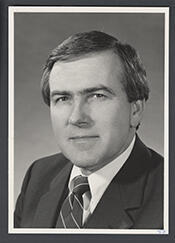
Here you will find contact information for Representative Tommy F. Robinson, including email address, phone number, and mailing address.
| Name | Tommy F. Robinson |
| Position | Representative |
| State | Arkansas |
| District | 2 |
| Party | Republican |
| Status | Former Representative |
| Term Start | January 3, 1985 |
| Term End | January 3, 1991 |
| Terms Served | 3 |
| Born | March 7, 1942 |
| Gender | Male |
| Bioguide ID | R000354 |
About Representative Tommy F. Robinson
Tommy Franklin Robinson (March 7, 1942 – July 10, 2024) was an American businessman, lobbyist, law enforcement officer, and politician who served as the U.S. representative for Arkansas’s 2nd congressional district from 1985 to 1991. Over three terms in the United States House of Representatives, he contributed to the legislative process during a significant period in American history, representing the interests of his central Arkansas constituents. Although he ultimately became a member of the Republican Party, he was first elected to Congress as a Democrat and later switched parties while in office.
Robinson was born on March 7, 1942, in Little Rock, Arkansas. He attended local schools and later graduated from the University of Arkansas at Little Rock. From 1959 to 1963, he served in the United States Navy, an experience that preceded and helped shape his subsequent career in law enforcement and public service.
Following his military service and university education, Robinson embarked on a career in law enforcement that spanned local, state, and campus policing before he entered elective office. He worked as a city patrolman in North Little Rock and later as an Arkansas state trooper. He subsequently served as director of campus police at the University of Arkansas and became police chief in Jacksonville, Arkansas. In 1979, Governor Bill Clinton appointed him director of the short-lived Arkansas Department of Public Safety, a cabinet-level agency that was abolished in 1981 by Clinton’s Republican successor, Governor Frank D. White. Robinson’s high-profile law enforcement career culminated in his election as sheriff of Pulaski County in 1980, when he defeated incumbent Ken Best in the Democratic primary; he was re-elected to that office in 1982.
Robinson’s tenure as Pulaski County sheriff was marked by aggressive tactics and frequent controversy. In early 1981, seeking to relieve overcrowding at the county jail, he ordered a group of state prisoners held in the Pulaski County facility transported to the state prison at Pine Bluff; when the warden refused to accept them, Robinson left the prisoners chained to the front gate of the prison. The 1982 murder of Little Rock socialite Alice McArthur led him to mount a sensational investigation focused on her husband, attorney William McArthur. Robinson spent time in jail in 1983 on a federal contempt of court citation after he refused to allow the federally appointed jail master, Kenneth Basinger, to enter the Pulaski County jail. In the course of the dispute, he publicly referred to the presiding federal judge, George Howard Jr., an African American, as “a token judge.” When county officials denied his request for additional funding for the sheriff’s office, Robinson arrested County Judge Bill Beaumont and Comptroller Jo Growcock on charges of obstructing governmental operations, releasing them only when threatened with another contempt citation. Amid these conflicts, Beaumont declined to seek another term in 1982. Robinson also led a widely publicized raid on a “toga party” organized by Central Arkansas Socials, which resulted in multiple lawsuits and the derisive labeling of Robinson and his deputies as the “Keyhole Kops.” Governor Frank White referred to him as “Captain Hotdog,” and his profanity-laced press conferences became a hallmark of his public persona. At the same time, he implemented aggressive anti-crime measures, including a program that placed undercover deputies armed with shotguns in random convenience stores to combat armed robbery, a strategy credited with producing a 96 percent drop in armed robberies in Pulaski County during his tenure.
In 1984, Robinson was elected to the United States House of Representatives from Arkansas’s 2nd congressional district as a Democrat. In the Democratic primary, he led a five-man field that included Secretary of State Paul Riviere, State Senator Stanley Russ of Conway, investment banker and former Senate aide Thedford Collins, and conservative former U.S. representative Dale Alford. After besting Riviere in the runoff, he faced Republican nominee Judy Petty, a member of the Arkansas House of Representatives and former aide to Governor Winthrop Rockefeller, as well as independent candidate Jim Taylor, a liberal Democrat opposed to Robinson’s more conservative positions. Petty ran as a Ronald Reagan Republican and Reagan carried the district, but Robinson prevailed in the general election. In the three-way race, he received 103,165 votes (47 percent) to Petty’s 90,841 votes (41 percent), while Taylor, who was underfinanced, garnered 25,073 votes (11 percent). Robinson financed his campaign with nearly $900,000 in unsecured bank loans, making it the most expensive congressional race in Arkansas history up to that time. He took office on January 3, 1985, and served three consecutive terms, remaining in Congress until January 3, 1991.
During his congressional service, Robinson aligned himself with the conservative Boll Weevil faction of the Democratic Party and was frequently at odds with the party’s national leadership, including Speakers Tip O’Neill and Jim Wright. Among the legislation he supported was the Abandoned Shipwrecks Act of 1987, which asserted United States title to certain abandoned shipwrecks embedded in or on submerged lands under state jurisdiction and transferred title to the respective states. The law, signed by President Ronald Reagan on April 28, 1988, was intended to help states manage and protect underwater cultural and historical resources from damage by treasure hunters and salvors. On July 28, 1989, reflecting his increasingly conservative stance and dissatisfaction with what he described as the Democratic Party’s growing liberalism, Robinson formally left the Democratic Party and joined the Republican Party while still serving in the House. He thus became one of a number of American politicians who switched parties while in office.
Robinson chose not to seek re-election to the House in 1990 and instead ran for governor of Arkansas as a Republican. In the Republican primary he was defeated by businessman Sheffield Nelson, himself a former Democrat. Nelson went on to lose the general election to Governor Bill Clinton. Robinson’s departure from Congress opened the way for Democrat Ray Thornton, a former U.S. representative and former Arkansas attorney general, to win the 2nd district seat in 1990; Thornton defeated Republican nominee Jim Keet, then a freshman state representative and restaurateur from Little Rock, who would later become the unsuccessful Republican gubernatorial nominee against Governor Mike Beebe in 2010. In the aftermath of his congressional career, Robinson’s financial practices came under scrutiny during the House banking scandal. In 1992, it was revealed that he had bounced 996 checks on the U.S. House bank, some of which were more than sixteen months overdue.
After leaving Congress, Robinson remained intermittently active in politics and business. He ran again for the U.S. House of Representatives in 2002, seeking a seat in a northeastern Arkansas district after a twelve-year absence from elective office, but he was defeated by the Democratic incumbent, Marion Berry. Outside of electoral politics, Robinson farmed milo in Monroe County and operated a political consulting firm as well as a liquor store. His agricultural enterprise, Ag_Pro Farms, encountered financial difficulties and was forced into bankruptcy in 2011. He also worked as a lobbyist and continued to be involved in public affairs in Arkansas.
In his later years, Robinson held several appointed positions in state government. Governor Mike Huckabee appointed him to the Arkansas Pollution Control and Ecology Commission, where he participated in regulatory oversight of environmental matters. He also served a term as chair of the Arkansas Board of Pardons and Parole, further extending his long association with criminal justice and corrections policy. Robinson died at a hospital in Forrest City, Arkansas, on July 10, 2024, at the age of 82, closing a public life that had spanned military service, law enforcement leadership, partisan realignment, and three terms in the United States Congress.