Senator Tristram Dalton
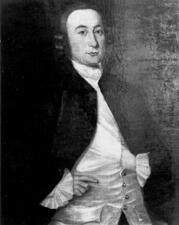
Here you will find contact information for Senator Tristram Dalton, including email address, phone number, and mailing address.
| Name | Tristram Dalton |
| Position | Senator |
| State | Massachusetts |
| Party | Pro-Administration |
| Status | Former Representative |
| Term Start | March 4, 1789 |
| Term End | March 3, 1791 |
| Terms Served | 1 |
| Born | May 28, 1738 |
| Gender | Male |
| Bioguide ID | D000013 |
About Senator Tristram Dalton
Tristram Dalton (May 28, 1738 – May 30, 1817) was an American politician, merchant, and early United States senator from Massachusetts. A member of the Pro-Administration Party, he served a single term as one of the first United States senators, representing Massachusetts in the United States Congress from March 4, 1789, to March 3, 1791. For many years he was one of the leading citizens of Newburyport, Massachusetts, but he ultimately lost most of his considerable fortune through ill-timed and mismanaged investments in the real estate of Washington, D.C.
Dalton was born on May 28, 1738, in that part of Newbury, Massachusetts, which later became Newburyport, the only child of Michael Dalton and Mary (Little) Dalton. His father, originally a ship’s captain who became a merchant, engaged in trade with Europe and the West Indies and was instrumental in securing the separation of Newburyport from Newbury. Raised in a prosperous mercantile household, Dalton was educated for public life and commerce. He entered Harvard College and graduated in 1755 in a class that included future President John Adams. After Harvard he studied law and was admitted to the bar, but he chose not to practice, instead following his father into mercantile pursuits. When Michael Dalton died in 1770, Tristram inherited an extensive estate and local businesses that made him the wealthiest citizen of Newburyport.
Dalton’s public career began in the turbulent years preceding the American Revolutionary War. He was not significantly involved in politics until 1774, when rising tensions with Great Britain led to the formation of revolutionary institutions in Massachusetts. That year he was elected to the Massachusetts Provincial Congress and to the Newburyport board of selectmen, aligning himself with the patriot cause. During the war he became an active proponent of independence, using his resources and shipping interests to support the American effort. Among his contributions was the provisioning of vessels from his merchant fleet for the ill-fated Penobscot Expedition of 1780. His prominence in local affairs and his wealth reinforced his standing as one of Newburyport’s leading citizens.
In the postwar period Dalton moved into state-level politics. He served as a member of the Massachusetts House of Representatives from 1782 to 1785 and was chosen speaker of the House in 1784. He then served in the Massachusetts State Senate from 1786 to 1788. Dalton was elected to the Continental Congress in 1783 and again in 1784, although he did not take his seat on either occasion. As the new federal Constitution was being considered, he was elected a delegate to the Massachusetts convention on the adoption of the United States Constitution, where he advocated its ratification. His support for the new federal framework and his alignment with the emerging national administration placed him among the leading Federalist-leaning figures in his state.
Dalton’s congressional service came at a formative moment in the new republic. In 1788 he was elected by the Massachusetts legislature as one of the state’s first United States senators, alongside Caleb Strong. When the two men drew lots to determine the length of their initial terms, Strong received the longer term and Dalton the shorter, two-year term. A member of the Pro-Administration Party, Dalton served in the United States Senate from March 4, 1789, to March 3, 1791, during the First Congress. In that capacity he participated in the early legislative process of the new federal government and represented the interests of his Massachusetts constituents at a time when the institutions, precedents, and policies of the United States were being established. In the 1791 senatorial election, when United States senators were still chosen by state legislatures, Dalton ran for reelection but finished a distant fourth in the balloting, losing to George Cabot and thereby concluding his brief Senate career.
After leaving the Senate, Dalton’s life reflected both continued public engagement and significant personal financial reversals. He had married Ruth Hooper, daughter of wealthy Marblehead merchant Robert “King” Hooper, in 1761, thereby linking two prominent mercantile families. The couple had ten children, of whom only three daughters survived to adulthood. During his Senate term, when New York City served as the seat of the federal government, Dalton and his wife developed a taste for urban life and moved first to New York and then to Philadelphia as the capital shifted. When the permanent national capital was designated on the Potomac, Dalton sold most of his Massachusetts holdings and speculatively purchased land in the new Federal City, later Washington, D.C. Many of the family’s personal possessions were lost when a ship carrying them to Washington foundered, and his real estate investments, made through an unscrupulous agent and in a market that did not appreciate as expected, proved disastrous. These misjudgments wiped out most of the fortune he had inherited and built as a merchant.
Despite his financial decline, Dalton continued to hold positions of public trust. In 1801 President Thomas Jefferson appointed him the last commissioner of the Federal City, filling the seat vacated by William Cranch when Cranch joined the judiciary in the new capital. Dalton served in this capacity for a little over a year, until the Board of Commissioners of the Federal City was disbanded in 1802 as the federal government altered the administrative structure of Washington. Later, in order to provide him with a stable income, he received a patronage appointment as surveyor of the port of Boston. He held this federal customs position from November 1814 until his death on May 30, 1817. Dalton was also a charter member of the American Academy of Arts and Sciences, founded in 1780, reflecting his standing among the intellectual and civic leaders of Massachusetts.
Dalton’s life also intersected with the institution of slavery. According to research published by The Washington Post, he was one of only two members of Congress from Massachusetts known to have owned slaves. In 1804 he buried an enslaved man named Fortune in the all-white, consecrated Old Burying Hill Cemetery by the Bartlet Mall in Newburyport, an act that has drawn historical attention to his role as a slaveholder in a state often associated with early antislavery sentiment. Tristram Dalton died on May 30, 1817, and was interred in the churchyard of St. Paul’s Episcopal Church in Newburyport, Massachusetts. His wife, Ruth Hooper Dalton, survived him by nearly a decade, dying in 1826. Dalton’s name has been commemorated geographically; he is the namesake of Dalton, Massachusetts, as well as Dalton, New Hampshire, and Dalton, Georgia, reflecting the enduring recognition of his prominence in the early political and commercial life of the United States.