Representative Truman Adams Merriman
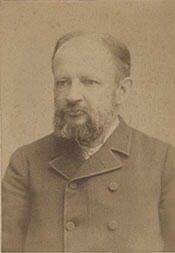
Here you will find contact information for Representative Truman Adams Merriman, including email address, phone number, and mailing address.
| Name | Truman Adams Merriman |
| Position | Representative |
| State | New York |
| District | 11 |
| Party | Democratic |
| Status | Former Representative |
| Term Start | December 7, 1885 |
| Term End | March 3, 1889 |
| Terms Served | 2 |
| Born | September 5, 1839 |
| Gender | Male |
| Bioguide ID | M000658 |
About Representative Truman Adams Merriman
Truman Adams Merriman (September 5, 1839 – April 16, 1892) was an American lawyer, Civil War veteran, journalist, and politician who served two terms as a U.S. Representative from New York from 1885 to 1889. A member of the Democratic Party, he contributed to the legislative process during this period, representing the interests of his constituents in the House of Representatives during a significant era in American political and economic development.
Merriman was born on September 5, 1839, in Auburn, Cayuga County, New York. He received his early education at Auburn Academy, a local preparatory institution that served many of the region’s professional and political figures. He went on to attend Hobart College in Geneva, New York, from which he graduated in 1861, completing his studies just as the United States was entering the Civil War.
In September 1861, shortly after his graduation, Merriman entered the Union Army as a captain, commanding a company that he had personally raised as part of the 92nd New York Volunteer Infantry. During his military service he participated in several major engagements of the war, including the Battle of Fair Oaks, the Seven Days Battles, and the prolonged operations around Petersburg, Virginia. He was wounded at Petersburg and continued his service until he was mustered out in December 1864 with the rank of lieutenant colonel, reflecting his advancement and responsibility in the field.
After leaving the army, Merriman turned to the study of law. He read law under the guidance of Charles J. Folger, a prominent New York jurist who later served as chief judge of the New York Court of Appeals and as U.S. Secretary of the Treasury. Merriman was admitted to the bar in 1867, beginning his legal career in New York. Seeking broader professional opportunities, he moved to New York City in 1871, where he shifted his focus from law to journalism, joining the staff of The Sun, one of the city’s leading newspapers.
Merriman became an influential figure in New York’s journalistic community. His work at The Sun and his growing prominence among reporters and editors led to his election as president of the New York Press Club, a position he held for three consecutive years in 1882, 1883, and 1884. In this role he helped represent the interests of the city’s press corps and participated in the social and professional life of the metropolitan media, further establishing his public profile and connections within Democratic and reform-oriented political circles.
Building on his legal training, military record, and journalistic reputation, Merriman entered electoral politics in the 1880s. He was elected as an Independent (non-Tammany) Democrat to the Forty-ninth Congress and reelected as a Democrat to the Fiftieth Congress, serving from March 4, 1885, to March 3, 1889. During his two terms as a Representative from New York, he sat in the House of Representatives as a member of the Democratic Party and participated in the legislative process at a time when issues such as tariff policy, civil service reform, and veterans’ affairs were central to national debate. He was not a candidate for renomination in 1888, concluding his congressional service at the end of his second term.
In his later years, Merriman remained in New York City, where he continued his professional and civic engagements after leaving Congress. He died in New York City on April 16, 1892. His body was returned to his hometown of Auburn, where he was interred at Fort Hill Cemetery, a burial place for many of the region’s notable figures, thus closing a life that had spanned service in war, the law, journalism, and national politics.