Senator Truman Handy Newberry
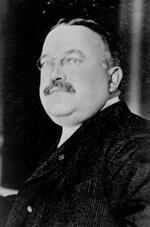
Here you will find contact information for Senator Truman Handy Newberry, including email address, phone number, and mailing address.
| Name | Truman Handy Newberry |
| Position | Senator |
| State | Michigan |
| Party | Republican |
| Status | Former Representative |
| Term Start | May 19, 1919 |
| Term End | November 18, 1922 |
| Terms Served | 1 |
| Born | November 5, 1864 |
| Gender | Male |
| Bioguide ID | N000062 |
About Senator Truman Handy Newberry
Truman Handy Newberry (November 5, 1864 – October 3, 1945) was an American businessman, naval officer, and Republican political figure who served as Secretary of the Navy from 1908 to 1909 and as a United States Senator from Michigan from 1919 to 1922. His congressional service occurred during a significant period in American history following World War I, during which he participated in the legislative process and represented the interests of his Michigan constituents in the United States Senate.
Newberry was born in Detroit, Michigan, the son of John Stoughton Newberry, a U.S. Representative from Michigan, and his second wife, Helen P. Handy. His maternal grandfather, Truman P. Handy, was a well-known financier and banker in Cleveland, Ohio, and Newberry was given his name. He attended the Michigan Military Academy, receiving a disciplined preparatory education, and then enrolled at Yale College’s Sheffield Scientific School. He graduated in 1885 and was a member of the St. Anthony Hall society while at Yale, reflecting early connections to influential social and professional networks.
Following his graduation, Newberry embarked on a career in business and transportation. From 1885 to 1887 he served in a succession of positions with the Detroit, Bay City & Alpena Railway, including superintendent of construction, paymaster, general freight and passenger agent, and ultimately manager. He then became president and treasurer of the Detroit Steel & Spring Company, a post he held from 1887 to 1901, building his reputation in industrial management. In 1902, he helped organize the Packard Motor Car Company, entering the emerging automobile industry. Over the years he engaged in various other manufacturing and financial enterprises, including involvement with the Union Trust Company, the Union Elevator Company, and the Michigan State Telephone Company, underscoring his role in the broader development of Michigan’s industrial and commercial infrastructure.
Parallel to his business pursuits, Newberry developed a significant naval and military association. In 1893, he joined with others to organize the Michigan State Naval Brigade. Within this organization he served successively as a landsman in 1895 and as a lieutenant and navigator in 1897 and 1898. During the Spanish–American War he was commissioned a lieutenant (junior grade) in the United States Navy in May 1898 and served aboard the USS Yosemite. This service provided him with direct naval experience that later informed his work in the Navy Department. In 1905 he was appointed Assistant Secretary of the Navy under President Theodore Roosevelt. In that capacity he effectively acted for the ailing Secretary of the Navy, Victor H. Metcalf, and upon Metcalf’s resignation on November 13, 1908, Newberry was appointed Secretary of the Navy on December 1, 1908. He held that cabinet post until March 5, 1909, overseeing aspects of the Navy during a period of American expansion and modernization. During World War I, he returned to naval service, becoming a lieutenant commander in the United States Navy Fleet Reserve on June 6, 1917, and serving as assistant to the commandant of the Third Naval District, headquartered in New York City, until January 9, 1919.
Newberry’s national political career culminated in his election as a Republican to the United States Senate from Michigan. He was elected in the 1918 contest against industrialist Henry Ford and took his seat on March 4, 1919. As a member of the Senate, he participated in the democratic process and contributed to the legislative work of the postwar era, representing the interests of his Michigan constituents during one full term in office. His tenure, however, became entangled in controversy over campaign expenditures. In 1921, Newberry was tried and convicted under the Federal Corrupt Practices Act for alleged “irregularities” in his election, particularly the large sums spent in the campaign. The United States Supreme Court later reversed this conviction in the landmark case Newberry v. United States, holding that Congress lacked authority under the Constitution to regulate party primaries in the manner attempted.
Following the Supreme Court’s decision, the Senate conducted its own investigation into the 1918 election. The Senate ultimately declared Newberry entitled to his seat, thereby affirming his legal right to serve, but at the same time expressed strong disapproval of the amount of money expended in his race against Ford. The continuing public and political pressure, and a renewed movement to unseat him, led Newberry to resign from the Senate on November 18, 1922, before the expiration of his term. He was succeeded by James J. Couzens, a prominent Detroit businessman and former Ford Motor Company executive, whose candidacy received the approval of Michigan Governor Alexander Groesbeck.
After leaving the Senate, Newberry withdrew from elective politics and returned to private life, resuming his involvement in manufacturing and business enterprises. He remained a figure of interest in discussions of campaign finance and political ethics, as his case was frequently cited in studies of federal political scandals and the limits of congressional power over elections. Truman Handy Newberry died in Grosse Pointe, Michigan, on October 3, 1945. He was interred in Elmwood Cemetery in Detroit, closing a life that spanned industrial expansion, naval service in wartime, and contentious national political debate.