Senator Truman Smith
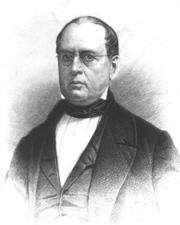
Here you will find contact information for Senator Truman Smith, including email address, phone number, and mailing address.
| Name | Truman Smith |
| Position | Senator |
| State | Connecticut |
| Party | Whig |
| Status | Former Representative |
| Term Start | December 2, 1839 |
| Term End | March 3, 1855 |
| Terms Served | 5 |
| Born | November 27, 1791 |
| Gender | Male |
| Bioguide ID | S000621 |
About Senator Truman Smith
Truman Smith (November 27, 1791 – May 3, 1884) was an American lawyer and Whig politician who served in both houses of the United States Congress as a Representative and Senator from Connecticut during a critical period in antebellum politics. Over the course of five terms in Congress between 1839 and 1855, he played a prominent role in national Whig Party strategy and contributed significantly to the legislative and political life of his state and nation.
Smith was born in Roxbury, Connecticut, and was part of a politically connected family; he was the nephew of Nathaniel Smith and Nathan Smith, both of whom were notable public figures. He completed preparatory studies and entered Yale College, where he became a member of the Brothers in Unity literary and debating society. He graduated from Yale in 1815. Pursuing a legal career, he studied at the Litchfield Law School, one of the leading legal institutions of the early republic, and was admitted to the bar in 1818. He then commenced the practice of law in Litchfield, Connecticut, establishing himself as a capable attorney before entering public life.
Smith’s early political career unfolded at the state level. A member of the Whig Party, he was elected to the Connecticut House of Representatives, serving from 1831 to 1832 and again in 1834. These terms in the state legislature marked his entry into elective office and provided him with experience in legislative procedure and party organization at a time when the Second Party System was taking shape. His work in Hartford helped build his reputation and prepared the way for his subsequent election to national office.
Smith entered the United States House of Representatives as a Whig in the Twenty-sixth Congress, representing Connecticut’s 5th congressional district. He served in the House from March 4, 1839, to March 3, 1843, during which time he participated in the legislative process and represented the interests of his constituents in a period marked by economic recovery after the Panic of 1837 and intense debate over federal economic policy. He declined renomination in 1842. Remaining active in national politics, he served as a presidential elector on the Whig ticket in 1844. He returned to the House of Representatives in the Twenty-ninth and Thirtieth Congresses, this time representing Connecticut’s 4th congressional district, and served from March 4, 1845, to March 3, 1849. His House service thus spanned key debates over territorial expansion, the Mexican-American War, and the extension of slavery.
Parallel to his formal legislative duties, Smith emerged as one of the Whig Party’s most important national strategists. Between 1846 and 1854, he effectively oversaw the national campaigns of the Whigs in a role analogous to that of a modern national party chairman. In 1846 he traveled extensively, raising funds from business leaders across the country and using these resources to print and distribute pamphlets and speeches promoting the Whig platform and to strengthen local Whig organizations in the states and territories. The Whigs performed notably well in the 1846 congressional elections, holding all of their Northern House seats and gaining additional seats in New York, New Jersey, Pennsylvania, Ohio, and Georgia, although they failed to secure Iowa’s two new Senate seats despite Smith’s considerable efforts there. In the 1848 presidential contest, he became an early and forceful advocate of General Zachary Taylor’s candidacy, arguing that Taylor’s broad appeal extended beyond traditional Whig strongholds. During the campaign he directed a sophisticated but controversial messaging strategy, sending different pamphlets to Northern and Southern voters—emphasizing Taylor’s status as a slaveholder and defender of Southern interests in the South, while suggesting in the North that Taylor would resist the expansion of slavery and support measures such as the Wilmot Proviso.
Following Taylor’s election, many Whigs urged that Smith be included in the new administration. President Taylor offered him the post of the first United States Secretary of the Interior in 1849, but Smith declined the cabinet appointment, having been elected to the United States Senate from Connecticut. He was sworn in as a Senator on March 4, 1849, and served until his resignation on May 24, 1854. His Senate tenure coincided with the Compromise of 1850 and the escalating sectional crisis over slavery. In the 1852 presidential election, Smith vigorously supported General Winfield Scott, again using pamphleteering to attack the character and positions of Democratic nominee Franklin Pierce. He misjudged the depth of Whig support in the South, and Scott’s decisive defeat contributed to Smith’s growing disillusionment with his party. In correspondence with party leader Thurlow Weed after the election, he refused to assist in efforts to revive Whig fortunes for the 1854 elections, declaring that he would “never again lift a finger to put the Whig Party in power.” His resignation from the Senate in 1854 marked the end of his formal congressional service at a time when the Whig Party itself was disintegrating.
Smith’s personal life was closely intertwined with his long public career. He married Maria Cook on June 2, 1832, and they had three children: Catherine Marie Smith, Jeannie Penniman (Jane) Smith, and George Webster Smith. Maria Cook Smith died on April 20, 1849, shortly after her husband’s election to the Senate. On November 7, 1850, he married Mary Ann Dickinson Walker, the adopted daughter of noted miniaturist Anson Dickinson. With his second wife he had six children: Truman Houston Smith, Samuel Hubbard Smith, Edmond Dickinson Smith, Robert Shufeldt Smith, Henry Humphry Smith, and Allen Hoyt Smith. His family life continued in parallel with his legal and political activities, and after leaving the Senate he settled with Mary Ann in Stamford, Connecticut.
After his resignation from the Senate, Smith resumed his legal career on a broader stage. He lived in Stamford while maintaining a law practice in New York City, where his office operated from 1854 to 1871. During the Civil War era, his legal and diplomatic experience led to a significant federal appointment. In 1862, President Abraham Lincoln named him a judge of the Court of Arbitration established under the 1862 treaty between the United States and Great Britain for the suppression of the transatlantic slave trade. Smith served on this international tribunal until 1870, contributing to the enforcement of anti–slave trade measures at a time when both nations were formally committed to ending the traffic in enslaved persons. He retired from business in 1871 and spent his remaining years in Stamford.
Truman Smith died in Stamford, Connecticut, on May 3, 1884, at the age of 92. He was interred in Woodland Cemetery in Stamford. His long life spanned from the early years of the republic through the Civil War and Reconstruction, and his career reflected the rise and fall of the Whig Party, the evolution of national campaign organization, and the growing centrality of sectional conflict in American politics.