Representative Uriah Forrest
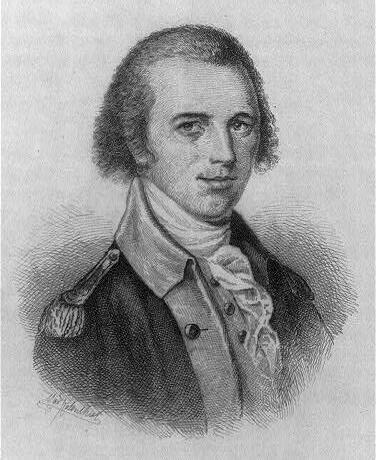
Here you will find contact information for Representative Uriah Forrest, including email address, phone number, and mailing address.
| Name | Uriah Forrest |
| Position | Representative |
| State | Maryland |
| District | 3 |
| Party | Unknown |
| Status | Former Representative |
| Term Start | December 2, 1793 |
| Term End | March 3, 1795 |
| Terms Served | 1 |
| Gender | Male |
| Bioguide ID | F000282 |
About Representative Uriah Forrest
Uriah Forrest (1756 – July 6, 1805) was an American statesman, military officer, and Federalist politician from Maryland whose career spanned the Revolutionary War, the early national period, and the founding of Washington, D.C. He was born in 1756 in St. Mary’s County in the Province of Maryland, near Leonardtown, into a family of four brothers and was a direct descendant of an ancestor who had arrived at Jamestown, Virginia, in 1608. In his early childhood he received only limited formal schooling, but his family connections and early experience in provincial Maryland society prepared him for later roles in military, commercial, and political life.
Forrest’s public career began in the Revolutionary War, in which he served in a succession of posts in the Maryland Line. On January 14, 1776, he was commissioned a first lieutenant in John Gunby’s Independent Maryland Company, serving until July 1776. He then became a captain in the 3rd Battalion of the Maryland Flying Camp, defending St. George’s Island in St. Mary’s County in July 1776, among other duties. In December 1776 he was promoted to major and transferred to the 3rd Maryland Regiment, a change of assignment that kept him from fighting at the Battle of Brooklyn, where the 1st Maryland Regiment under William Smallwood distinguished itself. By April 1777 Forrest had been promoted to lieutenant colonel and was serving in “Smallwood’s Battalion,” in which capacity he saw action at major engagements, including the Battle of Brandywine. He was severely wounded at the Battle of Germantown, where he lost a limb. In August 1779 he left Smallwood’s command and continued as a lieutenant colonel in the 7th Maryland Regiment until his resignation on February 23, 1781. He also held the post of Auditor General in the Continental Army, resigning that office on February 19, 1781.
During the later years of the war and its immediate aftermath, Forrest combined public service with commercial pursuits. In 1780 the Maryland General Assembly passed a bill authorizing confiscation of Loyalist property, and Forrest was appointed one of three commissioners—along with William Paca and Clement Hollyday—to administer the seizure and sale of such estates. He qualified for this position in February 1781 and resigned by July of that year. After the war he traveled to London from St. Mary’s County, acting as the resident partner of the tobacco export firm Forrest, Stoddert & Murdock, which he had established with Benjamin Stoddert and John Murdock in Georgetown; he returned to Maryland in 1783 to organize the business and then went back to London, remaining abroad until 1786. In 1784 he was admitted as an original member of the Society of the Cincinnati of Maryland, expressing in a letter his deep attachment to his former comrades in arms despite being “separated by an Ocean of 3000 Miles, and a slave to Business.”
Forrest’s political career in Maryland developed rapidly in the 1780s and 1790s. He was elected to the Maryland House of Delegates for multiple terms, serving from 1781 to 1783, again from 1786 to 1787, and then from 1787 to 1790, representing first St. Mary’s County and later Montgomery County. He also served as churchwarden of St. Andrew’s Parish in St. Mary’s County from 1782 to 1783 and as a justice in Montgomery County in 1799–1800. In 1787 he represented Maryland as a delegate to the Continental Congress, placing him among the national political figures of the Confederation period. Thomas Jefferson, writing to him from Paris on December 31 of that year, praised the framers of the new Constitution while warning that they might be sowing “seeds of danger” by assuming that future rulers would be as honest as themselves. Forrest was nominated for the United States Senate in 1788 as a Federalist but lost to Charles Carroll of Carrollton on the second and third ballots. He later served in the Maryland State Senate from 1796 to 1800, representing the Western Shore, and held a state judicial post as a state court judge from 1799 to 1800.
Forrest’s national prominence was further enhanced by his role in the creation of the federal capital. On October 13, 1790, he was one of the “original proprietors” who agreed to sell land they owned in the vicinity of Georgetown for the establishment of the Federal City, later Washington, D.C., on terms to be determined by President George Washington. A major landholder in the area, Forrest participated in speculative purchases and sales of property that would eventually be transferred to the federal government, including, in 1792, land that became part of the National Mall, which he and James Williams bought from the State of Maryland and then sold to the United States. In 1791 he served as mayor of the Town of George (now Georgetown) when Washington met with local landowners at Forrest’s home on March 29 to negotiate the cession of land within the newly designated ten-mile-square federal district. Forrest was instrumental in the incorporation of the Georgetown Bridge Company, the Bank of Columbia, and the Georgetown Mutual Insurance Company, and he remained a friend and host to George Washington while also entertaining other leading figures, including Thomas Jefferson, whom he hosted for dinner in 1790 during Jefferson’s visit to the Little Falls of the Potomac River.
Forrest’s service in the United States Congress occurred during a formative period in American national politics. In 1792 he ran for the U.S. House of Representatives from Maryland’s Third District as a “Pro-Administration” Federalist candidate and defeated the Anti-Federalist William Dorsey by 669 votes, drawing most of his support from Montgomery County and additional votes from Frederick County. He served as a Representative from Maryland in the United States Congress from March 4, 1793, to November 8, 1794, completing one term in the House of Representatives. A member of what was then known as the Pro-Administration, or Federalist, Party (described in some later accounts as of “Unknown Party”), Forrest contributed to the legislative process during his single term in office, participating in the early development of federal policy and representing the interests of his Maryland constituents during a significant period in American history. His tenure coincided with the consolidation of the new federal government under the Constitution, and he took part in the democratic process as the House addressed issues of finance, foreign policy, and the organization of the federal administration. During his time in Congress, however, he missed approximately 79.6 percent of roll-call votes, a rate much higher than the contemporary median of 13.0 percent among representatives serving in June 1794, and he resigned his seat in November 1794.
In addition to his legislative service, Forrest continued to hold military and political responsibilities in the 1790s. In 1795 he was commissioned brigadier general of the Fourth Brigade of the Maryland Militia and later that same year major general of the First Division of the Maryland Militia, a post he held until 1801. His influence in Federalist politics remained substantial; in December 1797 he wrote to Secretary of War James McHenry describing his successful efforts to secure the election of James Lloyd to the U.S. Senate to fill the vacancy created by John Henry’s resignation. Forrest’s personal and business life was closely tied to Georgetown and the emerging capital. By 1790 he and his family were living next to his friend and business partner Benjamin Stoddert in Georgetown. On October 11, 1789, at the age of about 33, he had married Rebecca Plater of Sotterley Plantation, a member of a prominent Maryland political family, and together they had seven children. In 1794 he built “Rosedale,” a large frame house in what is now the Northwest quadrant of Washington, D.C., near the new capital. Resembling the architectural style of Mount Vernon and surrounded by stone buildings dating from the 1740s, Rosedale became a country retreat for his wife and children from the bustle of the Georgetown port and a center for political discussion and social entertaining; among the notable events there was a large dinner party for President John Adams in 1800.
Forrest’s later years combined continued public service with financial difficulty. In 1796 he mortgaged Rosedale to obtain loans from the State of Maryland intended to stimulate the District’s economy, but by 1802 these obligations contributed to his bankruptcy. His brother-in-law Philip Barton Key accepted the mortgage and then granted Forrest lifetime use of the property. From 1800 until his death he served as clerk of the Circuit Court of the District of Columbia. He owned enslaved people throughout his adult life, holding five enslaved individuals in 1790 and nine by 1801, and in 1800 he received a bounty land warrant for his Revolutionary War service, although he never occupied the land, which remained vacant. Forrest died on July 6, 1805, in the parlor of the Rosedale farmhouse in Washington, D.C., and was buried in the Presbyterian Burying Ground in Washington; his remains were later reinterred at Oak Hill Cemetery. At the time of his death he owned approximately 1,680 acres in Allegany, St. Mary’s, and Montgomery counties and in the District of Columbia, along with about 150 lots in the District, but his estate was heavily encumbered by debt and nearly lost to litigation before being retained in the family.
After Forrest’s death, his widow Rebecca Forrest remained at Rosedale until her own death there on September 5, 1843. In September 1838 she applied for and received a federal widow’s pension of $600 per year based on her husband’s Revolutionary War service, including his participation in the Battle of Brandywine. The documentation generated by this claim later formed the “Rebecca Forrest (the widow of Uriah Forrest) Papers, 1838–1843,” held by the Historical Society of Washington, D.C. The Forrest family home in Georgetown that he had occupied from about 1790 to 1794 later became the residence of William Marbury, central figure in the Supreme Court case Marbury v. Madison, and in December 1992 that property became the Embassy of Ukraine in Washington, D.C. Rosedale itself passed through the family, and his granddaughter Alice Green, who lived there, married Don Ángel María de Iturbide y Huarte, an exiled prince of the Mexican imperial line and student at Georgetown University; their son, Don Agustín, Prince of Iturbide, heir of Emperor Maximilian I of Mexico and prince of the First and Second Mexican Empires, was thus Forrest’s great-grandson. The Rosedale estate ultimately became the Rosedale Conservancy. In the late twentieth and early twenty-first centuries, advocates of District of Columbia voting rights have cited Forrest’s service as a Maryland Representative while residing within what is now Washington, D.C., as an early example of congressional representation for residents of the federal district, underscoring his enduring connection to both Maryland and the nation’s capital.