Senator Vera Cahalan Bushfield
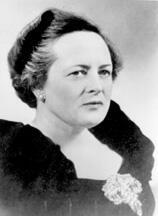
Here you will find contact information for Senator Vera Cahalan Bushfield, including email address, phone number, and mailing address.
| Name | Vera Cahalan Bushfield |
| Position | Senator |
| State | South Dakota |
| Party | Republican |
| Status | Former Representative |
| Term Start | October 6, 1948 |
| Term End | December 26, 1948 |
| Terms Served | 1 |
| Born | August 9, 1889 |
| Gender | Female |
| Bioguide ID | B001169 |
About Senator Vera Cahalan Bushfield
Vera Sarah Bushfield (née Cahalan; August 9, 1889 – April 16, 1976) was an American politician who served as a United States senator from South Dakota in 1948 and as First Lady of South Dakota from 1939 to 1943. A member of the Republican Party, she was appointed to the Senate to fill the vacancy caused by the death of her husband, Senator Harlan J. Bushfield, and served one term in office during a significant period in American history. Her appointment also marked the first time one state had been represented by two female senators, as Gladys Pyle had previously served from South Dakota for two months in late 1938 and early 1939.
Vera Sarah Cahalan was born in Miller, South Dakota, on August 9, 1889, the daughter of Maurice Francis Cahalan and Mary Ellen (Conners) Cahalan. She attended the public schools of Miller and pursued further education at several institutions in the Upper Midwest. In 1912 she graduated from the Stout Institute in Menomonie, Wisconsin, with a degree in domestic science, reflecting contemporary educational opportunities for women in applied and household sciences. In addition to her studies at Stout, she attended Dakota Wesleyan University in Mitchell, South Dakota, and the University of Minnesota, broadening her academic background beyond her primary field.
On April 15, 1912, shortly after completing her studies, Vera Cahalan married Harlan J. Bushfield, a fellow resident of Miller. The couple made their home in Miller and became prominent in the civic and political life of South Dakota. They were the parents of three children: Mary, John, and Harlan Jr. As Harlan Bushfield advanced in his legal and political career, Vera Bushfield’s role expanded from that of a community figure to that of a political spouse active in Republican Party circles.
Harlan J. Bushfield, an attorney and Republican Party official, was elected Governor of South Dakota and served from 1939 to 1943. During his governorship, Vera Bushfield served as First Lady of South Dakota, a role in which she undertook public and ceremonial duties on behalf of the state. Among her notable activities in this period was serving as the official sponsor of the battleship USS South Dakota (BB-57), a World War II vessel launched at Camden, New Jersey, on June 7, 1941. After his gubernatorial service, Harlan Bushfield was elected to the United States Senate and began his term in 1943, continuing the family’s involvement in national politics.
By 1948, Senator Harlan Bushfield was in ill health and was not a candidate for reelection. He died in September 1948, creating a vacancy in the Senate seat from South Dakota. The contest to succeed him in the regular election that year was between Republican Karl E. Mundt and Democrat John A. Engel. On October 6, 1948, Governor George T. Mickelson appointed Vera Bushfield to the United States Senate to temporarily fill the vacancy caused by her husband’s death, with the understanding that she would resign before the end of the term. Her service, though brief and confined to the closing months of 1948, placed her among the early women to serve in the Senate and contributed to the evolving role of women in national legislative life.
During her tenure in the Senate, the body was not in session, so Vera Bushfield did not regularly travel to Washington, D.C., to participate in floor debates or votes. Instead, she chose to remain in Pierre, South Dakota, where she maintained a small staff and focused on constituent services, representing the interests of South Dakotans and participating in the democratic process through casework and correspondence. In the November 1948 election, Karl E. Mundt won the race to succeed her late husband. In accordance with the prior understanding, Vera Bushfield resigned her Senate seat on December 26, 1948. Her resignation enabled Governor Mickelson to appoint Mundt to the vacancy, giving him a few days of seniority over other senators elected in 1948, whose regular terms began in January 1949.
After leaving the Senate, Bushfield maintained an active interest in politics and public affairs. In the 1952 presidential election cycle, she publicly endorsed Senator Robert A. Taft of Ohio for the Republican presidential nomination, aligning herself with the conservative, Midwestern wing of the party. Taft ultimately lost the nomination to General Dwight D. Eisenhower, who went on to win the presidency. Bushfield’s continued engagement in national political debates underscored her long-standing connection to Republican politics and her willingness to speak out on questions of party leadership and direction.
Vera Bushfield also remained connected to the Senate as a former member. In 1961, she exercised the floor privileges accorded to former senators to address the United States Senate on the 100th anniversary of the creation of Dakota Territory. During a commemorative session, Senator James Eastland delivered remarks praising the career of Harlan J. Bushfield and then yielded the floor to Senator Francis H. Case of South Dakota, who introduced Vera Bushfield so that she could deliver her own remarks marking the centennial. This appearance symbolized both her personal link to South Dakota’s political history and her status as one of the state’s pioneering women in federal office.
Vera Sarah Bushfield died in Fort Collins, Colorado, on April 16, 1976. She was interred at the G.A.R. Cemetery in her hometown of Miller, South Dakota. Her life and brief congressional service, together with her years as First Lady of South Dakota and her ongoing political involvement, placed her among the early generation of women who helped shape the presence of women in the United States Senate and in American public life.