Representative Victor Luitpold Berger
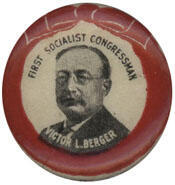
Here you will find contact information for Representative Victor Luitpold Berger, including email address, phone number, and mailing address.
| Name | Victor Luitpold Berger |
| Position | Representative |
| State | Wisconsin |
| District | 5 |
| Party | Socialist |
| Status | Former Representative |
| Term Start | April 4, 1911 |
| Term End | March 3, 1929 |
| Terms Served | 5 |
| Born | February 28, 1860 |
| Gender | Male |
| Bioguide ID | B000407 |
About Representative Victor Luitpold Berger
Victor Luitpold Berger served as a Representative from Wisconsin in the United States Congress from 1911 to 1929. A member of the Socialist Party, Victor Luitpold Berger contributed to the legislative process during 5 terms in office.
Victor Luitpold Berger’s service in Congress occurred during a significant period in American history. As a member of the House of Representatives, Victor Luitpold Berger participated in the democratic process and represented the interests of constituents.
Victor Luitpold Berger (February 28, 1860 – August 7, 1929) was an Austrian-American socialist politician and journalist who was a founding member of the Social Democratic Party of America and its successor, the Socialist Party of America. Born in the Austrian Empire (present-day Romania), Berger immigrated to the United States as a young man and became an important and influential socialist journalist in Wisconsin. He helped establish the so-called Sewer Socialist movement, and also sparked the American Socialist Party’s nativist turn. In 1910, he was elected as the first Socialist to the U.S. House of Representatives, representing a district in Milwaukee, Wisconsin. In 1919, Berger was convicted of violating the Espionage Act of 1917 for publicizing his anti-interventionist views and was denied the seat to which he had been reelected in the House of Representatives. The criminal verdict was eventually overturned by the Supreme Court in 1921 in Berger v. United States. Berger was subsequently elected to three successive terms in the 1920s, for which he was seated.