Representative Vic Fazio
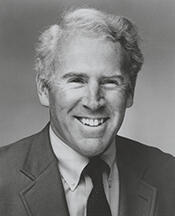
Here you will find contact information for Representative Vic Fazio, including email address, phone number, and mailing address.
| Name | Vic Fazio |
| Position | Representative |
| State | California |
| District | 3 |
| Party | Democratic |
| Status | Former Representative |
| Term Start | January 15, 1979 |
| Term End | January 3, 1999 |
| Terms Served | 10 |
| Born | October 11, 1942 |
| Gender | Male |
| Bioguide ID | F000053 |
About Representative Vic Fazio
Victor Herbert Fazio Jr. (October 11, 1942 – March 16, 2022) was an American politician who served as a member of the United States House of Representatives for California from 1979 to 1999. A member of the Democratic Party, he represented California’s 4th congressional district from January 3, 1979, to January 3, 1993, and, following redistricting, California’s 3rd congressional district from January 3, 1993, to January 3, 1999. Over 10 consecutive terms in office, he contributed to the legislative process during a significant period in American history, participating in the democratic process and representing the interests of his constituents.
Fazio was born in Winchester, Massachusetts, the son of Betty Virginia (Freeman) and V. Herbert Fazio. He was of Italian and New England Yankee descent. He grew up on the East Coast and graduated from Madison High School in Madison, New Jersey, in 1960. The following year, in 1961, he attended Williston Academy in Easthampton, Massachusetts. He went on to earn a Bachelor of Arts degree from Union College in Schenectady, New York, in 1965. From 1969 to 1972, he pursued graduate work at California State University, Sacramento, reflecting an early and growing connection to California. Between 1965 and 1966 he was a Coro Foundation Fellow in Los Angeles, an experience that introduced him to public affairs and political life in the state where he would later build his career.
Before entering elective office, Fazio worked extensively in politics and public policy. From 1966 to 1975 he was a congressional and legislative consultant, gaining experience in the workings of both state and federal government. In 1970 he co-founded California Journal magazine, a respected publication that analyzed state politics and legislative developments. He served on the Sacramento County Charter Commission from 1972 to 1974 and on the Sacramento County Planning Commission in 1975, roles that deepened his involvement in local governance and land-use policy. His growing prominence in Democratic politics was reflected in his selection as a delegate to California state Democratic conventions in 1976 and 1978, and later as a delegate to the Democratic National Conventions of 1976, 1980, 1984, 1988, 1992, and 1996.
Fazio’s first elected office was in the California State Assembly, where he served from 1975 to 1978. In that capacity he represented a Sacramento-area district and developed a reputation as a knowledgeable legislator on state issues. Building on his state-level experience, he ran for Congress and was elected as a Democrat to the 96th Congress and to the nine succeeding Congresses, serving from January 3, 1979, to January 3, 1999. During his tenure in the House of Representatives, he served through changing political eras, from the late Cold War through the end of the 20th century, and participated in debates over budget policy, infrastructure, environmental protection, and the internal operations of Congress. His service in Congress occurred during a significant period in American history, and he was regarded as an influential member of his party’s caucus.
As a congressman, Fazio was particularly noted for his work on environmental and conservation issues in his region. He lobbied to set aside an area as a wildlife refuge below the Interstate 80 overpass between Davis and Sacramento, in Yolo County, California. His efforts led to the establishment of the Vic Fazio Yolo Wildlife Area, a large seasonal wetlands complex in the Yolo Bypass, which was dedicated in 1997 by President Bill Clinton. The refuge provides valuable winter habitat for waterfowl and shorebirds, serves as a Pacific Flyway stopover for migratory birds during fall and spring migrations, and is accessible to the public via an auto tour route. Fazio’s electoral fortunes shifted after the 1990s round of redistricting, which made his district more rural and more Republican. After winning his first seven terms without serious difficulty, he secured only 51 percent of the vote in 1992 against former state senator H. L. Richardson. In 1994 he was nearly defeated, winning by only three percentage points, though he was reelected by a somewhat larger margin of 54 percent in 1996. In November 1997 he announced that he would not run for reelection in 1998, concluding his House service at the end of the 105th Congress.
Following his departure from Congress in January 1999, Fazio remained active in public affairs and policy. He worked as a senior advisor in the Washington, D.C., office of the law and lobbying firm Akin Gump Strauss Hauer & Feld, advising clients on legislative and regulatory matters. He served on the board of Northrop Grumman, reflecting his continued engagement with national security and industrial policy issues. Fazio was co-chair of the Information Technology and Innovation Foundation, a public policy think tank focused on innovation and competitiveness. He also sat on the Council on American Politics at George Washington University’s Graduate School of Political Management, which brings together leaders from across the nation to address issues related to the growth and enrichment of the school. In addition, he served on the board of directors of the Committee for a Responsible Federal Budget, contributing to bipartisan efforts to address federal fiscal policy. After leaving office, he became involved in political reform efforts, including joining nine other former members of Congress to co-author a 2021 opinion editorial advocating reforms of Congress, and he was a member of the ReFormers Caucus of Issue One, a group dedicated to strengthening democratic institutions.
Fazio’s personal life included three marriages and a close-knit family. His first marriage, to Joella Mason, ended in divorce; they had two daughters, Dana and Anne. In 1983 he married Judy Kern (formerly Judith G. Neidhardt), with whom he remained until her death in 2015 at age 71. Through this marriage he had two stepchildren, Kevin and Kristie. His daughter Anne died in 1995 from complications of leukemia, a loss that deeply affected him. In 2017 he married Kathy Sawyer, a retired journalist. Outside of his formal roles, Fazio maintained ties to academic and archival institutions, including the preservation of his congressional papers in the Special Collections Department of the University Library at the University of California, Davis, and he appeared frequently in public forums and on C‑SPAN to discuss legislative and political issues.
Victor Herbert Fazio Jr. died of melanoma at his home in Arlington County, Virginia, on March 16, 2022, at the age of 79. His long career in state and national politics, his 20 years of service in the U.S. House of Representatives, and his subsequent work in policy, advocacy, and political reform left a lasting imprint on California and on the broader national political landscape.