Representative Victor Murdock
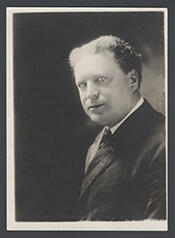
Here you will find contact information for Representative Victor Murdock, including email address, phone number, and mailing address.
| Name | Victor Murdock |
| Position | Representative |
| State | Kansas |
| District | 8 |
| Party | Republican |
| Status | Former Representative |
| Term Start | November 9, 1903 |
| Term End | March 3, 1915 |
| Terms Served | 6 |
| Born | March 18, 1871 |
| Gender | Male |
| Bioguide ID | M001083 |
About Representative Victor Murdock
Victor Murdock (March 18, 1871 – July 8, 1945) was an American politician, newspaper editor, and war correspondent who served as a U.S. Representative from Kansas from 1903 to 1915. Initially a member of the Republican Party, he later became a prominent figure in the national Progressive movement and held leadership roles within the Progressive Party while maintaining a long association with journalism in Kansas.
Murdock was born on March 18, 1871, in Burlingame, Osage County, Kansas, the son of Marshall Murdock, editor of the Osage County Chronicle, and Victoria Mayberry Murdock. In 1872, his family moved to Wichita, Kansas, where his father became a leading newspaperman and where Victor received his common school education. Growing up in a newspaper family, he learned the printing trade at an early age and entered journalism as a teenager. By the age of 15 he was working as a reporter, beginning a professional association with the press that would continue throughout his life.
In 1890, Murdock married Mary Pearl Allen. Around this time he spent a period in Chicago, where he worked on the Chicago Inter Ocean, gaining experience in a larger metropolitan press environment. He also undertook notable reporting assignments, including coverage of William McKinley’s 1892 campaign for governor of Ohio, giving him early exposure to national politics. Returning to Kansas, Murdock became managing editor of The Wichita Eagle, serving in that capacity from 1894 to 1903. His work at the Eagle helped establish him as a prominent figure in Wichita’s civic and political life and positioned him to move from journalism into elective office.
Murdock’s congressional career began while he was covering the Kansas Legislature in 1903. That year a vacancy arose in the United States House of Representatives when Representative Chester I. Long resigned to take a seat in the United States Senate. Murdock decided to run for the open seat and was elected as a Republican to the Fifty-eighth Congress, taking office on November 9, 1903. He served continuously in the House of Representatives through six terms, remaining in office until March 3, 1915. During this period, he represented Kansas during a significant era in American history marked by the Progressive Era reforms, and he participated in the legislative process on behalf of his constituents as a member of the House.
During the 1912 United States presidential election, Murdock broke with the Republican Party to support former President Theodore Roosevelt and joined the newly formed Progressive Party. Reflecting his prominence within the movement, he was chosen by the Progressive Party as its candidate for Speaker of the House in 1912. Although the party did not secure control of the chamber, his selection underscored his national standing among Progressives. He continued to serve in Congress as a Progressive until the end of his term in 1915, maintaining his reputation as a reform-oriented legislator.
After leaving Congress, Murdock remained active in national Progressive politics. He was elected chairman of the Progressive Party in 1914 and again in 1916, playing a central role in efforts to sustain the party as a national force. In 1916, when Theodore Roosevelt declined the Progressive Party’s presidential nomination, the party instead nominated Murdock as its candidate. Despite this symbolic endorsement, his name ultimately did not appear on the general election ballot, reflecting the party’s rapid decline as a viable third-party organization.
Murdock continued to combine public service and journalism in the years that followed. In 1916 he worked as a war correspondent, reporting on developments during World War I. In 1917, President Woodrow Wilson appointed him to the newly created Federal Trade Commission, an agency central to Progressive Era regulatory reforms. Murdock served as a commissioner of the Federal Trade Commission from 1917 until his resignation in 1924. After leaving the commission, he returned to Wichita and resumed his association with The Wichita Eagle, becoming its editor. He held that position for the remainder of his life, exerting considerable influence on public opinion in Kansas through his editorial work.
Victor Murdock died in Wichita, Kansas, on July 8, 1945. His career spanned local and national journalism, six terms in the United States House of Representatives from 1903 to 1915, leadership in the Progressive Party, and service on the Federal Trade Commission, marking him as a significant figure in both Kansas and national Progressive Era politics.