Representative Victor Eugene Wickersham
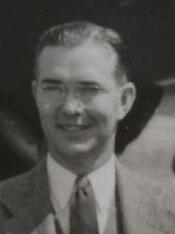
Here you will find contact information for Representative Victor Eugene Wickersham, including email address, phone number, and mailing address.
| Name | Victor Eugene Wickersham |
| Position | Representative |
| State | Oklahoma |
| District | 6 |
| Party | Democratic |
| Status | Former Representative |
| Term Start | January 3, 1941 |
| Term End | January 3, 1965 |
| Terms Served | 9 |
| Born | February 9, 1906 |
| Gender | Male |
| Bioguide ID | W000439 |
About Representative Victor Eugene Wickersham
Victor Eugene Wickersham (February 9, 1906 – March 15, 1988) was an American politician and a U.S. Representative from Oklahoma who served nine terms in the United States Congress between 1941 and 1965. A member of the Democratic Party, he participated in the legislative process during a significant period in American history, representing the interests of his Oklahoma constituents through World War II, the early Cold War, and the civil rights era.
Wickersham was born on a farm near Lone Rock, Arkansas, the son of Frank Morrell Wickersham and Lillie Mae Sword Wickersham. In 1915, when he was a child, his family moved to Mangum, Greer County, Oklahoma. He was educated in the public schools of Oklahoma, an upbringing that grounded him in the rural and small-town life of the state he would later represent in Congress.
Wickersham began his public service career at the local level. From 1924 to 1926 he was employed in the office of the county clerk of Greer County, Oklahoma. He was appointed court clerk of Greer County in 1926, a position he held until 1935. On June 30, 1929, he married Jessie Blaine Stiles of Mangum; in his capacity as county clerk, he issued his own marriage license. The couple had four children: LaMelba, Nelda, Galen, and Victor Wickersham II. After his tenure as court clerk, Wickersham served as chief clerk of the board of affairs of the State of Oklahoma in 1935 and 1936. He then entered private business, working as a building contractor in Oklahoma City in 1937 and 1938, and entering the life insurance business from 1938 to 1941. Over time he also worked as a real estate, insurance, and investment broker, combining business experience with his growing involvement in public affairs.
Wickersham’s national political career began with his election as a Democrat to the Seventy-seventh Congress to fill the vacancy caused by the death of Representative Sam C. Massingale. He took office on April 1, 1941, and was reelected to the Seventy-eighth and Seventy-ninth Congresses, serving continuously until January 3, 1947. During this initial period in the U.S. House of Representatives, he contributed to the legislative process as the nation mobilized for and fought in World War II and then transitioned into the postwar era. He was an unsuccessful candidate for renomination in 1946, temporarily interrupting his congressional service.
Returning to national office, Wickersham was elected again to the U.S. House of Representatives as a Democrat to the Eighty-first Congress and was reelected to the Eighty-second, Eighty-third, and Eighty-fourth Congresses, serving from January 3, 1949, to January 3, 1957. He was not renominated in 1956 and again failed to secure renomination in 1958, but he remained a significant figure in Oklahoma Democratic politics. He later won election to the Eighty-seventh and Eighty-eighth Congresses, serving from January 3, 1961, to January 3, 1965. Over the course of these nonconsecutive terms, Wickersham served a total of nine terms in the House of Representatives, from 1941 to 1965, during which he participated in debates over domestic policy, economic development, and civil rights. His voting record on civil rights reflected the complex politics of his region and era: he did not sign the 1956 Southern Manifesto, he voted in favor of the Twenty-Fourth Amendment to the Constitution in 1962, which abolished the poll tax in federal elections, but he voted against the Civil Rights Act of 1964. He was an unsuccessful candidate for renomination in 1964 to the Eighty-ninth Congress, ending his service in the U.S. House.
After leaving Congress, Wickersham continued his public service at the state level. He was elected to the Oklahoma House of Representatives, where he served from January 3, 1971, to January 3, 1979. Following a brief interval out of office, he returned to the Oklahoma House on February 9, 1988, and served there until his death later that year. By 1988 he was recognized as the oldest state legislator in office, serving at the age of 82, underscoring his long-standing commitment to public life and to the state of Oklahoma.
In his personal life, Wickersham experienced both long companionship and late-life change. His wife of many decades, Jessie Blaine Stiles Wickersham, died in 1984. Two years later, in 1986, he married Lorene Dennis. Victor Eugene Wickersham died in Oklahoma City, Oklahoma County, Oklahoma, on March 15, 1988, at the age of 82 years and 35 days. He was interred at Riverside Cemetery in Mangum, Oklahoma, the community where he had grown up and first entered public service.