Representative Vincent Mathews
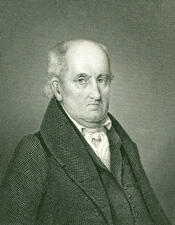
Here you will find contact information for Representative Vincent Mathews, including email address, phone number, and mailing address.
| Name | Vincent Mathews |
| Position | Representative |
| State | New York |
| District | 14 |
| Party | Federalist |
| Status | Former Representative |
| Term Start | May 22, 1809 |
| Term End | March 3, 1811 |
| Terms Served | 1 |
| Born | June 29, 1766 |
| Gender | Male |
| Bioguide ID | M000239 |
About Representative Vincent Mathews
Vincent Mathews (June 29, 1766 – August 23, 1846) was a United States Representative from New York and a prominent Federalist lawyer and legislator in the early republic. He was born at “Matthew’s Field” in Blooming Grove, Orange County, New York, in a village founded by his grandfather, also named Vincent Mathews. His family was deeply entangled in the political conflicts of the American Revolutionary era. Two of his uncles, David Mathews, the Loyalist mayor of New York City, and David’s brother Fletcher, supported the British cause. His father, James Mathews, was arrested along with David and Fletcher in connection with the so‑called Hickey Plot, a suspected attempt to kidnap General George Washington, an episode that underscored the divided loyalties within the extended Mathews family.
Mathews received a substantial early education for his time. He pursued an academic course at Noah Webster’s school in Goshen, New York, an institution associated with the noted lexicographer and educator, and continued his studies at an academy in Hackensack, New Jersey. He then turned to the law, studying in New York City, where he completed the traditional legal apprenticeship. In 1790 he was admitted to the bar and commenced the practice of law in Elmira, New York, then part of the state’s developing western frontier. His legal training and early practice established the foundation for a long career in public service and politics.
Mathews entered public life in the 1790s as New York expanded westward and its political institutions took shape. He was elected to the New York State Assembly from Tioga County, serving in 1794 and 1795. He subsequently served in the New York State Senate from the Western District from 1796 to 1803, sitting in the 20th through the 26th New York State Legislatures. During this period he participated in the legislative work of a rapidly growing state, dealing with issues such as land policy, internal improvements, and the organization of new counties and towns. In 1798 he was appointed bounty land claims commissioner, a position that involved adjudicating claims related to land granted for military service, reflecting the ongoing effort to settle veterans’ entitlements from the Revolutionary War.
In addition to his legislative duties, Mathews held military responsibilities in the state militia. He served as a cavalry commander and attained the rank of brigadier general in the New York militia, a role that placed him within the state’s system of citizen-soldiers responsible for local defense and order. His combined experience in law, legislation, and militia service positioned him as a leading Federalist figure in western New York at the turn of the nineteenth century.
Mathews was elected as a member of the Federalist Party to the 11th United States Congress, representing New York in the House of Representatives from March 4, 1809, to March 3, 1811. His single term in Congress coincided with a significant period in American history, marked by rising tensions with Great Britain that would culminate in the War of 1812. As a Federalist representative, he contributed to the legislative process and participated in debates over foreign policy, trade restrictions, and national defense, while representing the interests of his New York constituents in the national legislature.
After leaving Congress, Mathews returned to legal and prosecutorial work. He served as district attorney for the seventh district of New York from 1813 to 1815, a period that overlapped with the War of 1812 and required attention to issues of security, loyalty, and criminal justice in a border state. Following this service, he moved to Bath, New York, and in 1821 relocated to the growing city of Rochester, reflecting the broader westward and upstate migration within New York as canals, commerce, and settlement expanded.
Mathews remained active in state and local affairs during his later career. He was again elected to the New York State Assembly, this time representing Monroe County in 1826, returning to the legislative body where he had first served more than three decades earlier. In 1831 he was appointed district attorney of Monroe County, continuing his long association with public legal service. Alongside these official roles, he resumed and maintained a private law practice in Rochester, where he became part of the city’s early professional and civic leadership as it emerged as a major urban center in western New York.
Vincent Mathews died in Rochester, New York, on August 23, 1846. He was interred in Mount Hope Cemetery, one of the city’s principal burial grounds. His life and career spanned the transition from the Revolutionary era to the mid-nineteenth century, encompassing service in local, state, and national offices, and reflecting the development of New York’s political and legal institutions in the early United States.