Representative Virginia Ellis Jenckes
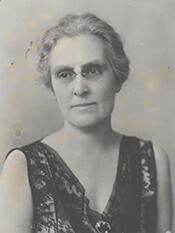
Here you will find contact information for Representative Virginia Ellis Jenckes, including email address, phone number, and mailing address.
| Name | Virginia Ellis Jenckes |
| Position | Representative |
| State | Indiana |
| District | 6 |
| Party | Democratic |
| Status | Former Representative |
| Term Start | March 9, 1933 |
| Term End | January 3, 1939 |
| Terms Served | 3 |
| Born | November 6, 1877 |
| Gender | Female |
| Bioguide ID | J000077 |
About Representative Virginia Ellis Jenckes
Virginia Ellis Jenckes served as a Representative from Indiana in the United States Congress from 1933 to 1939. A member of the Democratic Party, Virginia Ellis Jenckes contributed to the legislative process during 3 terms in office.
Virginia Ellis Jenckes’s service in Congress occurred during a significant period in American history. As a member of the House of Representatives, Virginia Ellis Jenckes participated in the democratic process and represented the interests of constituents.
Virginia Jenckes (née Ellis; November 6, 1877 – January 9, 1975) served three terms as a U.S. Representative (March 4, 1933 – January 3, 1939) from Indiana’s Sixth Congressional District. The Terre Haute, Indiana, native was the first woman from Indiana to be elected to the U.S. House of Representatives. Alongside Kathryn O’Loughlin McCarthy, she was the second woman Representative from the Midwest and the first who was not succeeding a male relative. In 1937 she became the first American woman appointed as a U.S. delegate to the Inter-Parliamentary Union in Paris, France. The outspoken, independent-minded farmer from Vigo County was an advocate for women and became known for her support of flood control measures and repeal of Prohibition, as well as her opposition to communism. Jenckes’s most significant accomplishment for her Indiana constituents was obtaining an $18 million appropriation for the Wabash River basin that eventually became law. While Jenckes broadly supported New Deal initiatives in general and voted with the majority of the Democrats in the U.S. Congress, she did not always follow the Democratic majority. During her later years, Jenckes became especially concerned about thwarting what she believed to be communist propaganda and its perceived threats, despite the public ridicule she received. After retiring from Congress in 1939, Jenckes served as an American Red Cross volunteer for more than twenty years. During the Hungarian uprising of 1956, she gained national attention for her efforts to assist five Catholic priests in their escape to the United States from Hungarian prisons. In 1969 Jenckes returned to Indiana, where she spent the final years of her life.