Representative Virginia Smith
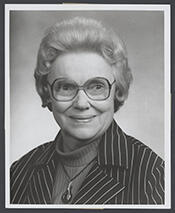
Here you will find contact information for Representative Virginia Smith, including email address, phone number, and mailing address.
| Name | Virginia Smith |
| Position | Representative |
| State | Nebraska |
| District | 3 |
| Party | Republican |
| Status | Former Representative |
| Term Start | January 14, 1975 |
| Term End | January 3, 1991 |
| Terms Served | 8 |
| Born | June 30, 1911 |
| Gender | Female |
| Bioguide ID | S000622 |
About Representative Virginia Smith
Virginia Dodd Smith (June 30, 1911 – January 23, 2006) was a Republican member of the United States House of Representatives who represented Nebraska’s 3rd congressional district from January 3, 1975, to January 3, 1991. Over eight consecutive terms in office, she contributed to the legislative process during a significant period in American history and became the first, and to date only, woman from Nebraska to hold a seat in the U.S. House of Representatives. As a member of the House, she participated actively in the democratic process and represented the interests of her largely rural and agricultural constituency.
Smith was born on June 30, 1911, in Randolph, Cedar County, Nebraska. She grew up in a rural environment that shaped her lifelong interest in agriculture and farm policy. Raised in a farming community, she became familiar at an early age with the economic and social issues facing farm families in the Great Plains. This background informed her later leadership in agricultural organizations and her legislative priorities in Congress.
Smith attended public schools in Nebraska and pursued further education in business and secretarial studies, which prepared her for administrative and organizational work. Her training and early professional experiences gave her skills in management and communication that she later applied in both agricultural advocacy and public office. Although she did not follow a traditional academic path through advanced degrees, her practical education and experience in farm and civic organizations established her reputation as an effective organizer and leader.
Before entering elective office, Smith built a national profile in agricultural and rural affairs. She chaired the American Farm Bureau Women for twenty years, a tenure that placed her at the center of farm policy discussions and grassroots organizing among farm families across the country. In that role she worked to advance the interests of farmers, promote rural development, and encourage civic engagement among women in agriculture. Her leadership in the Farm Bureau movement helped her develop extensive contacts in agricultural circles and provided a platform from which she later launched her political career.
Smith was elected to the U.S. House of Representatives in 1974 as a Republican from Nebraska’s 3rd district, a vast, predominantly rural area encompassing much of western and central Nebraska. Taking office on January 3, 1975, she served eight terms until January 3, 1991. During her sixteen years in Congress, she served through a period marked by debates over federal spending, agricultural policy, defense, and ethics in government. She participated in key legislative deliberations affecting her district, particularly those related to farm programs, rural infrastructure, and federal budget priorities. As a Republican member, she was involved in efforts to restrain congressional pay raises and federal expenditures, and she took part in closely contested committee decisions on major defense initiatives, including funding for strategic weapons systems during the Cold War era.
Throughout her congressional service, Smith was recognized as a diligent representative of her constituents’ interests. She worked to secure support for agricultural producers, rural communities, and small towns in Nebraska, often emphasizing the importance of stable farm income, access to credit, and investment in transportation and public works. Her tenure coincided with significant economic challenges in rural America, including the farm crises of the late 1970s and 1980s, and she used her committee assignments and floor votes to advocate for policies she believed would sustain family farms and rural livelihoods. Her status as the first woman elected to the House from Nebraska also made her a notable figure in the gradual expansion of women’s representation in Congress.
Smith chose not to seek reelection in 1990 and left Congress at the conclusion of her eighth term on January 3, 1991. In retirement, she remained associated with civic and agricultural causes and was frequently cited in reference works such as the Biographical Directory of the United States Congress and Who’s Who in America, reflecting her prominence in public life. She continued to be remembered in Nebraska for her long record of service and for breaking gender barriers in the state’s congressional delegation.
Virginia Dodd Smith died on January 23, 2006. Her career left a lasting imprint on Nebraska politics and on the representation of rural and agricultural interests in the U.S. House of Representatives. As the first and, to date, only woman from Nebraska to serve in the House, her sixteen years in Congress marked a significant chapter in both the state’s political history and the broader history of women in American national government.