Representative Wade Hampton Kitchens
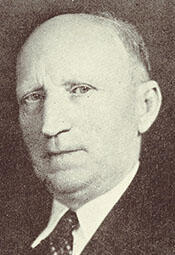
Here you will find contact information for Representative Wade Hampton Kitchens, including email address, phone number, and mailing address.
| Name | Wade Hampton Kitchens |
| Position | Representative |
| State | Arkansas |
| District | 7 |
| Party | Democratic |
| Status | Former Representative |
| Term Start | January 5, 1937 |
| Term End | January 3, 1941 |
| Terms Served | 2 |
| Born | December 26, 1878 |
| Gender | Male |
| Bioguide ID | K000248 |
About Representative Wade Hampton Kitchens
Wade Hampton Kitchens (December 26, 1878 – August 22, 1966) was an Arkansas lawyer, soldier, and Democratic politician who served as a Representative from Arkansas in the United States Congress from 1937 to 1941. Born on a farm near Falcon in Nevada County, Arkansas, he attended the common schools of the area and Southern Academy. Between 1895 and 1898 he studied at the University of Arkansas in Fayetteville, laying the foundation for a career that would combine military service, law, and public office.
Kitchens’s early adulthood was shaped by military service in the Spanish–American War. In 1898 he served as a sergeant in the Arkansas State Guard with the 1st Arkansas Volunteer Infantry. After the war he pursued legal training, graduating from the Cumberland School of Law at Cumberland University in Lebanon, Tennessee, in 1900. That same year he was admitted to the bar. Shortly afterward, he enlisted in the United States Army as a private in Company E of the Twentieth and Second United States Infantry and served in the Philippine–American War from 1900 to 1902. Remaining in the Philippines after his military service, he practiced law in Manila and Lingayen, thus beginning a legal career that would span two continents.
In 1906 Kitchens married Lillie Dempsey. He returned to the United States in 1909 and settled in Magnolia, Columbia County, Arkansas, where he established a law practice and became increasingly active in civic and political affairs. As his involvement in the Democratic Party grew, he served as a delegate to the Democratic state conventions in Little Rock, Arkansas, in 1910 and 1912. During World War I, he again entered military service, enlisting in the United States Army on May 18, 1917. He was commissioned an infantry captain on August 5, 1917, and served overseas before returning to Arkansas in 1918, where he resumed the practice of law in Magnolia.
Kitchens’s formal political career began at the state level. He won election to the Arkansas House of Representatives in November 1928 and took his seat in the 47th Arkansas General Assembly, which, in keeping with the Solid South era, was entirely controlled by the Democratic Party. Representing Columbia County, he served alongside Garland Pearce, who held the county’s other House seat. Kitchens was reelected to the 48th Arkansas General Assembly, this time serving with S. A. Crumpler as Columbia County’s other representative. He served in the Arkansas House of Representatives from 1929 to 1933 and did not seek reelection after his second term, returning to his legal practice while maintaining his standing in state Democratic circles.
Building on his state legislative experience, Kitchens sought federal office and won election as a Democrat to the Seventy-fifth Congress in 1936. He was reelected to the Seventy-sixth Congress, serving in the United States House of Representatives from January 3, 1937, to January 3, 1941. During his two terms in Congress, he participated in the legislative process during a significant period in American history marked by the later years of the New Deal and the mounting international tensions preceding U.S. entry into World War II. As a member of the House of Representatives, Wade Hampton Kitchens represented the interests of his Arkansas constituents and took part in the broader democratic process of national lawmaking. A member of the Democratic Party throughout his career, he contributed to the work of Congress during his two terms in office. In 1940 he was an unsuccessful candidate for renomination, bringing his congressional service to a close at the start of 1941.
After leaving Congress, Kitchens returned to Magnolia, Arkansas, where he resumed the practice of law. He continued to live and work there for the remainder of his life, remaining a figure of local prominence as a veteran of three conflicts, a former state legislator, and a former Member of Congress. Wade Hampton Kitchens died in Magnolia on August 22, 1966. He was interred in Columbia Cemetery near Waldo, Arkansas, closing a life that had encompassed military service, international legal practice, and public office at both the state and national levels.