Senator Waitman Thomas Willey
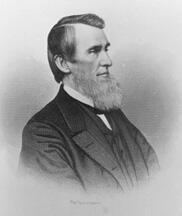
Here you will find contact information for Senator Waitman Thomas Willey, including email address, phone number, and mailing address.
| Name | Waitman Thomas Willey |
| Position | Senator |
| State | West Virginia |
| Party | Republican |
| Status | Former Representative |
| Term Start | July 4, 1861 |
| Term End | March 3, 1871 |
| Terms Served | 3 |
| Born | October 18, 1811 |
| Gender | Male |
| Bioguide ID | W000484 |
About Senator Waitman Thomas Willey
Waitman Thomas Willey (October 18, 1811 – May 2, 1900) was an American lawyer and politician from Morgantown, West Virginia, who played a central role in the creation of the state of West Virginia during the American Civil War. A member of the Republican Party in his later career, he served in the United States Senate from 1861 to 1871, first representing the Restored Government of Virginia and then becoming one of the new state of West Virginia’s first two senators. He is one of only two people in United States history to represent more than one state in the U.S. Senate, the other being James Shields, who represented Illinois, Minnesota, and Missouri.
Willey was born in a log cabin near Buffalo Creek, close to present-day Farmington, Marion County, Virginia (now West Virginia), in 1811. He was raised on Paw Paw Creek in neighboring Monongalia County. His family’s need for his labor on the farm limited his formal schooling to about two months, but he was determined to obtain an education. On Christmas Day 1827, at age seventeen and carrying his belongings wrapped in a handkerchief, he set out on foot from his home to Madison College (later Allegheny College) in Uniontown, Pennsylvania. Supporting himself through hard work and tutoring other students, he completed his studies ahead of schedule and graduated in June 1831, six months earlier than planned. Over the course of his life he maintained close ties with religious and educational circles, and he later received honorary degrees from Allegheny College, Augusta College, and West Virginia University.
After completing his collegiate education, Willey returned to what was then still the Commonwealth of Virginia and moved to Wellsburg, where he read law under the guidance of prominent western Virginia sectional leader Philip Doddridge. Admitted to the Virginia bar in September 1832, he soon relocated to Morgantown, in Monongalia County, to establish a private legal practice. In 1834 he married Elizabeth Ray; the couple had six children: Mary E. Casselberry (d. 1862), Sarah B. Hagans, William P. Willey, Julia E. McGrew, Thomas R. Willey, Louisa A. Willey, and John B. Willey. During these early years he also became active in local civic and church affairs, gaining a reputation as a thoughtful speaker and community leader.
Willey’s political career began in the Whig Party. In 1840 he served as a presidential elector for the William Henry Harrison–John Tyler ticket, although he failed in a bid to be elected a delegate to the Virginia General Assembly. In 1841 the voters of Monongalia County elected him Clerk of the County Court, a position to which he was re-elected several times and in which he served until 1852. He was active in local politics and public life, frequently speaking for literary societies and temperance campaigns. As one of four delegates representing Marion, Preston, Monongalia, and Taylor Counties at the Virginia Constitutional Convention of 1850, Willey argued for universal suffrage for white men and criticized the dominance of eastern Virginia elites in state politics. His address “Liberty and Union” attracted wider attention beyond his home region. In 1852 he ran unsuccessfully as the Whig candidate for Congress, and in 1859 he was the Whig nominee for lieutenant governor of Virginia, again losing. In the 1860 presidential election he supported John Bell and Edward Everett of the Constitutional Union Party, but their defeat and the election of Republican Abraham Lincoln marked the collapse of his old party alignment.
With the secession crisis, Willey emerged as a leading Unionist in northwestern Virginia. In 1861 he was elected a member of the Virginia Secession Convention, representing Monongalia County alongside J. M. Heck and Marshall M. Dent. At Richmond he repeatedly warned fellow delegates of the devastation civil war would bring and voted several times against secession, but the ordinance of secession ultimately passed and Virginia formally left the Union on April 17, 1861. Although personally conservative and a slaveholder, Willey took part in the First Wheeling Convention in May 1861, which laid the groundwork for the Restored Government of Virginia and, ultimately, the creation of West Virginia. He was among those who opposed John S. Carlile’s proposal for immediate statehood, favoring a more deliberate process. Willey did not seek election to the Second Wheeling Convention in June 1861, which formally organized the Restored Government of Virginia, but his stature as a Unionist leader soon led to higher responsibilities.
The Restored Government of Virginia elected Willey to the United States Senate to fill the vacancy created when Senator James M. Mason joined the Confederacy. Taking his seat in 1861, he served in the U.S. Senate through 1871, a decade that spanned the Civil War and the early years of Reconstruction. During this period he was aligned with the Republican Party and contributed to the legislative process over three terms in office. On May 29, 1862, he presented to Congress the petition for the creation of the new state of West Virginia. In the ensuing debates, and influenced in part by an abolitionist address by Reverend Gordon Battelle, Congress insisted on provisions for emancipation as a condition of admission. Willey, who had previously advocated compensated emancipation and himself owned domestic slaves, crafted what became known as the Willey Amendment, providing that slaves under twenty-one years of age would be freed on July 4, 1863, upon reaching the age of twenty-one. This compromise secured passage of the West Virginia statehood bill. When West Virginia was formally admitted to the Union in 1863, Willey became one of its first two U.S. senators, serving alongside Peter G. Van Winkle. Although he drew the shorter initial term of two years under the staggered-term system, he subsequently won and served one full term.
Willey’s senatorial career unfolded amid the turbulence of war. In April 1863 he was targeted in the Confederate Jones–Imboden Raid, which sought to disrupt the Baltimore and Ohio Railroad and capture the Restored Government of Virginia at Wheeling. When Confederate forces moved into Kingwood and Morgantown, they attempted unsuccessfully to destroy a suspension bridge over the Monongahela River; Willey escaped in a fast buggy into Pennsylvania, while the raiders proceeded to Fairmont and destroyed the library of Governor Francis Pierpont. In Washington, Willey supported the Union war effort and later Reconstruction measures. He participated only from the sidelines in West Virginia’s constitutional convention at Wheeling because of his federal duties, but he remained an influential voice in state affairs. In 1868 he voted in the Senate to remove President Andrew Johnson from office in the impeachment trial, though the effort failed by a single vote; his colleague Van Winkle voted for acquittal. After completing his service and choosing not to seek further reelection, Willey retired from Congress in 1871.
Following his departure from the Senate, Willey continued to be active in public and religious life in West Virginia. He served as a delegate to the West Virginia Constitutional Convention of 1872, which revised the state’s fundamental law at a time when Democrats were regaining political power and bringing his formal political career to a close. That same year he was elected to the General Conference of the Methodist Church but declined to serve. He remained engaged in Republican politics, acting as a delegate-at-large to the National Republican Convention in 1876 and later serving as a delegate to the Methodist General Conference of 1880. In 1882 he accepted a temporary appointment as Clerk of the County Court of Monongalia County after the incumbent’s death, and in 1884 voters elected him to a full six-year term, returning him to a position he had first held decades earlier.
In his later years Willey resided in Morgantown, where he had long been a leading member of the bar and a mentor to younger attorneys. Over his lifetime he tutored many men who went on to become judges and prominent members of the West Virginia legal profession. His son William P. Willey became a professor at West Virginia University in Morgantown, further extending the family’s influence in the state’s intellectual and civic life. Willey’s home, built in 1839–1840 on what was then a semi-rural site, became a local landmark. After his death, seventy-eight lots were platted around the property, and the surrounding area developed into the Chancery Hill Addition within the growing industrial city. The Waitman T. Willey House survived these changes; it was listed on the National Register of Historic Places in 1982 and underwent renovation in 2012.
Waitman Thomas Willey died in Morgantown on May 2, 1900, at the age of eighty-eight, having outlived his wife and one of his daughters. He was buried in Oak Grove Cemetery in Morgantown. His long career as lawyer, Unionist leader, and U.S. senator—spanning the antebellum era, the Civil War, and Reconstruction—left a lasting imprint on both the state of West Virginia and the broader history of the United States Congress.