Senator Waldo Porter Johnson
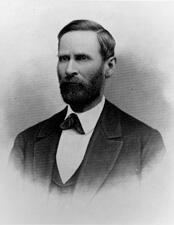
Here you will find contact information for Senator Waldo Porter Johnson, including email address, phone number, and mailing address.
| Name | Waldo Porter Johnson |
| Position | Senator |
| State | Missouri |
| Party | Democratic |
| Status | Former Representative |
| Term Start | July 4, 1861 |
| Term End | March 3, 1863 |
| Terms Served | 1 |
| Born | September 16, 1817 |
| Gender | Male |
| Bioguide ID | J000179 |
About Senator Waldo Porter Johnson
Waldo Porter Johnson (September 16, 1817 – August 14, 1885) was an American lawyer, jurist, and politician who served as a Missouri state representative, a United States Senator from Missouri, a Confederate States Army officer, a Confederate States Senator from Missouri from 1863 to 1865, and later as chairman of the Missouri constitutional convention of 1875. A member of the Democratic Party, he briefly represented Missouri in the United States Senate from 1861 to 1862, when he was expelled for disloyalty to the Union during the Civil War, and subsequently served in the Confederate government.
Johnson was born in Bridgeport, Virginia (in what is now West Virginia), to Olive Waldo (1798–1852) and her cousin and husband, William Johnson (1791–1868), a New York–born settler who became Bridgeport’s postmaster. One of a large family—he had about a dozen siblings—Johnson grew up in a politically active household. His older brother Joseph Johnson, a prominent local farmer and politician, intermittently represented the area in the United States House of Representatives during Waldo’s youth and was elected Governor of Virginia in 1851, after Waldo had moved west to Missouri. Johnson attended local public and private schools and then pursued higher education at Baptist-affiliated Rector College in Pruntytown, Virginia, from which he graduated in 1839.
After completing his collegiate studies, Johnson read law and was admitted to the Virginia bar. He began practicing law in Harrison County, Virginia, in 1841. In 1842 he moved westward to Osceola, in St. Clair County, Missouri, where he continued his legal practice on the developing and often turbulent border region between Missouri and what would become the State of Kansas. During the Mexican–American War, Johnson volunteered for military service and served as a private in the First Missouri Regiment of Mounted Volunteers. Returning to civilian life, he entered Missouri politics and quickly advanced: in 1847 he was elected to the Missouri House of Representatives, in 1848 he was chosen circuit attorney, and in 1851 he was elected judge of the seventh judicial circuit. He resigned his judicial and other government positions in 1852 and resumed private legal practice in Osceola. During the 1850s he also filed several land claims with the General Land Office, reflecting his engagement in the region’s expansion and development.
Missouri voters elected Johnson as a Democrat to the United States Senate in 1860. He took his seat on March 17, 1861, representing Missouri during the opening phase of the secession crisis and the American Civil War. His service in Congress occurred during a significant period in American history, and as a member of the Senate he participated in the legislative process and represented the interests of his Missouri constituents. In early 1861 he served as a member of the Washington, D.C., peace convention, an ultimately unsuccessful effort to devise means to avert the impending conflict between North and South. Johnson’s term in the United States Senate was cut short when, amid the deepening war and questions about the loyalty of border-state senators, he was expelled on January 10, 1862, for disloyalty to the federal government. His tenure in the United States Congress thus extended from March 17, 1861, to his expulsion on January 10, 1862, encompassing one partial term in office.
Following his removal from the United States Senate, Johnson openly aligned with the Confederacy. He had already attained the rank of major in the pro-Confederate Missouri State Guard and volunteered for service in the Confederate Army. He recruited a battalion that fought in the Battle of Pea Ridge near Bentonville, Arkansas, one of the key engagements in the Trans-Mississippi Theater. On April 28, 1862, his command was reorganized at Memphis, Tennessee, as the 4th Missouri Infantry Regiment (Confederate), with Johnson commissioned as lieutenant colonel. In 1863, he transitioned from military to legislative service in the Confederate government when he was appointed a member of the Confederate States Senate from Missouri, filling a vacancy and serving in that capacity until the collapse of the Confederacy in 1865.
In the immediate aftermath of the Confederate surrender, Johnson left the country and resided in Hamilton, Ontario, Canada, from August 1865 to April 1866. After this period of exile, he returned to Osceola, Missouri. Having received a presidential pardon, he resumed his legal practice and reestablished himself in state public life. In 1875 he played a prominent role in Missouri’s postwar political reconstruction as president and chairman of the Missouri constitutional convention, which drafted a new state constitution and marked an important stage in the state’s adjustment to the post–Civil War order.
Johnson married Emily Moore (1822–1884) in Harrison County, Virginia, in 1847. By 1850 the couple had settled in Missouri, where their first son, William Tell Johnson (1848–1930), was born; he would later become a Missouri lawyer and judge and name a son in honor of his father. The 1860 census recorded that Waldo P. Johnson’s real estate and personal property holdings had grown substantially, and his household included William and three younger sons: Thomas Moore Johnson (1851–1919), who became a lawyer, mayor of Osceola, and writer; St. Clair Johnson (1855–1900), who later moved to Texas; and Charles Johnson (1859–1901). The census also recorded that Johnson owned a 30-year-old mulatto woman as a slave, reflecting his participation in the slaveholding society of prewar Missouri. The remains of St. Clair, who died in Texas, and of Charles were later returned to Missouri for burial in the family plot.
Johnson survived his wife Emily, who died in 1884. He himself died of a lung abscess in Osceola, Missouri, on August 14, 1885. Initially interred locally, he was later reburied in an elaborate family tomb at Forest Hill Calvary Cemetery in Kansas City, Missouri, where several members of his family are also buried. His career, which spanned service in both the United States and Confederate governments, as well as significant roles in Missouri’s judiciary and constitutional revision, left a complex legacy in the political history of Missouri and the nation.