Representative Wallace Turner Foote
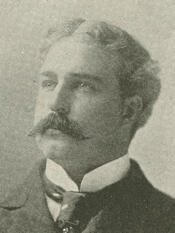
Here you will find contact information for Representative Wallace Turner Foote, including email address, phone number, and mailing address.
| Name | Wallace Turner Foote |
| Position | Representative |
| State | New York |
| District | 23 |
| Party | Republican |
| Status | Former Representative |
| Term Start | December 2, 1895 |
| Term End | March 3, 1899 |
| Terms Served | 2 |
| Born | April 7, 1864 |
| Gender | Male |
| Bioguide ID | F000252 |
About Representative Wallace Turner Foote
Wallace Turner Foote Jr. (April 7, 1864 – December 17, 1910) was a Republican member of the United States House of Representatives from New York who served two terms in Congress from 1895 to 1899. He was born in Port Henry, Essex County, New York, where he spent his early years in the community he would later represent. Raised in a region shaped by iron mining and related industries, he was exposed early to the economic and industrial concerns that would inform his later professional and political life.
Foote received his early education in the public schools of Port Henry, attending the Port Henry Union School. He then continued his preparatory studies at Williston Seminary in Easthampton, Massachusetts, an institution known for preparing students for collegiate and professional careers. Pursuing technical training, he enrolled at Union College in Schenectady, New York, where he studied engineering. He was graduated from Union College in 1885 with a degree as a civil engineer, a qualification that led directly to his first professional appointment in industry.
Immediately after his graduation in 1885, Foote returned to his native Port Henry and entered the iron industry, serving as assistant superintendent of the Cedar Point Furnace from 1885 to 1887. In this role he was associated with the management and operation of one of the local industrial enterprises that were central to the economy of the Lake Champlain region. After two years in engineering and industrial management, he decided to shift his professional focus to the law. He moved to New York City to attend Columbia Law School, undertaking formal legal studies in preparation for admission to the bar.
Foote was admitted to the bar in 1889 and commenced the practice of law in Port Henry, returning once again to his hometown. As a lawyer, he built a practice that served the needs of a community closely tied to mining, transportation, and commerce. His combined background in engineering, industry, and law positioned him as a figure familiar with both the technical and legal dimensions of economic development in northern New York. His professional standing and Republican affiliation led him into elective politics at the national level.
In 1894, Foote was elected as a Republican to the Fifty-fourth Congress, and he was subsequently reelected to the Fifty-fifth Congress, serving from March 4, 1895, to March 3, 1899. As a Representative from New York, he participated in the legislative process during a significant period in American history marked by industrial expansion, monetary debates, and the nation’s growing international presence. During his two terms in the House of Representatives, he represented the interests of his constituents and took part in the deliberations and votes that shaped federal policy in the late nineteenth century. A member of the Republican Party, Foote contributed to the work of Congress at a time when issues of tariff policy, economic regulation, and national development were central to the legislative agenda.
Foote chose not to be a candidate for renomination in 1898, thereby concluding his congressional service at the end of his second term in March 1899. After leaving Congress, he resumed the practice of law, again engaging in legal work connected to his region and its industries. In addition to his legal practice, he also engaged in mining, reflecting both his early professional experience in the iron industry and the continuing importance of mineral resources to the economy of northeastern New York. His post-congressional career thus combined legal, business, and industrial pursuits.
Wallace Turner Foote Jr. died in New York City on December 17, 1910. Although he died away from his hometown, he was returned to Port Henry for burial and was interred in Union Cemetery there. His life and career linked professional training in engineering and law with service in industry and national politics, and his two terms in the House of Representatives placed him among the New Yorkers who helped shape federal legislation at the close of the nineteenth century.