Senator Wallace Humphrey White
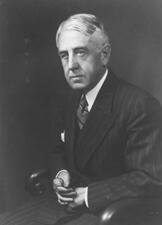
Here you will find contact information for Senator Wallace Humphrey White, including email address, phone number, and mailing address.
| Name | Wallace Humphrey White |
| Position | Senator |
| State | Maine |
| Party | Republican |
| Status | Former Representative |
| Term Start | April 2, 1917 |
| Term End | January 3, 1949 |
| Terms Served | 10 |
| Born | August 6, 1877 |
| Gender | Male |
| Bioguide ID | W000396 |
About Senator Wallace Humphrey White
Wallace Humphrey White Jr. (August 6, 1877 – March 31, 1952) was an American politician and Republican leader in the United States Congress from 1917 until 1949. A native of Lewiston, Maine, he served in the U.S. House of Representatives before being elected to the U.S. Senate, where he became Senate Minority Leader and later Majority Leader. Over the course of ten terms in Congress, White contributed to the legislative process during a significant period in American history, representing the interests of his Maine constituents and playing a key role in party leadership.
White was born in Lewiston, Androscoggin County, Maine. He came from a politically prominent family; his grandfather, William P. Frye, served as a United States Senator from Maine and as President pro tempore of the Senate. White attended local schools and went on to Bowdoin College in Brunswick, from which he graduated in 1899. His early exposure to national politics came through his grandfather’s career and would shape his own path into public service.
After graduating from Bowdoin, White moved to Washington, D.C., where he became assistant clerk to the Senate Committee on Commerce. He later served as secretary to his grandfather, Senator Frye, gaining firsthand experience in the workings of the Senate. During this period he studied law, was admitted to the bar, and began practicing in Lewiston, Maine. This combination of legal training and practical legislative experience provided the foundation for his subsequent electoral career.
White’s formal political career began when he was elected as a Republican to the U.S. House of Representatives in 1916. He took office on March 4, 1917, and served continuously until March 3, 1931, representing Maine in the 65th through 71st Congresses. During his House service he held several important committee chairmanships. He was chairman of the House Committee on Expenditures in the Department of Justice in the 66th Congress, chairman of the House Committee on Woman Suffrage in the 67th through 69th Congresses during the final push toward the Nineteenth Amendment, and chairman of the House Committee on Merchant Marine and Fisheries in the 70th and 71st Congresses. In these roles he helped shape legislation on justice administration, women’s voting rights, and maritime and fisheries policy, and he also served as a presidential appointee on a variety of commissions.
In late 1930, White was elected to the United States Senate from Maine, and he left the House when his term ended in March 1931. He entered the Senate on March 4, 1931, and was reelected in 1936 and 1942, serving until January 3, 1949. As a senator, he continued to be active in committee work and legislative oversight. He served as chairman of the Senate Committee on Interstate and Foreign Commerce in the 80th Congress, a position that placed him at the center of policy debates over transportation, communications, and trade in the immediate post–World War II era. During his Senate career he participated in major national decisions of the interwar and World War II periods and the early Cold War. In 1937 he was one of a small number of senators who voted against the elevation of Hugo Black to the Supreme Court, citing concerns about Black’s previous membership in the Ku Klux Klan.
Within the Republican Party, White emerged as a key figure in Senate leadership. He was elected Senate Minority Leader by his Republican colleagues, serving from 1944 to 1947, and became Senate Majority Leader when the Republicans gained control in the 80th Congress from 1947 to 1949. As majority leader, he was the titular floor leader of his party at a time when figures such as Robert A. Taft and Arthur H. Vandenberg were highly influential in shaping Republican policy. Contemporary observers, including journalist John Gunther in his 1947 book “Inside U.S.A.,” noted that while “everybody likes White,” his principal function as leader was often to balance and mediate between more dominant personalities within the party. He chose not to be a candidate for renomination in 1948 and retired from the Senate at the conclusion of his term in January 1949, ending more than three decades of continuous congressional service.
White’s personal life was marked by both family devotion and tragedy. In 1903 he married Anna Pratt of Lewiston, and the couple had one son, Herbert Frye White, born in 1904. In 1914, Anna Pratt White and an infant daughter, Helen Hayden White, both died in childbirth. In 1917, White married Nina Lumbard Lunn, a widow. Through this marriage he became stepfather to her son, Richard Lunn, and daughter, Nina Katherine Lunn, and the family maintained close ties to Maine while White’s career kept him frequently in Washington.
After his retirement from public office, White returned to Maine, remaining a respected elder statesman of the Republican Party and a prominent figure in Lewiston and the surrounding region. He died on March 31, 1952, in Auburn, Maine. Wallace Humphrey White Jr. was interred at Mount Auburn Cemetery in Auburn, closing the life of a legislator who had served his state and nation in Congress from 1917 to 1949, including service as both Senate Minority and Majority Leader.