Senator Waller Taylor
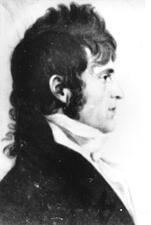
Here you will find contact information for Senator Waller Taylor, including email address, phone number, and mailing address.
| Name | Waller Taylor |
| Position | Senator |
| State | Indiana |
| Party | Republican |
| Status | Former Representative |
| Term Start | January 1, 1816 |
| Term End | March 3, 1825 |
| Terms Served | 2 |
| Gender | Male |
| Bioguide ID | T000102 |
About Senator Waller Taylor
Waller Taylor (December 7, 1775 – August 26, 1826) was an American military commander, lawyer, and politician who became one of the first two United States senators from the state of Indiana. A member of the Republican Party, and associated over time with the Democratic-Republican and later National Republican factions, he served in the United States Senate from 1815 to 1825, representing Indiana during a formative decade in the nation’s political development.
Taylor was born in Lunenburg County, Virginia, where he spent his entire childhood. Little is recorded about his early family life, but he received a legal education and studied law in Virginia. After qualifying for the bar, he entered public life in his native state. From 1800 to 1802 he served in the Virginia House of Delegates, gaining early legislative experience that would later inform his work in territorial and national politics.
In 1804 Taylor moved west to Vincennes, in the Indiana Territory, where he established a law practice. His abilities were soon recognized by territorial authorities, and in 1807 he was appointed chancellor of the Indiana Territory, a senior judicial position. That same year he became a major in the territorial militia, marking the beginning of his formal military career. Taylor fought against Native American forces on the frontier and served as an aide-de-camp to Governor William Henry Harrison during Tecumseh’s War from 1809 to 1810. He participated in the Battle of Tippecanoe in 1811, a key engagement in the conflict between United States forces and the Native confederation led by Tecumseh and his brother Tenskwatawa.
During the War of 1812, Taylor continued his military service in the United States Army and rose to the rank of adjutant general. At the same time, he was deeply involved in the political struggles of the Indiana Territory. A strong supporter of slavery, he believed that slavery should have been permitted in Indiana and aligned himself with the pro-slavery faction seeking to maintain and expand the institution in the territory. After the so‑called “slavery party” lost its majority status in the 1809 territorial election, Taylor worked with others in an effort to regain political power. In 1812 he campaigned to become the territorial congressional delegate from Indiana but was defeated by Jonathan Jennings. Known for a hot temper, Taylor challenged Jennings to a duel during the campaign, a challenge Jennings declined.
When Indiana achieved statehood in 1816, Taylor’s prominence in law, military affairs, and territorial politics led to his selection as one of the new state’s first United States senators, alongside James Noble. Although Indiana formally entered the Union in December 1816, Taylor’s service in the United States Congress is recorded as beginning in 1815, and he served continuously in the Senate until 1825, completing two terms in office. He was elected to a full term in 1818 and left the Senate when that term expired in 1825. During his decade in the Senate, Taylor participated in the legislative process at a time of significant national change, including the Era of Good Feelings, debates over internal improvements, and the early sectional controversies over slavery. He was a member of the faction in the Senate that supported John Quincy Adams and Henry Clay, aligning himself with the emerging National Republican outlook that favored a stronger federal role in economic development. Throughout his tenure he represented the interests of his Indiana constituents while remaining closely tied to the broader Republican political tradition.
Little is known about Taylor’s activities after he left the Senate in 1825. He returned to his native Lunenburg County, Virginia, where he spent the final year of his life. Waller Taylor died there of natural causes on August 26, 1826. He was buried on his family’s land in Lunenburg County, closing a career that had spanned state, territorial, military, and national service during the early decades of the United States.