Representative Walter Halben Butler
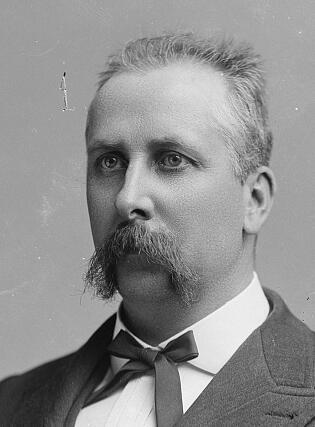
Here you will find contact information for Representative Walter Halben Butler, including email address, phone number, and mailing address.
| Name | Walter Halben Butler |
| Position | Representative |
| State | Iowa |
| District | 4 |
| Party | Democratic |
| Status | Former Representative |
| Term Start | December 7, 1891 |
| Term End | March 3, 1893 |
| Terms Served | 1 |
| Born | February 13, 1852 |
| Gender | Male |
| Bioguide ID | B001193 |
About Representative Walter Halben Butler
Walter Halben Butler (February 13, 1852 – April 24, 1931) was a lawyer, teacher, newspaper publisher, and one-term Democratic U.S. Representative from Iowa’s 4th congressional district, then located in northeastern Iowa. A member of the Democratic Party, he served as a Representative from Iowa in the United States Congress from 1891 to 1893, contributing to the legislative process during one term in office and representing the interests of his constituents during a significant period in American history.
Born on February 13, 1852, Butler came of age in the years following the Civil War, a time of rapid political, economic, and social change in the United States. Details of his early childhood and family background are not extensively documented in the public record, but his later professional pursuits indicate that he received a solid foundational education and developed an early interest in public affairs, law, and civic life. His formative years in the Midwest exposed him to the concerns of a largely rural and small-town population, experiences that would later inform his work as a teacher, lawyer, and public official.
Butler pursued his education with the aim of entering the learned professions, and he prepared himself for a career that would span teaching, the law, and journalism. After completing his schooling, he engaged in teaching, a common avenue of advancement for educated young men of his era, which provided him with experience in public speaking, organization, and community leadership. He subsequently studied law, was admitted to the bar, and began practicing as an attorney. His legal career placed him at the center of local civic and economic life, while his work as a newspaper publisher demonstrated his interest in public discourse, political debate, and the dissemination of information at a time when the press was a primary vehicle for shaping public opinion.
By the late nineteenth century, Butler had established himself as a figure of some prominence in northeastern Iowa, combining his legal practice and newspaper work with active participation in Democratic Party politics. His involvement in journalism and the law naturally led him into the political arena, where he became identified with the Democratic Party’s positions on economic and governmental issues in a region that was often politically competitive. His reputation as a professional and community leader helped pave the way for his election to national office.
Butler was elected as a Democrat to the U.S. House of Representatives from Iowa’s 4th congressional district and served in the Fifty-second Congress from 1891 to 1893. His service in Congress occurred during a significant period in American history, marked by debates over tariffs, monetary policy, and the regulation of interstate commerce in the closing years of the Gilded Age. As a member of the House of Representatives, Walter Halben Butler participated in the democratic process and represented the interests of constituents from northeastern Iowa, contributing to the legislative process during his single term in office. Although he served only one term, his tenure placed him among the relatively small number of Democrats elected from Iowa in that era.
After leaving Congress in 1893, Butler returned to private life and resumed the pursuits that had defined his earlier career. He continued his work in the law and remained engaged in business and community affairs, drawing on his experience as a teacher, attorney, and newspaper publisher. His post-congressional years reflected the pattern of many nineteenth-century citizen-legislators, who alternated between public service and professional life rather than making a permanent career in elective office.
Walter Halben Butler died on April 24, 1931. His life spanned from the immediate aftermath of the Mexican–American War through the Civil War, Reconstruction, the Gilded Age, and into the early years of the Great Depression. Remembered as a lawyer, educator, publisher, and public servant, he exemplified the multifaceted careers of many late nineteenth-century American politicians who combined professional work with a period of national legislative service.