Representative Walter Capps
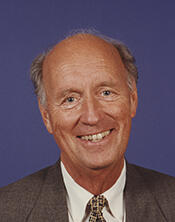
Here you will find contact information for Representative Walter Capps, including email address, phone number, and mailing address.
| Name | Walter Capps |
| Position | Representative |
| State | California |
| District | 22 |
| Party | Democratic |
| Status | Former Representative |
| Term Start | January 7, 1997 |
| Term End | January 3, 1999 |
| Terms Served | 1 |
| Born | May 5, 1934 |
| Gender | Male |
| Bioguide ID | C000134 |
About Representative Walter Capps
Walter Holden Capps (May 5, 1934 – October 28, 1997) was an American academic and politician who served as a Democratic member of the United States House of Representatives from California. He represented California’s 22nd congressional district from January 1997 until his death nine months later, serving one term in office. During this period, he contributed to the legislative process in the House of Representatives and participated in the democratic governance of the nation while representing the interests of his constituents.
Capps pursued advanced theological and religious studies, receiving both a master’s degree and a Ph.D. from Yale Divinity School. His academic training at Yale laid the foundation for a career devoted to the study of religion in public life and the development of religious studies as a distinct scholarly discipline. His later recognition by international academic institutions underscored the influence of his work in the field.
Before entering electoral politics, Capps taught for more than thirty years at the University of California, Santa Barbara, where he was a professor of religious studies. He played a significant role in helping to define and shape the modern academic discipline of religious studies, examining the interaction of religion with culture, politics, and public life. In 1995, he published “Religious Studies: The Making of a Discipline,” a work that cataloged the growth, institutionalization, and intellectual evolution of the field. An anti-war activist during the 1960s, he later drew on that experience to create a nationally renowned course, “Religion and the Impact of Vietnam,” introduced in 1979, which explored the moral, spiritual, and social consequences of the Vietnam War and attracted wide attention beyond the campus.
Capps’s academic achievements were recognized internationally. On May 30, 1997, during his tenure in Congress, he received an honorary doctorate from the Faculty of Theology at Uppsala University in Sweden. This honor reflected his longstanding contributions to religious scholarship and his efforts to bridge academic inquiry with contemporary public issues.
Capps’s path to Congress was marked by persistence and personal adversity. He first ran for the U.S. House of Representatives in 1994, seeking to represent California’s 22nd congressional district. In that election, a landslide year for Republicans nationally, he lost to the incumbent, Andrea Seastrand. Undeterred, he ran again in the 1996 election. During the summer of 1996, while driving home from a campaign event, his vehicle was struck by a drunk supporter. Capps was seriously injured in the accident and, as a result, was unable to actively campaign for much of the race, returning to the campaign trail only in its final weeks. His opponent chose not to make his health and absence a campaign issue. Despite these challenges and his limited ability to campaign, Capps won the election in November 1996, even as Republican presidential nominee Bob Dole narrowly edged Democratic President Bill Clinton in the district.
Walter Holden Capps took office in the United States House of Representatives in January 1997, beginning his service in the 105th Congress. As a member of the House, he participated in the legislative process during a significant period in American political life, engaging in debates and votes on national policy and working to represent the concerns of his coastal California district. His background as a scholar of religion and ethics informed his approach to public service, emphasizing moral reflection, civic responsibility, and the human consequences of public policy.
On October 28, 1997, while still in office, Capps collapsed after suffering a heart attack at Washington Dulles International Airport in Virginia. He was pronounced dead shortly thereafter at a hospital in Reston, Virginia. His death brought an abrupt end to a congressional career that had only just begun. His funeral drew national figures, including civil rights leader Jesse Jackson, reflecting both his standing in public life and the respect he commanded across different communities.
Following his death, Capps was succeeded in Congress by his widow, Lois Capps, who won the special election for California’s 22nd congressional district in the spring of 1998. Continuing the family’s public service, she went on to serve multiple terms in the House of Representatives. Among her legislative initiatives was subsequent legislation mandating the presence of automated external defibrillators in public places, a measure that has been associated with the circumstances of Walter Capps’s sudden death and has had lasting implications for public health and safety.