Senator Walter Terry Colquitt
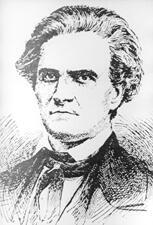
Here you will find contact information for Senator Walter Terry Colquitt, including email address, phone number, and mailing address.
| Name | Walter Terry Colquitt |
| Position | Senator |
| State | Georgia |
| Party | Democratic |
| Status | Former Representative |
| Term Start | December 2, 1839 |
| Term End | March 3, 1849 |
| Terms Served | 3 |
| Born | December 27, 1799 |
| Gender | Male |
| Bioguide ID | C000648 |
About Senator Walter Terry Colquitt
Walter Terry Colquitt (December 27, 1799 – May 7, 1855) was an American lawyer, circuit-riding Methodist preacher, and politician who served as both a United States Representative and a United States Senator from Georgia. A member of the Democratic Party for most of his national career, he contributed to the legislative process during a decade in Congress, serving in the House of Representatives at the close of the 1830s and in the Senate from 1839 to 1849, during a significant and turbulent period in American history.
Colquitt was born on December 27, 1799, in Monroe, Halifax County, Virginia. As a child he moved with his parents to Mount Zion in Carroll County, Georgia, where he grew up on the Georgia frontier. He attended Princeton College (now Princeton University) in New Jersey and pursued classical studies before returning to Georgia to study law. He “read the law” in the traditional manner and gained admission to the bar in 1820 at the age of twenty-one, marking the beginning of a professional career that would combine legal practice, military service in the state militia, religious ministry, and politics.
In 1820 Colquitt began his law practice in Sparta, Georgia. That same year he was commissioned a brigadier general of the Georgia state militia, also at the age of twenty-one, reflecting his early prominence in local affairs. He soon moved to the village of Cowpens in Walton County, Georgia, where he continued to practice law. In 1826 he was elected judge of the Chattahoochee circuit, a position to which he was re-elected in 1829, gaining a reputation as a capable jurist on the state bench. In 1827 he was licensed as a Methodist preacher and became a circuit-riding minister, traveling widely through central and south Georgia. Colquitt became extremely popular for both his oratory and his strong support of states’ rights at a time when Georgia was attempting to deal directly with Native American tribes occupying extensive territory within the state. Although the federal government alone was constitutionally authorized to make treaties with Native Americans, Georgia sought to force the cession of tribal lands for white settlement, and Colquitt’s advocacy placed him at the center of the state’s political and moral conflicts. Contemporary accounts described him as a man of remarkable energy, capable of making a stump speech, trying a court case, pleading another at the bar, christening a child, preaching a sermon, and marrying a couple all before dinner. He entered elective office as a member of the Georgia Senate, serving terms in 1834 and 1837.
Colquitt’s national political career began in the late 1830s. In 1838 he was elected as a Whig to the Twenty-sixth Congress and served as a United States Representative from Georgia from March 4, 1839, to July 21, 1840, when he resigned. During this period, his service in Congress coincided with mounting sectional tensions and the aftermath of Indian Removal in Georgia and the Southeast. He subsequently changed his party affiliation, joining the Democratic Party. He was elected as a Van Buren Democrat to the Twenty-seventh Congress, filling one of several newly available Georgia seats that had opened due to the resignations of Julius C. Alford, William Crosby Dawson, and Eugenius A. Nisbet. His time in the House marked his emergence as a prominent Democratic spokesman from Georgia and prepared the way for his elevation to the Senate.
In 1842 the Georgia state legislature elected Colquitt as a Democrat to the United States Senate. He entered the Senate on March 4, 1843, and served until his resignation in February 1848. Although some accounts broadly characterize his Senate tenure as extending from 1839 to 1849, his formal Senate service ran from the Twenty-eighth through part of the Thirtieth Congresses. As a senator, he represented the interests of his Georgia constituents during a significant period in American history, participating in debates over territorial expansion, slavery, and the powers of the federal government. During the Twenty-ninth Congress he served as chairman of the Committee on the District of Columbia and of the Committee on Patents and the Patent Office, positions that placed him at the center of legislation affecting the federal capital and the nation’s emerging system of intellectual property. Colquitt supported President James K. Polk’s administration in the controversy over the Oregon Territory and was a prominent opponent of the Wilmot Proviso throughout the Mexican–American War, aligning himself with Southern Democrats who resisted any restriction on the expansion of slavery into newly acquired territories.
After resigning from the Senate in 1848, Colquitt retired from national politics and returned to Georgia to resume his law practice and his work as a Methodist preacher. He remained active in the sectional debates of the era and was a member of the Nashville Convention in 1850, where Southern delegates discussed the proper response to the Compromise of 1850 and the future of slavery in the territories. At the convention Colquitt argued for the possibility of secession if slavery were restricted in any of the new territories then being added to the United States, reflecting the increasingly militant stance of many Southern leaders in the decade before the Civil War.
Colquitt’s personal life was marked by several marriages and a prominent family legacy. After establishing his law practice, he married Nancy Holt. Their children included Alfred Holt Colquitt (1824–1894) and Peyton H. Colquitt (1831–1863). Alfred Holt Colquitt later became a Confederate general during the American Civil War and, following the war, served as both Governor of Georgia and as a United States Representative and Senator from Georgia, extending the Colquitt family’s influence in state and national politics. Peyton H. Colquitt also served as a Confederate officer; he was a colonel in the Confederate States Army and was mortally wounded at the Battle of Chickamauga in 1863, dying two days later. After Nancy Holt’s death, Walter Colquitt married Alphea B. (Todd) Fauntleroy, a widow, in 1841; she died later that same year. In 1842 he married Harriet W. Ross, with whom he spent the remainder of his life.
Walter Terry Colquitt died on May 7, 1855, while traveling from Columbus to Macon, Georgia. At the time of his death he was residing in Columbus, and he was interred in Linwood Cemetery in that city. His memory is preserved in the geography and political history of Georgia: Colquitt County, Georgia, and the town of Colquitt, Georgia, were named in his honor. Through his combined careers as lawyer, judge, preacher, militia officer, state legislator, United States Representative, and United States Senator, as well as through the later prominence of his sons, he left a lasting imprint on Georgia and on the broader political life of the antebellum South.