Representative Walter Franklin Lineberger
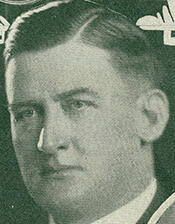
Here you will find contact information for Representative Walter Franklin Lineberger, including email address, phone number, and mailing address.
| Name | Walter Franklin Lineberger |
| Position | Representative |
| State | California |
| District | 9 |
| Party | Republican |
| Status | Former Representative |
| Term Start | April 11, 1921 |
| Term End | March 4, 1927 |
| Terms Served | 3 |
| Born | July 20, 1883 |
| Gender | Male |
| Bioguide ID | L000331 |
About Representative Walter Franklin Lineberger
Walter Franklin Lineberger (July 20, 1883 – October 9, 1943) was an American businessman, soldier, and Republican politician who served as a U.S. Representative from California for three terms from 1921 to 1927. Over the course of his congressional service, he represented California’s Ninth Congressional District and contributed to the legislative process during a significant period in American history, participating in the democratic process and representing the interests of his constituents.
Lineberger was born near Whiteville, Hardeman County, Tennessee, on July 20, 1883. He attended local public schools before pursuing higher education at the Agricultural and Mechanical College of Texas (now Texas A&M University) and later at Rensselaer Polytechnic Institute in Troy, New York. His technical and agricultural studies provided the foundation for a career that initially combined engineering-related pursuits with agriculture and resource development.
After completing his education, Lineberger engaged in mining and agriculture in Mexico, gaining experience in both extractive industries and farming at a time when American economic interests were expanding in that region. In 1911 he moved to Long Beach, California, where he continued his work in agriculture as a farmer before entering the financial sector. In Long Beach he became a banker and rose to serve as president of the Guarantee Bond & Mortgage Co., Inc., reflecting his growing prominence in local business and civic affairs.
With the entry of the United States into World War I, Lineberger joined the Engineer Officers’ Reserve Corps of the United States Army in June 1917. He served with several engineer units—the 116th, 1st, 107th, and 115th Engineer Battalions—and was deployed to France, where he saw active service from December 1917 until March 1919. He was discharged from the Army in March 1919 with the rank of major. For his wartime service in France, he received the Croix de guerre, underscoring his contributions to the Allied war effort and enhancing his public standing upon his return to California.
Lineberger entered national politics as a member of the Republican Party. He was elected to the Sixty-seventh Congress to fill the vacancy caused by the death of Representative-elect Charles F. Van de Water, a fellow Republican who had won election to represent California’s Ninth Congressional District but died before the 67th Congress convened. In the special election held on February 15, 1921, Lineberger won with 32,442 votes, or 58.5 percent of the total, defeating Prohibition Party candidate Charles H. Randall, who received 21,056 votes, or 38.0 percent. Randall had been the incumbent whom Van de Water had defeated for re-election three months earlier. Although detailed data for this special election are not fully available in some official compilations, contemporary accounts and congressional records confirm Lineberger’s decisive victory and his assumption of the seat.
Reelected as a Republican to the Sixty-eighth and Sixty-ninth Congresses, Lineberger served in the U.S. House of Representatives from April 11, 1921, to March 3, 1927. He won reelection with 59.1 percent of the vote in 1922 and increased his margin to 63.9 percent in 1924, reflecting solid support within his district. During his three terms in office, he participated in the legislative deliberations of the early 1920s, a period marked by postwar economic adjustment, debates over Prohibition, and evolving federal policy on commerce and infrastructure. Lineberger did not seek renomination to the House in 1926, instead becoming a candidate for the Republican nomination for United States Senator from California. His bid for the Senate was unsuccessful, and he concluded his congressional career at the end of the Sixty-ninth Congress.
After leaving Congress, Lineberger returned to private enterprise. In 1932 he started a business in oil securities, drawing on his earlier experience in mining, finance, and investment. He remained active in business during the interwar and early World War II years, residing in California and maintaining his connections to the state where he had built both his political and commercial careers.
Walter Franklin Lineberger died on October 9, 1943, in Santa Barbara, California. He was interred in Santa Barbara Cemetery. His life encompassed service as a businessman, a World War I Army engineer and decorated veteran, and a three-term Republican Representative from California who took part in the national legislative process during a transformative era in American history.