Representative Walter Aloysius Lynch
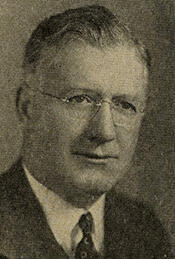
Here you will find contact information for Representative Walter Aloysius Lynch, including email address, phone number, and mailing address.
| Name | Walter Aloysius Lynch |
| Position | Representative |
| State | New York |
| District | 23 |
| Party | Democratic |
| Status | Former Representative |
| Term Start | January 3, 1939 |
| Term End | January 3, 1951 |
| Terms Served | 6 |
| Born | July 7, 1894 |
| Gender | Male |
| Bioguide ID | L000537 |
About Representative Walter Aloysius Lynch
Walter Aloysius Lynch (July 7, 1894 – September 10, 1957) was an American lawyer, jurist, and Democratic politician from New York who served six terms in the United States House of Representatives. Over the course of his public career, he held a series of influential positions in city, state, and national politics, including service in Congress from 1939 to 1951 and later as a justice of the New York Supreme Court.
Lynch was born on July 7, 1894, in New York City. He was educated in the city and attended Fordham Preparatory School before enrolling at Fordham University. He graduated from Fordham University in 1915 and continued his studies at Fordham Law School, from which he received his law degree in 1918. Following his admission to the bar, he commenced the practice of law in New York City, establishing himself in private practice during the interwar years.
Alongside his legal work, Lynch became involved in public service and Democratic Party affairs. In 1930 he served as a temporary New York City magistrate, gaining experience on the bench in the city’s judicial system. His growing prominence in legal and political circles led to his selection as a delegate to New York’s state constitutional convention in 1938, where he participated in deliberations on revisions to the state’s fundamental law. During this period he continued to build his reputation as a lawyer and party leader in New York City.
Lynch’s congressional career began with his election as a Democrat to the United States House of Representatives from New York. He was first chosen in a special election to the Seventy-sixth Congress to fill the vacancy caused by the death of Representative Edward W. Curley, and he took his seat on February 20, 1940. He was subsequently re-elected to the Seventy-seventh, Seventy-eighth, Seventy-ninth, Eightieth, and Eighty-first Congresses, serving continuously until January 3, 1951. In total, he served six terms in the House of Representatives, representing his New York constituents during a significant period in American history that encompassed World War II and the early years of the Cold War. As a member of the Democratic Party, Lynch contributed to the legislative process, participated in the democratic governance of the nation, and represented the interests of his district in national debates.
During his years in Congress, Lynch was also active in national party politics. He served as a delegate to the Democratic National Conventions of 1944 and 1948, taking part in the nomination of presidential and vice-presidential candidates and in the formulation of the party platform. His standing within the party led to his selection in 1950 as the Democratic nominee for governor of New York. In that election he ran against the incumbent Republican governor, Thomas E. Dewey, but was defeated in a landslide, reflecting both Dewey’s political strength and the broader electoral climate of the period.
After leaving Congress in January 1951, Lynch remained a significant figure in New York Democratic politics. In 1952 he served as chairman of the New York State Democratic Committee, overseeing party organization and strategy at the state level. He returned to the judiciary when he was elected to the New York Supreme Court in 1954. Lynch assumed his duties as a justice in January 1955 and served on that court until his death, bringing to the bench the legal and legislative experience he had accumulated over decades in public life.
In his personal life, Lynch married Claire Rosemary Mitchell (1895–1985) in 1920. The couple had two sons: Walter A. Lynch Jr. (1921–2017) and John Joseph Lynch (1928–1995). Lynch died on September 10, 1957, at his summer home in Belle Harbor, Queens, New York. He was interred at Gate of Heaven Cemetery in Hawthorne, New York, closing a career that spanned legal practice, municipal judicial service, state constitutional deliberations, congressional representation, party leadership, and service on the state’s highest trial court.