Representative Walter Irving McCoy
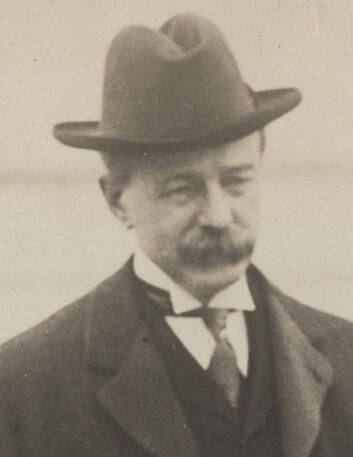
Here you will find contact information for Representative Walter Irving McCoy, including email address, phone number, and mailing address.
| Name | Walter Irving McCoy |
| Position | Representative |
| State | New Jersey |
| District | 9 |
| Party | Democratic |
| Status | Former Representative |
| Term Start | April 4, 1911 |
| Term End | March 3, 1915 |
| Terms Served | 2 |
| Born | December 8, 1859 |
| Gender | Male |
| Bioguide ID | M000376 |
About Representative Walter Irving McCoy
Walter Irving McCoy (December 8, 1859 – July 17, 1933) was a United States Representative from New Jersey and later an Associate Justice and Chief Justice of the Supreme Court of the District of Columbia. A member of the Democratic Party, he served two terms in the United States House of Representatives from 1911 to 1915, contributing to the legislative process during a significant period in American history before embarking on a distinguished federal judicial career.
McCoy was born in Troy, New York, on December 8, 1859. He attended the public schools of Troy and then pursued preparatory studies at Troy Academy and Phillips Exeter Academy in Exeter, New Hampshire. He went on to higher education at Princeton University and then Harvard College, where he received an Artium Baccalaureus degree in 1882. Continuing his studies at Harvard, he earned an Artium Magister degree in 1886 and, in the same year, completed a Bachelor of Laws at Harvard Law School, establishing the academic foundation for his subsequent legal and public service career.
Following his admission to the bar in 1886, McCoy commenced the practice of law in New York City, New York, where he remained in active practice from 1886 to 1914. During these years he also became closely associated with New Jersey civic and political life. He resided in South Orange, New Jersey, and served as a trustee of the village of South Orange from 1893 to 1895, again from 1901 to 1905, and once more in 1910. His growing prominence in Democratic Party circles was reflected in his role as vice president of the Essex County, New Jersey, Democratic committee and his selection as a delegate to the Democratic National Conventions of 1904 and 1908.
McCoy was elected as a Democrat to the United States House of Representatives, representing New Jersey in the 62nd and 63rd Congresses. He served from March 4, 1911, until October 3, 1914. During his tenure in Congress, which coincided with the early years of the Woodrow Wilson administration and an era of Progressive Era reforms, McCoy participated in the democratic process and represented the interests of his New Jersey constituents in national legislative affairs. His service in Congress occurred during a significant period in American history, and he contributed to the legislative work of the House over the course of his two terms. He resigned his seat on October 3, 1914, to accept appointment to the federal bench.
On September 29, 1914, President Woodrow Wilson nominated McCoy to an Associate Justice seat on the Supreme Court of the District of Columbia (now the United States District Court for the District of Columbia), to succeed Associate Justice Job Barnard. The United States Senate confirmed his nomination on October 2, 1914, and he received his commission the same day, formally ending his long career in private practice and elective office. McCoy served as an Associate Justice of that court until May 22, 1918, when his judicial service in that capacity terminated due to his elevation to the position of Chief Justice.
President Wilson nominated McCoy on May 16, 1918, to be Chief Justice of the Supreme Court of the District of Columbia, filling the vacancy created by the departure of Chief Justice J. Harry Covington. The Senate confirmed him on May 22, 1918, and he received his commission the same day. As Chief Justice, McCoy presided over the principal trial court for the nation’s capital during and after World War I, overseeing its administration and the adjudication of a broad range of federal and local matters. He remained in that position until December 8, 1929, when his service on the bench concluded upon his retirement.
After retiring from the federal judiciary, McCoy continued to reside in Washington, D.C., until 1932. That year he moved to Cambridge, Massachusetts. Walter Irving McCoy died in Cambridge on July 17, 1933. He was interred at Oakwood Cemetery in his native Troy, New York, closing a career that spanned nearly half a century in law, local governance, national legislation, and federal judicial service.