Senator Walter F. Mondale
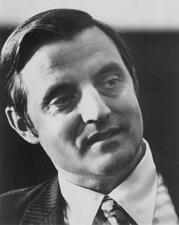
Here you will find contact information for Senator Walter F. Mondale, including email address, phone number, and mailing address.
| Name | Walter F. Mondale |
| Position | Senator |
| State | Minnesota |
| Party | Democratic |
| Status | Former Representative |
| Term Start | January 3, 1963 |
| Term End | January 3, 1977 |
| Terms Served | 7 |
| Born | January 5, 1928 |
| Gender | Male |
| Bioguide ID | M000851 |
About Senator Walter F. Mondale
Walter Frederick Mondale served as a Senator from Minnesota in the United States Congress from 1964 to 1976. A member of the Democratic Party, Walter Frederick Mondale contributed to the legislative process during 3 terms in office.
Walter Frederick Mondale’s service in Congress occurred during a significant period in American history. As a member of the Senate, Walter Frederick Mondale participated in the democratic process and represented the interests of constituents.
Walter Frederick “Fritz” Mondale (January 5, 1928 – April 19, 2021) was an American politician who served as the 42nd vice president of the United States from 1977 to 1981 under President Jimmy Carter. A member of the Democratic Party, he represented Minnesota in the United States Senate from 1964 to 1976, and was the Democratic nominee in the 1984 presidential election. Mondale was born in the small municipality of Ceylon, Minnesota, and graduated from the University of Minnesota in 1951 after attending Macalester College. He then served in the U.S. Army during the Korean War before earning a law degree in 1956. He married Joan Mondale in 1955. Working as a lawyer in Minneapolis, Mondale was appointed Minnesota Attorney General in 1960 by Governor Orville Freeman and was elected to a full term as attorney general in 1962 with 60% of the vote. He was appointed to the U.S. Senate by Governor Karl Rolvaag upon the resignation of U.S. senator Hubert Humphrey following Humphrey’s election as vice president in 1964. Mondale was elected to a full Senate term in 1966 and reelected in 1972, resigning in 1976 as he prepared to succeed to the vice presidency in 1977. While in the Senate, he supported consumer protection, fair housing, tax reform, and the desegregation of schools; he served on the Church Committee. In 1976, Jimmy Carter, the Democratic presidential nominee, chose Mondale as his vice-presidential running mate. The Carter–Mondale ticket narrowly defeated the Republican ticket of incumbent president Gerald Ford and his running mate Bob Dole. The economy worsened during Carter and Mondale’s time in office, and they lost the 1980 presidential election in a landslide to Republicans Ronald Reagan and George H. W. Bush. In 1984, Mondale won the Democratic presidential nomination and campaigned for a nuclear freeze, the Equal Rights Amendment, an increase in taxes, and a reduction of U.S. public debt. His vice presidential nominee, U.S. representative Geraldine Ferraro from New York, was the first female vice-presidential nominee of any major party in U.S. history. Mondale and Ferraro lost the election to the incumbents Reagan and Bush, with Reagan winning 49 states and Mondale carrying only his home state of Minnesota and Washington, D.C.. After his defeat, Mondale joined the Minnesota-based law firm Dorsey & Whitney and the National Democratic Institute (1986–1993). President Bill Clinton appointed Mondale United States ambassador to Japan in 1993; he retired from that post in 1996. In 2002, Mondale became the last-minute choice of the Minnesota Democratic–Farmer–Labor Party to run for Senate after Democratic U.S. Senate member Paul Wellstone was killed in a plane crash less than two weeks before the election. Mondale narrowly lost the race to mayor of Saint Paul, Minnesota Norm Coleman. He then returned to working at Dorsey & Whitney and remained active in the Democratic Party. Mondale later took up a part-time teaching position at the University of Minnesota’s Humphrey School of Public Affairs. He died in 2021 from natural causes.