Representative Walter Hughes Newton
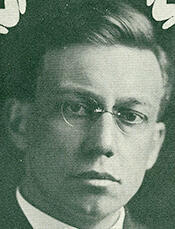
Here you will find contact information for Representative Walter Hughes Newton, including email address, phone number, and mailing address.
| Name | Walter Hughes Newton |
| Position | Representative |
| State | Minnesota |
| District | 5 |
| Party | Republican |
| Status | Former Representative |
| Term Start | May 19, 1919 |
| Term End | March 3, 1931 |
| Terms Served | 6 |
| Born | October 10, 1880 |
| Gender | Male |
| Bioguide ID | N000079 |
About Representative Walter Hughes Newton
Walter Hughes Newton (October 10, 1880 – August 10, 1941) was a United States Representative from Minnesota and a prominent Republican who later served in the Herbert Hoover administration as secretary to the president. Over the course of six consecutive terms in Congress, he played an active role in the legislative process during a transformative period in American history, and he subsequently held several important federal appointments before returning to legal practice and public service in Minnesota.
Newton was born on October 10, 1880, and was raised in Minnesota, where he developed the regional ties that would later underpin his political career. He pursued his education in the state and studied law, preparing for admission to the bar and the practice of his profession. His early legal work in Minnesota helped establish his reputation and introduced him to the political and civic networks that would support his entry into national politics. By the time he sought federal office, he was already recognized as an able lawyer and an engaged participant in public affairs.
A member of the Republican Party, Newton was elected to the U.S. House of Representatives as a Republican to the Sixty-sixth, Sixty-seventh, Sixty-eighth, Sixty-ninth, Seventieth, and Seventy-first Congresses. He represented Minnesota in the House from March 4, 1919, until his resignation on June 30, 1929. During these six terms, he contributed to the legislative process and participated fully in the democratic governance of the nation, representing the interests and concerns of his Minnesota constituents through the post–World War I era, the 1920s economic expansion, and the onset of the conditions that preceded the Great Depression.
Newton’s most notable legislative achievement in Congress was his leadership in restructuring the federal appellate court system through what became known as the “Newton Bill.” In 1928 and 1929, Congress adopted his plan to divide the jurisdiction of the Eighth Circuit Court of Appeals, creating the Tenth Circuit, which sits in Denver. This was the first change in the geographic organization of the federal courts since the present system of courts of appeals was created in 1891. The Eighth Circuit had previously encompassed an enormous territory stretching from the Mississippi River (excluding Texas and part of Louisiana) almost to the West Coast. Newton’s proposal, which resolved competing views among the American Bar Association, the federal courts, and both houses of Congress, divided the circuit along a north–south boundary. The new Tenth Circuit was composed of Oklahoma, Colorado, Wyoming, Utah, and New Mexico, while the Eighth Circuit retained a more unified grouping of states sharing the Mississippi–Missouri river system, from Minnesota and the Dakotas to Arkansas. This approach contrasted with earlier, more likely plans that would have drawn an east–west boundary, and it reflected Newton’s careful attention to legal, geographic, and economic coherence in federal judicial administration.
Newton left Congress on June 30, 1929, upon his appointment as personal secretary to President Herbert Hoover, a position often referred to as secretary to the president. In this senior White House role, which he held from 1929 until March 3, 1933, he served as a key aide and adviser during one of the most challenging periods in modern American history, encompassing the stock market crash of 1929 and the early years of the Great Depression. As secretary to the president, he was closely involved in the administration’s efforts to respond to the economic crisis, manage relations with Congress, and communicate the policies of the Hoover administration to the public and to political leaders.
After leaving the White House at the close of the Hoover administration in March 1933, Newton continued his public service at the national level. He served as a regent of the Smithsonian Institution, contributing to the governance of one of the nation’s leading scientific and cultural institutions. That same year, President Franklin D. Roosevelt appointed him a member of the Federal Home Loan Bank Board, where he served until 1934. In that capacity, he participated in the early New Deal–era efforts to stabilize the housing finance system and promote home ownership during the depths of the Depression. Following this service, he returned to Minneapolis, Minnesota, where he resumed the practice of law and also engaged in writing, working as an author in addition to his legal career.
Newton remained active in electoral politics even after his departure from Congress and the Hoover administration. In 1936 he sought to return to the House of Representatives as a candidate for election to the Seventy-fifth Congress, but he was unsuccessful in that bid. Two years later, in 1938, he was appointed Federal Referee in Bankruptcy, a position in which he drew on his legal expertise and legislative experience to oversee bankruptcy proceedings at a time when economic recovery remained incomplete and financial distress was still widespread.
Walter Hughes Newton continued to serve as Federal Referee in Bankruptcy until his death in Minneapolis, Minnesota, on August 10, 1941. He was interred in Lakewood Cemetery in Minneapolis. His career encompassed significant legislative work in the House of Representatives, influential service in the Hoover White House, and important roles in federal institutions and boards, reflecting a lifetime of engagement in law, governance, and public service on behalf of Minnesota and the nation.