Representative Walter Marcus Pierce
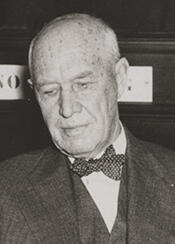
Here you will find contact information for Representative Walter Marcus Pierce, including email address, phone number, and mailing address.
| Name | Walter Marcus Pierce |
| Position | Representative |
| State | Oregon |
| District | 2 |
| Party | Democratic |
| Status | Former Representative |
| Term Start | March 9, 1933 |
| Term End | January 3, 1943 |
| Terms Served | 5 |
| Born | May 30, 1861 |
| Gender | Male |
| Bioguide ID | P000339 |
About Representative Walter Marcus Pierce
Walter Marcus Pierce (May 30, 1861 – March 27, 1954) was an American politician and Democrat who served as the 17th Governor of Oregon and later as a member of the United States House of Representatives from Oregon’s 2nd congressional district. A native of Illinois, he became a prominent and controversial figure in Oregon politics in the early twentieth century, known both for his advocacy of progressive economic and infrastructure measures and for his support of racist and anti-Catholic policies, including eugenics, Prohibition, and compulsory public education aimed at eliminating parochial schools.
Pierce was born in Illinois on May 30, 1861, and spent his early years in the Midwest before moving west. He eventually settled in Oregon, where he established himself as a rancher in La Grande. His early life and work in agriculture and local affairs helped build the base of support that would later sustain his political career. Over time, he became increasingly involved in public issues, particularly those related to rural development, public education, and state finance, which drew him into elective office.
Pierce’s formal political career began in the Oregon State Senate, where he served prior to becoming governor. As a state senator, he emerged as an advocate for road construction, public education, and various reform measures. He supported Prohibition and was an early proponent of state-level economic reforms, including proposals for a state income tax and vehicle license fees, though these revenue measures repeatedly failed to gain legislative approval. His positions reflected a blend of agrarian progressivism and social conservatism, including support for birth control alongside strong backing for eugenics policies that were rooted in racism and widely accepted in some reform circles of the era.
In 1922, Pierce ran a successful campaign for governor of Oregon, defeating incumbent Republican Governor Ben W. Olcott. The campaign took place at a time when the Ku Klux Klan was gaining influence in the state and had drafted the Compulsory School Act, an overtly anti-Catholic and anti-Semitic measure requiring all school-age children to attend public schools. While Olcott refused to cooperate with the Klan, Pierce tacitly accepted its endorsement and lent his support to the school bill. Elected as the 17th Governor of Oregon, he took office in 1923 and soon signed into law the compulsory public education measure that effectively banned parochial schools, a decision that would lead to significant legal challenges and national attention.
As governor, Pierce faced a Republican-dominated legislature that limited his ability to enact much of his program. His administration was able to continue and expand the road-building policies initiated by his predecessors, improving transportation infrastructure across the state. However, he was unable to secure passage of a state income tax or an assessed value license fee for automobiles, both of which he saw as essential to modernizing Oregon’s fiscal system. He sought alliances with progressive Republicans on issues such as prison reform, reforestation, and hydroelectric development, reflecting his interest in conservation and public power. His endorsement of Progressive Party candidate Robert M. La Follette for President in 1924, however, divided the state Democratic Party and weakened his political standing. The Ku Klux Klan, which had supported him only a short time earlier, turned against him and launched an unsuccessful recall effort.
The Compulsory Education Act that Pierce had supported and signed was challenged in federal court by religious and private educational institutions. In 1925, the United States Supreme Court, in Pierce v. Society of Sisters, struck down the law on the grounds that it violated the Fourteenth Amendment to the United States Constitution. The decision became a landmark ruling in American constitutional law, affirming the rights of parents and private schools against state attempts to monopolize education. The controversy surrounding the act and its invalidation further eroded Pierce’s political support. In the 1926 elections, Republican I. L. Patterson defeated Pierce, and upon leaving the Governor’s office, Pierce returned to his ranch in La Grande, Oregon.
Pierce remained active in public life and returned to the Oregon State Senate after his gubernatorial defeat, continuing to participate in state politics. His broader political career reached the national level when he was elected as a Representative from Oregon in the United States Congress. A member of the Democratic Party, Walter Marcus Pierce served five consecutive terms in the U.S. House of Representatives from 1933 to 1943, representing Oregon’s 2nd congressional district during a critical period that encompassed the Great Depression and the early years of World War II. In Congress, he contributed to the legislative process as part of the Democratic majority that supported President Franklin D. Roosevelt’s New Deal, and he participated in the democratic process by representing the interests of his largely rural constituents in eastern Oregon.
After leaving Congress in 1943, Pierce again returned to Oregon and to his ranching interests, remaining a well-known, if often controversial, elder statesman in the state’s political history. He lived quietly in his later years, his long career marked by both significant contributions to Oregon’s infrastructure and public policy and by enduring criticism for his alignment with eugenics, Prohibition, and anti-Catholic legislation. Walter Marcus Pierce died on March 27, 1954, closing a public life that had spanned from the late nineteenth century into the mid-twentieth century and left a complex legacy in Oregon and American political history.