Representative Walter Reeves
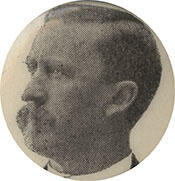
Here you will find contact information for Representative Walter Reeves, including email address, phone number, and mailing address.
| Name | Walter Reeves |
| Position | Representative |
| State | Illinois |
| District | 11 |
| Party | Republican |
| Status | Former Representative |
| Term Start | December 2, 1895 |
| Term End | March 3, 1903 |
| Terms Served | 4 |
| Born | September 25, 1848 |
| Gender | Male |
| Bioguide ID | R000139 |
About Representative Walter Reeves
Walter Reeves (September 25, 1848 – April 9, 1909) was an American educator, lawyer, and Republican politician who served four terms as a U.S. Representative from Illinois from 1895 to 1903. Over the course of his congressional career, he represented his Illinois constituents during a significant period in American history, contributing to the legislative process in the House of Representatives and participating actively in the nation’s democratic institutions.
Reeves was born near Brownsville, Fayette County, Pennsylvania, on September 25, 1848. In 1856 he moved with his parents to Illinois, where the family settled on a farm in La Salle County. His upbringing in a rural Midwestern community during the years before and after the Civil War helped shape his understanding of agricultural and local concerns that would later inform his public service.
He attended the public schools of Illinois and, as a young man, worked as a schoolteacher. While teaching, Reeves studied law, pursuing legal training in parallel with his work in education. He was admitted to the bar at Mount Vernon, Illinois, in 1875 and soon thereafter commenced the practice of law in Streator, Illinois. His legal practice, grounded in the needs of a growing industrial and mining region, established him as a prominent attorney and community figure in La Salle County.
Building on his legal and civic reputation, Reeves entered politics as a member of the Republican Party. He was elected as a Republican to the Fifty-fourth Congress and to the three succeeding Congresses, serving from March 4, 1895, to March 3, 1903. During these four consecutive terms in the U.S. House of Representatives, he represented an Illinois district at a time marked by economic transformation, debates over monetary policy, and the nation’s emergence as an international power. Reeves participated in the legislative process on a wide range of issues, reflecting both national priorities and the interests of his constituents.
During his congressional service, Reeves held a leadership role as chairman of the Committee on Patents in the Fifty-seventh Congress. In that capacity, he was involved in the consideration of legislation affecting intellectual property and the legal framework for inventions and technological innovation, an area of growing importance in the rapidly industrializing United States. While serving in Congress, he also sought higher office within his party and was an unsuccessful candidate for the Republican nomination for governor of Illinois in 1900. He chose not to be a candidate for renomination to the House in 1902, bringing his eight-year tenure in Congress to a close.
After leaving Congress in March 1903, Reeves returned to Streator and resumed the practice of law. He continued to be regarded as a respected member of the bar and a figure of influence in local affairs, drawing on his experience as an educator, attorney, and former legislator. He remained in Streator for the rest of his life, maintaining his professional activities until his final illness.
Walter Reeves died at his home in Streator, Illinois, on April 9, 1909. He was interred in Riverview Cemetery in Streator. His career, spanning education, law, and four terms in the U.S. House of Representatives, reflected the opportunities and responsibilities of public service in the late nineteenth and early twentieth centuries, and his work in Congress, particularly on patent legislation, formed a notable part of his public legacy.