Representative Walter Allen Watson
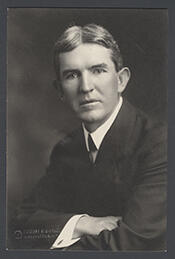
Here you will find contact information for Representative Walter Allen Watson, including email address, phone number, and mailing address.
| Name | Walter Allen Watson |
| Position | Representative |
| State | Virginia |
| District | 4 |
| Party | Democratic |
| Status | Former Representative |
| Term Start | April 7, 1913 |
| Term End | March 3, 1921 |
| Terms Served | 4 |
| Born | November 25, 1867 |
| Gender | Male |
| Bioguide ID | W000206 |
About Representative Walter Allen Watson
Walter Allen Watson (November 25, 1867 – December 24, 1919) was a Virginia lawyer, judge, and Democratic politician who served in the Virginia Senate and in the United States House of Representatives from 1913 to 1921. A member of the Democratic Party, he represented a Southside Virginia district in Congress for four terms, participating in the legislative process during a significant period in American history and serving as chairman of the House Committee on Elections.
Watson was born on November 25, 1867, at Woodland plantation near Jennings Ordinary in Nottoway County, Virginia. He was the first child born after the Civil War to former Confederate cavalryman Meredith Watson (1841–1893), of Lunenburg County and Company E of the 3rd Virginia Cavalry, and his wife, the former Josephine Leonora Robertson of Nottoway County. Woodland plantation, where he grew up, had been purchased by his paternal grandparents, Robert A. A. Watson and his wife Mary, from the Dupuy family in 1852, and both grandparents were living with the young farming family by 1870. His paternal great-grandfather had been named a colonel of Prince Edward County militiamen by Governor Thomas Jefferson and fought in the American Revolutionary War, underscoring the family’s long-standing military and civic tradition. Watson was one of thirteen children, and the family suffered heavy losses; many siblings died in childhood, including at least four in 1889 alone. Two younger brothers, Meredith Leon Watson and Henry Hunter Watson, survived to adulthood, farmed, and lived with him and their widowed mother around the turn of the century, along with several sisters—at least one of whom was a schoolteacher—and another small family.
On his mother’s side, Watson’s background was also rooted in the plantation society of Southside Virginia. His maternal grandfather, a Nottoway County plantation owner and apparently of somewhat higher social status than the Watsons, was killed by a slave in 1847, the year of Josephine’s birth. Her mother later remarried George Daniel Horner, who joined the 18th Virginia Infantry as a private in 1864. Josephine’s sixteen-year-old brother died fighting for the Confederacy at the Battle of Williamsburg in May 1862. Growing up in this environment of postwar economic adjustment, family bereavement, and strong Confederate and Revolutionary-era memories, Watson was educated first in an “old field” school before pursuing higher education.
Watson attended Hampden–Sydney College in Prince Edward County, where one of his elder brothers-in-law taught, and he graduated in 1887. He then studied law at the University of Virginia in Charlottesville during 1888 and 1889, receiving a formal legal education that prepared him for both practice and public life. After completing his legal studies, he returned to Southside Virginia and, in 1893, was admitted to the bar. He began practicing law in Nottoway County and adjoining counties, building a reputation as a capable attorney and aligning himself with the dominant Democratic political organizations of the era.
Watson’s political career developed rapidly in the 1890s. He aligned first with the Martin organization and later with the Byrd Organization, the powerful Democratic machines that shaped Virginia politics in the late nineteenth and early twentieth centuries. In 1891 he won election to the Senate of Virginia, becoming the youngest member of that body and serving from 1891 to 1895 in what was then a part-time legislature. In 1895 he was elected Commonwealth’s Attorney for his county, a position he held until 1904. During the Virginia Constitutional Convention of 1901–1902, Watson served as a delegate and a member of the Democratic state committee. At the convention he unsuccessfully argued against provisions designed to restrict voting rights for Black citizens and poor whites, placing him in a minority within his party on the question of suffrage restrictions. In 1904 the General Assembly elected him judge of the Fourth Judicial Circuit of Virginia, and he served on the bench until 1912, when he resigned after being elected to Congress. Judge R. G. Southall succeeded him in that judicial post.
In 1912, Watson entered national politics. That year he defeated incumbent Independent Robert Turnbull of Lawrenceville in Brunswick County and was elected as a Democrat to the Sixty-third Congress with 96.41 percent of the vote, defeating both Socialist candidate Fred Herzig and Independent Turnbull. He was subsequently reelected to the Sixty-fourth Congress in 1914 with 96.17 percent of the vote, again defeating Socialist Fred Herzig. In 1916 he was reelected unopposed to the Sixty-fifth Congress, and in 1918 he was again returned to office without opposition for the Sixty-sixth Congress. His service in the House of Representatives began on March 4, 1913, and continued until his death in 1919. During these four terms, he represented the interests of his Southside Virginia constituents at a time when Nottoway County had become an important railroad stop roughly halfway between Petersburg and Danville, reflecting the region’s growing transportation and commercial significance. In the Sixty-fifth Congress, Watson served as chairman of the Committee on Elections, giving him a key role in adjudicating contested congressional races and overseeing matters related to electoral procedures in the House.
Watson’s years in Congress coincided with a transformative period in American history, including the Progressive Era reforms and the First World War. As a member of the House of Representatives, he participated in the democratic process and contributed to the legislative work of the Democratic majorities that enacted significant domestic and wartime measures under President Woodrow Wilson. Although much of his work was in committee and in representation of local and regional concerns, his chairmanship of the Committee on Elections placed him at the center of issues involving the integrity and conduct of congressional elections.
Walter Allen Watson died in office in Washington, D.C., on December 24, 1919, at the age of 52, from mastoiditis. He thus became one of the members of the United States Congress who died in office in the early twentieth century. He was survived by his widow and sons and was interred in the family cemetery on the Woodland estate in Nottoway County. An amateur historian with a deep interest in the history and natural history of Southside Virginia, Watson had contemplated retiring from public life to complete his historical and reminiscence writings. After his death, his wife, with the assistance of the Virginia State Library, edited his notes, which were published by the state in 1925 under the title Notes on Southside Virginia. The work was republished by Genealogical Publishing in 1977, preserving his reflections on the region he represented in both the Virginia Senate and the United States Congress. His congressional successor was Patrick H. Drewry, a Petersburg-based lawyer and former state senator, who continued the representation of the district after Watson’s death.