Senator Warren Robinson Austin
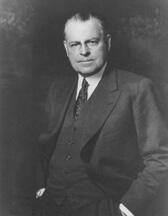
Here you will find contact information for Senator Warren Robinson Austin, including email address, phone number, and mailing address.
| Name | Warren Robinson Austin |
| Position | Senator |
| State | Vermont |
| Party | Republican |
| Status | Former Representative |
| Term Start | December 7, 1931 |
| Term End | August 2, 1946 |
| Terms Served | 3 |
| Born | November 12, 1877 |
| Gender | Male |
| Bioguide ID | A000342 |
About Senator Warren Robinson Austin
Warren Robinson Austin (November 12, 1877 – December 25, 1962) was an American politician and diplomat who served as a United States Senator from Vermont from 1931 to 1946 and as the first official United States Ambassador to the United Nations from 1947 to 1953. A member of the Republican Party, he represented Vermont in the Senate for three terms during a significant period in American history, and later became a key figure in early United Nations diplomacy at the outset of the Cold War.
Austin was born in Highgate Center, Franklin County, Vermont, where he was educated in the local schools of Highgate and nearby Bakersfield. He also pursued studies in Quebec in order to learn French, a skill that later supported his legal and diplomatic work. He attended the University of Vermont in Burlington, graduating in 1899. Following his graduation, he studied law under the supervision of his father, Charles W. Austin, was admitted to the bar in 1902, and entered into legal practice in partnership with his father.
After his admission to the bar, Austin settled in St. Albans, Vermont, where he quickly became active in Republican politics and local public affairs. He served in several municipal and county offices, including Grand Juror and chairman of the city Republican committee. From 1904 to 1906 he was State’s Attorney of Franklin County, gaining prominence as a prosecutor. In 1908 he chaired the Vermont Republican state convention, and from 1909 to 1910 he served as Mayor of St. Albans. At the same time, his legal responsibilities expanded beyond the local level: from 1907 to 1915 he was a Commissioner for the United States Court of Appeals for the Second Circuit. He also developed an international legal dimension to his career, serving as an attorney practicing before the United States Court for China from 1916 to 1917.
In 1917 Austin moved his residence and law practice to Burlington, Vermont, where he continued to build his reputation as a lawyer and civic leader. He served as a trustee of the University of Vermont from 1914 to 1941, reflecting his long-standing commitment to higher education in the state. From 1925 to 1927 he was special counsel for the state of Vermont in the proceedings to establish the official boundary between Vermont and New Hampshire, a complex interstate matter that further enhanced his standing as a legal expert. Throughout these years he remained an influential figure in Vermont Republican politics, which laid the groundwork for his eventual election to national office.
Austin entered the United States Senate in 1931 after winning a special election to fill the vacancy caused by the death of Senator Frank L. Greene. He defeated Frank C. Partridge, who had been appointed to the seat on an interim basis, and went on to serve three terms as Senator from Vermont, remaining in office until 1946. During his Senate career he participated actively in the legislative process and represented the interests of his Vermont constituents through the Great Depression, the New Deal era, and the Second World War. From 1939 to 1942 he held a leadership position as the Senate’s Assistant Minority Leader (Minority Whip), helping to coordinate Republican strategy in a period of Democratic dominance in Congress. His service in Congress thus coincided with major domestic and international developments, and he was involved in debates over economic recovery, national defense, and wartime policy.
In June 1946 President Harry S. Truman nominated Austin to serve as United States Ambassador to the United Nations. Because the U.S. Constitution prohibits members of Congress from accepting an office that was created or whose emoluments were increased during their term, he could not immediately assume the ambassadorship. As a result, he resigned from the Senate in 1946 and was appointed Special Representative to the President and advisor to acting UN Ambassador Herschel Johnson until he could formally take up the new post. In January 1947, after the constitutional impediment had lapsed, Austin became the first official U.S. Ambassador to the United Nations, succeeding earlier U.S. representatives to the United Nations Conference on International Organization, including Edward Stettinius Jr. and Herschel Johnson.
Austin’s tenure at the United Nations, from January 1947 until January 1953, coincided with the formative years of the organization and the early, intense phase of the Cold War. During this period the UN addressed the creation of the State of Israel and the conflict between Jewish and Arab populations in Palestine, the partition of British India and the ensuing Indo-Pakistani War of 1947, and a series of major crises in Europe and Asia. In 1948 the Communist coup in Czechoslovakia, the Soviet blockade of Berlin and the Berlin Airlift, and the implementation of the Marshall Plan all came before the UN in various forms. In 1949 the establishment of the North Atlantic Treaty Organization and the victory of Mao Zedong’s forces in China, leading to the creation of the People’s Republic of China, further shaped the international environment in which Austin operated. In 1950, the Chinese annexation of Tibet and the invasion of South Korea by North Korea brought the Korean War to the UN Security Council, where Austin was a prominent advocate of Western Bloc positions and of collective security measures under the UN Charter.
Austin became widely known internationally for his firm articulation of U.S. and Western policies in these debates. His term at the UN is also remembered for a widely reported but imprecisely quoted remark concerning the conflict between Arabs and Jews at the time of Israel’s founding. He was said to have expressed the hope that “Arabs and Jews will settle their differences in a truly Christian spirit.” According to his deputy, this wording did not accurately reflect Austin’s intent; he had sought to convey, as a Christian, that he would show no partiality toward either Muslims or Jews in the dispute and that the parties should resolve their differences in a spirit of fairness and goodwill. Austin retired from diplomatic service after being succeeded as U.S. Ambassador to the United Nations by Henry Cabot Lodge Jr. in January 1953, at the beginning of the administration of President Dwight D. Eisenhower.
Following his retirement from public life, Austin resided in Burlington, Vermont. He remained a respected elder statesman and figure of long standing in Vermont’s legal, educational, and political communities. Warren Robinson Austin died in Burlington on December 25, 1962, and was buried at Lakeview Cemetery in that city, closing a career that had spanned local, national, and international service over more than half a century.