Representative Warren Gard
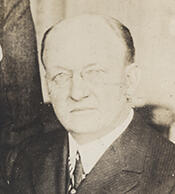
Here you will find contact information for Representative Warren Gard, including email address, phone number, and mailing address.
| Name | Warren Gard |
| Position | Representative |
| State | Ohio |
| District | 3 |
| Party | Democratic |
| Status | Former Representative |
| Term Start | April 7, 1913 |
| Term End | March 3, 1921 |
| Terms Served | 4 |
| Born | July 2, 1873 |
| Gender | Male |
| Bioguide ID | G000048 |
About Representative Warren Gard
Warren Gard (July 2, 1873 – November 1, 1929) was an attorney, prosecutor, jurist, and Democratic member of the United States House of Representatives from Ohio, serving four consecutive terms from 1913 to 1921. His congressional service took place during a significant period in American history, encompassing the Progressive Era and World War I, during which he participated in the legislative process and represented the interests of his Ohio constituents in the national government.
Gard was born on July 2, 1873, in Hamilton, Butler County, Ohio. He was raised in southwestern Ohio, a region with a strong tradition of civic engagement and legal practice that helped shape his early interest in the law and public affairs. Growing up in Hamilton, he was exposed to the political and economic life of a developing Midwestern community, experiences that would later inform his work as a lawyer, prosecutor, and legislator.
After completing his early education in local schools, Gard studied law and was admitted to the bar in Ohio. He began practicing law in Hamilton, where he established himself as an attorney. His legal training and early practice provided the foundation for a career that would span private practice, public prosecution, judicial responsibilities, and ultimately national legislative service. Through his work at the bar, he gained familiarity with both criminal and civil matters, building a reputation that led naturally to positions of public trust.
Gard’s professional career advanced as he took on roles as a prosecutor and jurist in Ohio. As a prosecutor, he was responsible for enforcing the criminal laws of the state, trying cases on behalf of the public, and working closely with local courts and law enforcement. His experience in prosecution and his service in judicial capacities enhanced his understanding of statutory interpretation, due process, and the practical impact of legislation on citizens and communities. These roles strengthened his credentials as a legal expert and public servant and helped prepare him for the broader responsibilities of federal office.
In 1913, Gard was elected as a Democrat to the United States House of Representatives from Ohio, beginning the first of four consecutive terms that would extend through 1921. Serving in the House during the administrations of Presidents Woodrow Wilson and, briefly, Warren G. Harding, he participated in the democratic process at a time when Congress addressed major issues such as economic regulation, wartime mobilization, and postwar adjustment. As a member of the Democratic Party, Gard contributed to the legislative process, took part in debates over national policy, and worked to represent the interests and concerns of his Ohio district. His tenure in Congress coincided with the nation’s entry into World War I and the subsequent transformation of federal authority and domestic policy, placing him among those legislators who helped shape the federal response to war and its aftermath.
Gard’s congressional service concluded in 1921, after which he returned to private life and the practice of law in Ohio. Drawing on his extensive experience as an attorney, prosecutor, jurist, and legislator, he remained a figure of professional standing in his community. He continued to be associated with the legal and civic affairs of Hamilton and the surrounding region, reflecting a lifelong commitment to public service and the rule of law.
Warren Gard died on November 1, 1929. His career encompassed local legal practice, public prosecution, judicial service, and four terms in the United States House of Representatives, during which he took part in the governance of the nation at a time of profound social and political change.