Representative Warren Miller
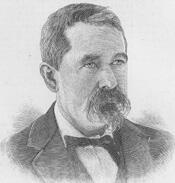
Here you will find contact information for Representative Warren Miller, including email address, phone number, and mailing address.
| Name | Warren Miller |
| Position | Representative |
| State | West Virginia |
| District | 4 |
| Party | Republican |
| Status | Former Representative |
| Term Start | December 2, 1895 |
| Term End | March 3, 1899 |
| Terms Served | 2 |
| Born | April 2, 1847 |
| Gender | Male |
| Bioguide ID | M000761 |
About Representative Warren Miller
Warren Miller was a Republican politician who served as a Representative from West Virginia in the United States Congress from 1895 to 1899. Born in 1847, he lived through the Civil War era and the subsequent period of Reconstruction and industrial expansion that reshaped both West Virginia and the nation. His lifetime, extending until 1920, spanned a transformative period in American political and economic history, and his congressional service placed him at the center of national debates in the closing years of the nineteenth century.
Details of Miller’s early life indicate that he came of age as West Virginia itself was emerging as a separate state during the Civil War. Growing up in this environment would have exposed him to the political and sectional tensions that defined the mid-nineteenth century United States, as well as to the economic and social changes that followed the war. These formative experiences likely influenced his later alignment with the Republican Party, which at that time was closely associated with Union victory, Reconstruction policies, and the promotion of industrial and infrastructural development.
Miller’s education and early professional development occurred against this backdrop of postwar change. Like many public men of his generation, he would have pursued legal or related professional training as a pathway into public life, preparing him for participation in local and state affairs before rising to national office. By the time he entered Congress, he had established himself sufficiently within Republican circles in West Virginia to secure election as a member of the United States House of Representatives, reflecting both his personal standing and the strength of his party in the region.
Warren Miller’s congressional career began when he took his seat in the House of Representatives in 1895. Serving two consecutive terms, he remained in office until 1899. His tenure therefore coincided with the 54th and 55th Congresses, a period marked by significant national issues, including debates over tariffs, monetary policy, and the role of the federal government in regulating the rapidly industrializing economy. As a member of the House, Miller contributed to the legislative process and participated in the democratic governance of the country, representing the interests and concerns of his West Virginia constituents at a time when questions of economic development, labor, and infrastructure were especially pressing in his home state.
As a Republican, Miller aligned with a party that, in the 1890s, generally supported protective tariffs, a sound-money policy, and an active federal role in fostering economic growth. His service in Congress occurred during a significant period in American history, encompassing the aftermath of the Panic of 1893 and the political realignments that culminated in the election of 1896. Within this context, Miller’s role as a representative from West Virginia placed him at the intersection of national policy debates and the specific needs of a state whose economy depended heavily on coal, timber, and emerging industrial enterprises.
After leaving Congress in 1899, Miller remained part of the generation of former lawmakers who witnessed the United States’ transition into the Progressive Era and its emergence as a global power. Although the details of his later professional activities are less fully documented, his continued presence in public life as a former congressman would have given him ongoing influence and standing within his community and party. He lived to see the First World War and the profound social and political changes it brought to the United States.
Warren Miller died in 1920, closing a life that had begun before the Civil War and extended into the modern industrial age. Remembered primarily for his service as a Republican member of the United States House of Representatives from West Virginia from 1895 to 1899, he was one among several notable Americans bearing the name Warren Miller, a list that includes figures such as an early twentieth-century baseball outfielder, an American writer, a political scientist, a ski and snowboarding filmmaker, and various other public officials and editors. His own legacy rests in his role as a nineteenth-century congressman who represented West Virginia during a critical period of American political and economic transformation.