Senator Warren Rudman
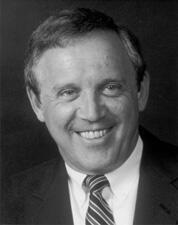
Here you will find contact information for Senator Warren Rudman, including email address, phone number, and mailing address.
| Name | Warren Rudman |
| Position | Senator |
| State | New Hampshire |
| Party | Republican |
| Status | Former Representative |
| Term Start | January 3, 1981 |
| Term End | January 3, 1993 |
| Terms Served | 6 |
| Born | May 18, 1930 |
| Gender | Male |
| Bioguide ID | R000497 |
About Senator Warren Rudman
Warren Bruce Rudman (May 18, 1930 – November 19, 2012) was an American attorney and politician who served as a United States Senator from New Hampshire from 1980 to 1993. A member of the Republican Party, he was widely regarded as a moderate centrist and was known for his independence on fiscal and social issues. His reputation for pragmatism and bipartisanship was such that President Bill Clinton approached him in 1994 about replacing departing Treasury Secretary Lloyd Bentsen in the Clinton administration, an offer Rudman declined.
Rudman was born in Boston, Massachusetts, on May 18, 1930, the son of Theresa (née Levenson) and Edward G. Rudman. His family were Jewish immigrants from Germany, Poland, and Russia, and he was one of the relatively few Jewish politicians ever elected in New Hampshire. He grew up in Nashua, New Hampshire, and, with few exceptions, lived his entire life in the state. He attended Valley Forge Military Academy in Wayne, Pennsylvania, where he received a military-style secondary education that preceded his later service in uniform. Rudman went on to earn his undergraduate degree from Syracuse University.
During the Korean War, Rudman served in the United States Army, an experience that informed his later interest in national security and defense policy. After his military service, he pursued legal studies and received his J.D. from Boston College Law School in 1960. Returning to New Hampshire, he established himself as a practicing attorney and quickly became active in public affairs. In 1970 he was appointed Attorney General of New Hampshire, a position he held until 1976. As attorney general, he developed a reputation as a tough, capable prosecutor and an able administrator, which helped lay the groundwork for his subsequent political career.
Rudman entered national politics at the end of the 1970s. In the 1980 election, riding the wave of Ronald Reagan’s landslide victory, he defeated incumbent Democratic Senator John Durkin. Durkin resigned before the end of his term, and Governor Hugh Gallen appointed Rudman to fill the vacancy in late December 1980, allowing him to take office early. Rudman thus began what would be nearly three terms in the United States Senate, representing New Hampshire from 1980 to 1993. His service in Congress occurred during a significant period in American history marked by the Reagan administration, the end of the Cold War, and growing concern over federal deficits. As a senator, he participated fully in the legislative process and represented the interests of his New Hampshire constituents while also becoming a prominent voice on national fiscal and security issues.
In the Senate, Rudman served on the powerful Appropriations Committee and on the Ethics Committee. He became best known legislatively for coauthoring the Gramm-Rudman-Hollings Act, a landmark deficit-reduction measure intended to impose automatic spending cuts if Congress failed to meet specified budget targets. Ideologically, he was a moderate Republican: conservative on fiscal and defense matters—favoring tax cuts, reduced domestic spending, and higher military spending—yet liberal on many social issues. He supported a woman’s right to choose to have an abortion, backed gay rights, and opposed a constitutional amendment mandating voluntary school prayer. Rudman also played a key role, along with John H. Sununu, in the appointment of his personal friend David Souter first to the U.S. Court of Appeals for the First Circuit and then to the Supreme Court of the United States. He later wrote in his memoir that he had “suspected all along” that Souter would not overturn major liberal precedents, a view that drew criticism from some conservatives but underscored Rudman’s own brand of “Yankee Republican” centrism. After two full terms in office, he chose not to run for re-election in 1992 and left the Senate in January 1993.
After leaving the Senate, Rudman remained deeply engaged in law, public policy, and national politics. He joined the international law firm Paul, Weiss, Rifkind, Wharton & Garrison as a partner and continued to practice law, including representing high-profile clients. Among his notable representations was his work on behalf of Carlos Hank Rhon, son of Mexican businessman and politician Carlos Hank González, in response to a leaked 1999 U.S. National Drug Intelligence Center report alleging extensive involvement by the Hank family in drug trafficking and money laundering. Rudman lobbied the U.S. government to disavow the report, and in March 2000 Attorney General Janet Reno wrote that the report was beyond the NDIC’s substantive expertise and area of responsibility; at Rudman’s request, a copy of her letter was sent to Federal Reserve Board Chairman Alan Greenspan because of the family’s banking interests in the United States. Carlos Hank Rhon was later fined $40 million to settle charges that he violated banking laws in connection with his acquisition of Laredo National Bancshares in Texas. From 2004 to 2006, Rudman led a team of attorneys investigating accounting practices at Fannie Mae, further cementing his reputation as a specialist in complex financial and regulatory matters.
Rudman also continued to play a significant role in national security and electoral politics. Prior to the September 11, 2001, terrorist attacks, he and former Senator Gary Hart co-chaired the U.S. Commission on National Security/21st Century, often known as the Hart–Rudman Commission, a national panel that investigated the emerging threat of international terrorism and the adequacy of U.S. security structures. Their recommendations, which warned of the likelihood of a major terrorist attack on American soil and called for sweeping reforms, were widely praised as prescient after 9/11. He served as an advisory board member and co-chair of the Partnership for a Secure America, a not-for-profit organization dedicated to rebuilding a bipartisan center in American national security and foreign policy. In electoral politics, Senator John McCain asked Rudman to serve as his campaign chair during McCain’s 2000 presidential campaign. Rudman was twice considered as a possible vice-presidential candidate on tickets of parties other than the Republican Party: in 1996, Ross Perot offered him the vice-presidential slot on the Reform Party ticket, which he declined, and in 2004 he was mentioned as a potential running mate for Democratic nominee John Kerry. On January 8, 2001, President Clinton presented Rudman with the Presidential Citizens Medal in recognition of his public service.
In his later years, Rudman combined legal, corporate, and advisory work. He was a co-chair, along with former Secretary of State Madeleine Albright and former National Security Advisor Sandy Berger, of the Albright Stonebridge Group, a global business consulting and strategy firm based in Washington, D.C., and at the time of his death he remained a co-chair of that firm. He was also a retired partner in Paul, Weiss, Rifkind, Wharton & Garrison and served as an advisory board member of Promontory Financial Group. In the corporate sector, he sat on the boards of directors of Raytheon, Collins & Aikman, Allied Waste, Boston Scientific, and a number of funds in the Dreyfus Family of Funds. He authored a memoir titled Combat, in which he reflected on his military service, legal career, and years in public life. Rudman spent his final years as a resident of Hollis, New Hampshire, a suburb of Nashua, maintaining his long-standing ties to the state he had represented in the Senate.
Warren Bruce Rudman died of lymphoma in Washington, D.C., on November 19, 2012, only a month after his former Senate opponent John Durkin. At the time of his death, he was still active in advisory and consulting roles. In a public statement, President Barack Obama memorialized him as “an early advocate for fiscal responsibility,” a characterization that reflected both his central role in deficit-reduction efforts such as the Gramm-Rudman-Hollings Act and his broader legacy as a centrist Republican committed to sound budgeting, strong national defense, and bipartisan cooperation.