Representative Washington Hunt
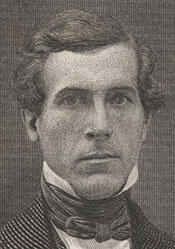
Here you will find contact information for Representative Washington Hunt, including email address, phone number, and mailing address.
| Name | Washington Hunt |
| Position | Representative |
| State | New York |
| District | 34 |
| Party | Whig |
| Status | Former Representative |
| Term Start | December 4, 1843 |
| Term End | March 3, 1849 |
| Terms Served | 3 |
| Born | August 5, 1811 |
| Gender | Male |
| Bioguide ID | H000978 |
About Representative Washington Hunt
Washington Hunt (August 5, 1811 – February 2, 1867) was an American lawyer, legislator, and executive official who rose to prominence in New York State politics in the mid-nineteenth century. He was born in Windham, New York, and in 1828 moved to Lockport, New York, a growing canal town in Niagara County that would remain the center of his professional and political life. His relocation to Lockport marked the beginning of a career that combined legal practice with steadily increasing public responsibilities.
In Lockport, Hunt pursued legal studies and prepared for admission to the bar. He was admitted to the bar in 1834, and in 1835 he opened a law office on Market Street in Lockport, establishing himself as a practicing attorney. His legal training and early practice in Niagara County provided the foundation for his later judicial and political roles. Hunt’s professional base in Lockport became a lasting part of his legacy; his former home at 363 Market Street would later be included in the Lowertown Historic District, and his law office site would be recognized in local historical accounts.
Hunt’s public career began in the judiciary. From 1836 to 1841 he served as First Judge of the Niagara County Court, a position that placed him at the center of local legal affairs during a period of rapid regional development. His judicial service enhanced his reputation as a capable lawyer and public servant, and it helped propel him into state and national politics. By the early 1840s, he had aligned himself with the Whig Party, then one of the two major national political parties, and emerged as a significant Whig figure in western New York.
Hunt was elected as a Whig to the United States House of Representatives, serving three consecutive terms as a Representative from New York. He represented his constituents in the 28th, 29th, and 30th Congresses, serving from March 4, 1843, to March 3, 1849. During these six years in Congress, he participated in the legislative process at a time of substantial national change and sectional tension. As a member of the House of Representatives, he took part in debates and votes on issues central to the era, and he contributed to the democratic process by representing the interests of his New York constituents. His congressional service, spanning three terms, coincided with a significant period in American history, including the Mexican–American War and the intensifying national discussion over slavery and territorial expansion.
After leaving Congress in 1849, Hunt continued to advance in state government. He was elected New York State Comptroller by the State Legislature following the resignation of Millard Fillmore, who had been elected Vice President of the United States. In November 1849 he was re-elected Comptroller, underscoring his standing within the Whig Party and the confidence placed in his management of state finances. He resigned the comptrollership after his election as the 17th Governor of New York. Hunt served as Governor from 1851 to 1852, administering the affairs of a rapidly growing state, but he was defeated for re-election by Democrat Horatio Seymour, who would later become both his political rival and, in time, his ally.
The collapse of the Whig Party in the 1850s forced Hunt, like many of his contemporaries, to reconsider his political affiliations. Although he had been associated with the Seward–Weed faction of the Whigs, he emerged as one of the more conservative Whigs who declined to join the newly formed Republican Party. In 1856 he served as chairman of the Whig National Convention and supported his fellow New York Whig, former President Millard Fillmore, for the presidency. By 1860, Hunt had joined the Constitutional Union Party and supported its presidential nominee, John Bell. When it became apparent that Bell could not carry New York on his own, Hunt took part in efforts to create a fusion ticket with supporters of Democrat Stephen Douglas, reflecting his increasingly complex and moderate stance amid rising sectional conflict.
In the final phase of his career, Hunt moved steadily closer to the Democratic Party. During the Civil War era he endorsed his former opponent Horatio Seymour for the New York gubernatorial race in 1862 and supported General George B. McClellan for the presidency at the 1864 Democratic National Convention. On June 13, 1864, he was present at Niagara Falls to confer with Confederate Commissioner Jacob Thompson, an episode that illustrated the fluid and often controversial nature of wartime political maneuvering. After the war, Hunt became a supporter of President Andrew Johnson and backed Johnson’s “National Union” movement, which sought to unite Democrats and conservative Republicans in support of the President’s Reconstruction policies. He served as a delegate to the National Union Convention of 1866, reflecting his continued engagement in efforts to shape postwar national politics.
Washington Hunt died on February 2, 1867. He was buried at Glenwood Cemetery in Lockport, New York, the community that had been the center of his legal and political life since his youth. His family included his brother, Major Edward B. Hunt, a West Point graduate who was killed in October 1863 while working with an experimental weapons system during the Civil War. Washington Hunt’s career—as county judge, three-term Whig congressman, state comptroller, governor, and later a prominent figure in the shifting party alignments of the 1850s and 1860s—placed him among the notable New York political leaders of his generation.