Representative Washington Frederick Willcox
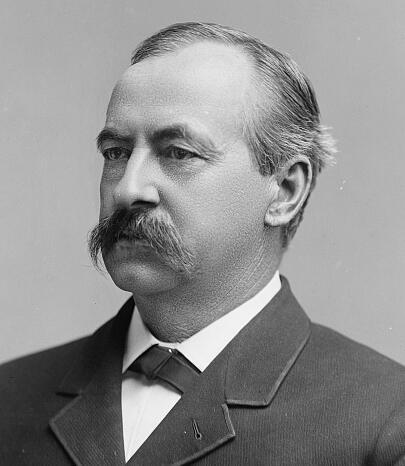
Here you will find contact information for Representative Washington Frederick Willcox, including email address, phone number, and mailing address.
| Name | Washington Frederick Willcox |
| Position | Representative |
| State | Connecticut |
| District | 2 |
| Party | Democratic |
| Status | Former Representative |
| Term Start | December 2, 1889 |
| Term End | March 3, 1893 |
| Terms Served | 2 |
| Born | August 22, 1834 |
| Gender | Male |
| Bioguide ID | W000480 |
About Representative Washington Frederick Willcox
Washington Frederick Willcox (August 22, 1834 – March 8, 1909) was an American businessman, lawyer, and Democratic politician who served two terms as a U.S. Representative from Connecticut from 1889 to 1893. Over the course of a long public career, he held offices at both the state and federal levels and was active in legal practice, banking, and regulatory work in his home state.
Willcox was born on August 22, 1834, in Killingworth, Connecticut. He received his early education in Connecticut, preparing for college at Madison Academy and the Hopkins Grammar School in New Haven, institutions that were known in the nineteenth century for providing rigorous classical and preparatory instruction. This foundation enabled him to pursue advanced legal studies at a time when formal legal education was becoming more systematized in the United States.
He attended Yale Law School and graduated in 1862, entering the legal profession during the Civil War era. That same year he was admitted to the bar and commenced the practice of law in Deep River, Connecticut. Deep River, then a growing community in Middlesex County, became the center of his professional life. In addition to his legal work, he would later be involved in business and banking, reflecting the close ties between law, commerce, and local development in nineteenth-century New England.
Willcox’s public career began early, coinciding with his entry into the legal profession. He served as a member of the Connecticut House of Representatives in 1862 and 1863, representing his constituents during the critical years of the Civil War. After more than a decade of continued legal and civic activity, he advanced to the upper chamber of the state legislature, serving in the Connecticut State Senate from 1875 to 1876. During this period he also held an important prosecutorial role as State’s attorney of Middlesex County, a position he occupied from 1875 to 1883, overseeing criminal prosecutions and representing the state in legal matters within the county.
Building on his state-level experience, Willcox was elected as a Democrat to the United States House of Representatives. He won election to the Fifty-first and Fifty-second Congresses and served from March 4, 1889, to March 3, 1893, representing Connecticut in the national legislature. As a member of the House of Representatives during a significant period in American history marked by industrial expansion, tariff debates, and evolving federal economic policy, Washington Frederick Willcox participated in the democratic process and contributed to the legislative work of Congress. He represented the interests of his constituents in Connecticut and took part in the broader deliberations of the era. After two consecutive terms, he was not a candidate for renomination in 1892, thus concluding his service in the national legislature after four years.
Following his departure from Congress, Willcox returned to Deep River and resumed the practice of law. In addition to his legal work, he engaged in banking, reflecting his continued involvement in the economic life of his community. His expertise and experience led to further public service when he was appointed to the state Railroad Commission, on which he served from 1897 to 1905. In this capacity he helped oversee and regulate railroad operations in Connecticut at a time when rail transportation was central to commerce, industry, and regional development.
Washington Frederick Willcox spent his later years in the lower Connecticut River valley. He died at his home in Chester, Connecticut, on March 8, 1909. He was interred at Fountain Hill Cemetery in Deep River, Connecticut, a community that had been the focal point of his professional and civic life.