Senator Watson Carvosso Squire
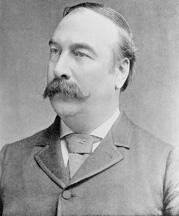
Here you will find contact information for Senator Watson Carvosso Squire, including email address, phone number, and mailing address.
| Name | Watson Carvosso Squire |
| Position | Senator |
| State | Washington |
| Party | Republican |
| Status | Former Representative |
| Term Start | December 2, 1889 |
| Term End | March 3, 1897 |
| Terms Served | 2 |
| Born | May 18, 1838 |
| Gender | Male |
| Bioguide ID | S000761 |
About Senator Watson Carvosso Squire
Watson Carvosso Squire (May 18, 1838 – June 7, 1926) was an American Civil War veteran, the twelfth governor of Washington Territory, and a United States Senator from the state of Washington. A member of the Republican Party, he served as a Senator from Washington in the United States Congress from 1889 to 1897, contributing to the legislative process during two terms in office. His congressional service occurred during a significant period in American history, as the nation continued to adjust to post–Civil War industrialization, western expansion, and evolving federal policy toward the territories and newly admitted states.
Squire was born on May 18, 1838, in Cape Vincent, Jefferson County, New York. He was raised in upstate New York in a period marked by rapid economic development along the Great Lakes and the St. Lawrence River, an environment that exposed him early to commerce and transportation issues that would later influence his public career. Details of his early family life and upbringing are less extensively documented than his later public service, but his formative years in New York laid the groundwork for his later pursuits in law, business, and politics.
Squire received a formal education that prepared him for both professional and public life. He attended local schools in New York and went on to study law, gaining admission to the bar and beginning the practice of law before the outbreak of the Civil War. His legal training and early professional experience provided him with a grounding in statutory interpretation and public affairs that would prove valuable in his later roles as territorial governor and United States Senator. This combination of legal education and practical experience helped position him for leadership at a time when the nation was undergoing profound constitutional and political change.
During the American Civil War, Squire served in the Union Army, establishing his reputation as a Civil War veteran. His military service placed him among the generation of political leaders whose public standing was closely tied to their wartime record. The discipline, organizational experience, and national perspective he gained during the conflict informed his subsequent work in both territorial administration and federal legislation. After the war, he was associated with business and industrial enterprises, reflecting the broader postwar trend of veterans moving into commercial and civic leadership roles.
Squire’s political prominence rose with his appointment as the twelfth governor of Washington Territory. In that capacity, he oversaw territorial affairs during a crucial phase of development in the Pacific Northwest, when questions of infrastructure, settlement, relations with Native peoples, and the transition from territorial to state institutions were central concerns. His administration contributed to the consolidation of civil government and the preparation of Washington for eventual statehood. As governor, he worked within the framework of federal oversight while advocating for the interests of the territory’s residents, helping to shape the political and economic foundations on which the future state would be built.
With the admission of Washington as a state in 1889, Squire was elected to represent the new state in the United States Senate. Serving from 1889 to 1897, he participated in the democratic process at the national level and represented the interests of his constituents during a period marked by debates over tariffs, monetary policy, railroad regulation, and the role of the federal government in western development. As a Republican senator, he aligned with his party’s general support for protective tariffs and economic development, and he took part in shaping legislation affecting the rapidly growing Pacific Northwest. His two terms in office coincided with the broader national transformation from a largely agrarian society to an increasingly industrial and urban one, and he was part of the congressional deliberations that guided this transition.
After leaving the Senate in 1897, Squire remained a respected public figure associated with the early political history of Washington. He continued to be linked with civic and business affairs in the region, and his name became connected with properties such as the Remington Mansion, reflecting his status within the social and economic life of the state. In his later years, he lived to see Washington firmly established as a significant state in the Union, its growth and institutions shaped in part by the territorial and early statehood policies he had helped to guide.
Watson Carvosso Squire died on June 7, 1926. By the time of his death, he was recognized as one of the key figures in Washington’s transition from territory to statehood and as a member of the generation of Civil War veterans who carried their wartime experience into national and regional leadership. His career as a soldier, territorial governor, and United States Senator from Washington left a lasting imprint on the political development of the Pacific Northwest and on the legislative history of the late nineteenth-century United States.