Representative Wayne L. Hays
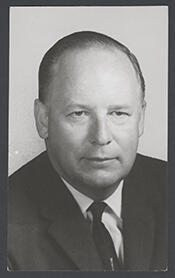
Here you will find contact information for Representative Wayne L. Hays, including email address, phone number, and mailing address.
| Name | Wayne L. Hays |
| Position | Representative |
| State | Ohio |
| District | 18 |
| Party | Democratic |
| Status | Former Representative |
| Term Start | January 3, 1949 |
| Term End | January 3, 1977 |
| Terms Served | 14 |
| Born | May 13, 1911 |
| Gender | Male |
| Bioguide ID | H000408 |
About Representative Wayne L. Hays
Wayne Levere Hays (May 13, 1911 – February 10, 1989) was an American World War II veteran and Democratic politician who served 14 terms as a U.S. Representative from Ohio from 1949 to 1976. Over nearly three decades in the House of Representatives, he participated actively in the legislative process and represented the interests of his Ohio constituents during a significant period in American history. A powerful committee chairman and influential figure in congressional administration, he resigned from Congress in 1976 after a much-publicized sex scandal.
Hays was born on May 13, 1911, in Bannock, Belmont County, Ohio. He attended the public schools of Bannock and nearby communities and later studied at Ohio State University in Columbus. Before entering national politics, he established himself in local public life in eastern Ohio. He studied law and was admitted to the bar, beginning the practice of law in St. Clairsville, Ohio. His early career also included work in local government, which helped build his reputation as a capable and assertive political figure in Belmont County.
During World War II, Hays served in the United States Army, contributing to the nation’s war effort before resuming his political career. After the war, he returned to Ohio and continued to build his standing in Democratic Party politics. He served as mayor of Flushing, Ohio, and later as a member of the Ohio State Senate, where he gained experience in legislative procedure and party organization. These roles, combined with his legal background and military service, positioned him for a successful run for national office.
Hays was first elected as a Democrat to the U.S. House of Representatives in 1948 and took his seat on January 3, 1949, representing an Ohio district centered in the eastern part of the state. He was subsequently reelected to 13 additional consecutive terms, serving continuously from 1949 to 1976. His long tenure in Congress coincided with major developments in American domestic and foreign policy, including the Cold War, the civil rights movement, and the Vietnam War. Throughout this period, he contributed to the legislative process and participated in the democratic governance of the country, maintaining a strong political base in his home district.
Within the House, Hays became best known for his work on internal congressional affairs. He rose to prominence on the powerful House Administration Committee, eventually serving as its chairman. In that capacity, he exercised considerable influence over the day-to-day operations of the House, including staffing, budgets, and certain aspects of member services and institutional management. He also held a leadership role in the Democratic Party’s campaign apparatus as chairman of the Democratic Congressional Campaign Committee, where he was involved in strategy and fundraising for House Democrats. His reputation in Congress was that of a tough, sometimes domineering figure who valued discipline and control in legislative and administrative matters.
Hays’s congressional career came to an abrupt end in 1976 following revelations that he had placed a woman, Elizabeth Ray, on the congressional payroll in a position for which she later claimed she had no substantive duties, alleging that her primary role was to provide personal companionship to the congressman. The resulting scandal attracted intense national media attention and raised broader questions about the use of public funds and patronage in Congress. Under mounting public and political pressure, Hays resigned as chairman of the House Administration Committee and from his seat in the House of Representatives in September 1976, ending his service in Congress after nearly 28 years.
After leaving Congress, Hays returned to Ohio and largely withdrew from national public life, though he remained a figure of interest in discussions of congressional ethics and institutional reform. He continued to reside in eastern Ohio, where he had spent most of his life and built his political career. Wayne Levere Hays died on February 10, 1989, in Wheeling, West Virginia, and was interred in Union Cemetery in St. Clairsville, Ohio. His long tenure, influential committee leadership, and dramatic resignation left a complex legacy in the history of the U.S. House of Representatives and in the political life of Ohio.