Senator Weldon Brinton Heyburn
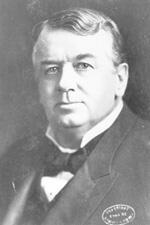
Here you will find contact information for Senator Weldon Brinton Heyburn, including email address, phone number, and mailing address.
| Name | Weldon Brinton Heyburn |
| Position | Senator |
| State | Idaho |
| Party | Republican |
| Status | Former Representative |
| Term Start | November 9, 1903 |
| Term End | March 3, 1913 |
| Terms Served | 2 |
| Born | May 23, 1852 |
| Gender | Male |
| Bioguide ID | H000554 |
About Senator Weldon Brinton Heyburn
Weldon Brinton Heyburn (May 23, 1852 – October 17, 1912) was an American attorney and Republican politician who served as a United States senator from Idaho from 1903 to 1912. Over the course of two terms in office, he represented Idaho during a significant period in American history and contributed actively to the legislative process in the United States Congress.
Heyburn was born on May 23, 1852, in southeastern Pennsylvania near Chadds Ford, Pennsylvania, to parents who were Quakers of English descent. He attended local public schools and pursued further study at the Maplewood Institute in Concordville, Pennsylvania. He also attended the University of Pennsylvania, reflecting an early commitment to higher education. His family included a younger brother, William Heyburn (1861–1939), who later moved west to Louisville, Kentucky, where he became a prominent citizen and president of the Belknap Hardware and Manufacturing Company.
After completing his formal education, Heyburn studied law under Edward A. Price and was admitted to the bar in 1876. He commenced the practice of law in Media, Pennsylvania, before following the opportunities presented by the western mining boom. He moved to Leadville, Colorado, where he practiced law for several years in a rapidly developing mining community. In 1883, he relocated again, this time to the Silver Valley of northern Idaho, and established his law practice in Wallace in Shoshone County. His legal work and growing prominence in the territory led to his selection as a member of the Idaho Constitutional Convention in 1889, where he participated in framing the fundamental law for the future state.
In addition to his legal and political activities, Heyburn took part in the region’s mining development. On August 30, 1884, he staked the Polaris discovery northeast of what would later become one of the most productive mining areas in the district, doing so 26 days before Blake’s discovery of the Yankee Boy and Yankee Girl ore bodies. After Heyburn’s death in 1912, a nephew mined some ore from the Polaris on a limited basis. Hecla Mining Company took over the Polaris property in 1930, while the Yankee Boy mine became the core of the Sunshine Mine in 1918, underscoring the long-term significance of the mineral district in which he had been an early participant.
Heyburn’s first bid for national office came in 1898, when he ran as the Republican candidate for election to the 56th Congress. He was unsuccessful in that race, losing to Silver Republican Edgar Wilson, but the campaign solidified his position within Idaho’s Republican Party. In January 1903, the Idaho Legislature elected him to the United States Senate. In the legislative balloting he defeated Democrat James Hawley by a vote of 50 to 17. Boise attorney William Borah was the runner-up for the Republican nomination, receiving 22 votes to Heyburn’s 28 before the full legislative election; Borah would win Idaho’s other Senate seat four years later. Former Governor and Senator George Shoup and Judge D. W. Standrod also entered the race but withdrew and threw their support to Heyburn, helping secure his election.
Heyburn served in the Senate from 1903 until his death in 1912, encompassing two terms in office and a period of intense national debate over economic regulation, conservation, and labor reform. He was re-elected by the Idaho Legislature in January 1909. During his Senate career, he chaired the Committee on Manufactures from the 58th through the 62nd Congresses, a position that placed him at the center of discussions over industrial regulation and consumer protection. He is best remembered for introducing the bill that became the Pure Food and Drug Act of 1906, landmark legislation that established federal standards for the labeling and safety of food and medicines and marked a major step in the federal government’s role in protecting consumers.
In policy debates, Heyburn often took positions skeptical of expanding federal authority, particularly in the American West. He opposed Gifford Pinchot’s call for extensive national forests, objecting to the federal government’s control over large tracts of land in western states and arguing that such lands should be more directly accessible to local development and use. He also frequently clashed with President Theodore Roosevelt over key Progressive Era initiatives, including proposals for an eight-hour workday and child welfare laws, reflecting his more conservative view of federal power and labor regulation. Nonetheless, as a member of the Senate, he consistently participated in the democratic process and represented the interests of his Idaho constituents during a transformative era in American public life.
Heyburn’s final year in office was marked by serious health problems. Known as the largest man in the Senate, he collapsed on the Senate floor after delivering a speech in March 1912 and remained in ill health for much of the remainder of the year. He died in Washington, D.C., on October 17, 1912, at the age of 60, while still serving in the United States Senate. His death brought an end to nearly a decade of service in Congress. He was interred at Birmingham-Lafayette Cemetery in Birmingham Township, Pennsylvania, returning in death to the state where he had been born and educated.
Heyburn’s name and legacy endure in several prominent landmarks in Idaho. The city of Heyburn in Minidoka County is named in his honor, as is Mount Heyburn, a jagged peak in the Sawtooth Mountains that rises to 10,229 feet (3,118 m) above sea level and overlooks Redfish Lake in the Sawtooth National Recreation Area near Stanley in Custer County. Heyburn State Park, the oldest state park in the Pacific Northwest, is located in Benewah County at the southern end of Lake Coeur d’Alene. Created in 1908 after Heyburn had attempted, unsuccessfully, to secure the area as a national park, it was named for him by the Idaho Legislature in 1911 while he was still in office, reflecting the high regard in which he was held in the state he represented.