Representative Wells Andrews Hutchins
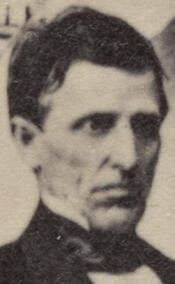
Here you will find contact information for Representative Wells Andrews Hutchins, including email address, phone number, and mailing address.
| Name | Wells Andrews Hutchins |
| Position | Representative |
| State | Ohio |
| District | 11 |
| Party | Democratic |
| Status | Former Representative |
| Term Start | December 7, 1863 |
| Term End | March 3, 1865 |
| Terms Served | 1 |
| Born | October 8, 1818 |
| Gender | Male |
| Bioguide ID | H001010 |
About Representative Wells Andrews Hutchins
Wells Andrews Hutchins (October 8, 1818 – January 25, 1895) was an American lawyer and politician who served as a U.S. Representative from Ohio during the American Civil War. Born in Hartford, Trumbull County, Ohio, he was a first cousin of future congressman John Hutchins. He attended the local public schools and, as a young man, taught school himself before turning to the study of law. After reading law, he was admitted to the bar in 1841 and commenced the practice of law in Warren, Ohio.
In 1842, Hutchins moved to Portsmouth, Scioto County, Ohio, which became the principal base of his professional and political life. On February 23, 1843, he married Cornelia Robinson of Portsmouth. While establishing his legal practice, he became active in local affairs and aligned himself with the Whig Party during his early political career in Portsmouth. His growing prominence in the community led to election to the Ohio House of Representatives, where he served as a member of the state legislature in 1852 and 1853. He subsequently held the office of city solicitor of Portsmouth from 1857 to 1861, further consolidating his reputation as a capable attorney and public official.
Hutchins sought national office as a Whig-aligned candidate and was an unsuccessful candidate in 1860 for election to the Thirty-seventh Congress. With the outbreak of the Civil War, he continued in public service. In 1862, during the early part of the conflict, he was appointed United States provost marshal for the state of Ohio, a federal position that involved overseeing aspects of military administration and enforcement of wartime measures within the state.
Wells Andrews Hutchins was elected as a Democrat to the Thirty-eighth Congress and served one term in the U.S. House of Representatives from March 4, 1863, to March 3, 1865. A member of the Democratic Party, he contributed to the legislative process during this single term in office, representing the interests of his Ohio constituents at a critical moment in American history. Identified as a War Democrat, Hutchins supported key elements of President Abraham Lincoln’s wartime agenda despite the opposition of many in his party. He publicly characterized Lincoln’s September 15, 1863 proclamation issued under the authority of the Habeas Corpus Suspension Act of 1863 as “necessary” to defeat the rebellion. On January 31, 1865, he was one of only sixteen Democrats in the House of Representatives who joined with Republicans to vote for the Thirteenth Amendment to the United States Constitution, which abolished slavery in the United States. His support for the amendment placed him among those who, in the words of abolitionist Congressman James Mitchell Ashley, had “defied their party discipline, and had deliberately and with unfaltering faith marched to their political death.” Hutchins was an unsuccessful candidate in 1864 for reelection to the Thirty-ninth Congress.
After leaving Congress in 1865, Hutchins returned to Portsmouth and resumed the practice of law. He remained active in political life and again sought a seat in Congress, running unsuccessfully in 1880 for election to the Forty-seventh Congress. Although he did not return to federal office, he continued to be recognized locally as a prominent attorney and former congressman. His Civil War–era service and his vote for the Thirteenth Amendment later drew renewed attention from historians and the public.
Hutchins spent his later years in Portsmouth, where he continued his legal work until declining health intervened. He died in Portsmouth on January 25, 1895, from kidney disease and was interred in Greenlawn Cemetery in that city. His role as a War Democrat who broke with much of his party to support the abolition of slavery has been noted in historical accounts, and a congressman loosely based on him was portrayed by actor Walton Goggins in the 2012 film “Lincoln,” reflecting his place in the broader narrative of congressional action during the Civil War.