Representative Wesley Abner D’Ewart
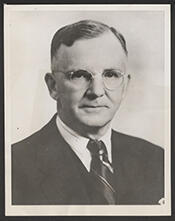
Here you will find contact information for Representative Wesley Abner D’Ewart, including email address, phone number, and mailing address.
| Name | Wesley Abner D’Ewart |
| Position | Representative |
| State | Montana |
| District | 2 |
| Party | Republican |
| Status | Former Representative |
| Term Start | January 3, 1945 |
| Term End | January 3, 1955 |
| Terms Served | 5 |
| Born | October 1, 1889 |
| Gender | Male |
| Bioguide ID | D000281 |
About Representative Wesley Abner D’Ewart
Wesley Abner D’Ewart (October 1, 1889 – September 2, 1973) was a Republican politician who represented Montana in the United States House of Representatives from June 5, 1945, to January 3, 1955. He served five terms in Congress from Montana’s 2nd congressional district and was a prominent figure in mid‑twentieth‑century Western politics, particularly in the areas of land, water, and reclamation policy.
D’Ewart was born in Worcester, Massachusetts, to William John D’Ewart and Mary Elizabeth Barnard. He attended Washington State College at Pullman, Washington, where he pursued higher education before moving west. In 1910 he relocated to Wilsall, Montana, settling in Park County. There he established himself in ranching and also worked for the United States Forest Service, gaining firsthand experience with the agricultural and natural resource issues that would later shape his legislative interests and public service. Wilsall remained his home base throughout his long career in politics and public affairs.
D’Ewart entered elective politics as a staunch member of the Republican Party. In 1936 he was elected to the Montana House of Representatives, where he served for three years and began to build a reputation as an advocate for rural and agricultural constituencies. In 1940 he successfully ran for the Montana Senate and served as a state senator from 1941 to 1945. His tenure in the state legislature coincided with the World War II era, and he developed legislative experience and political connections that positioned him for national office.
D’Ewart’s congressional career began under unusual circumstances. When United States Representative James F. O’Connor, who represented Montana’s 2nd congressional district, died on January 15, 1945, a special election was held to fill the vacancy. D’Ewart won that election and took his seat in the U.S. House of Representatives on June 5, 1945. He was subsequently re‑elected in 1946 by a wide margin over Democratic nominee John J. Holmes. In 1948 he narrowly won re‑election against Democrat Willard E. Fraser, and in both 1950 and 1952 he again defeated John J. Holmes to retain his seat. During his five terms in Congress, from 1945 to 1955, D’Ewart participated actively in the legislative process, representing the interests of his Montana constituents during a significant period in American history that encompassed the end of World War II, the early Cold War, and the beginning of the Eisenhower era.
While in the House of Representatives, D’Ewart focused on issues related to Western development, water, and territorial administration. Among his legislative work, he authored or sponsored House reports such as “Promoting the interests of the Fort Hall Indian irrigation project, Idaho” (House Report, 80th Congress, 2nd Session, June 15, 1948), reflecting his engagement with irrigation and Indian affairs, and the “Revised Organic Act of the Virgin Islands” (House Report, 83rd Congress, 2nd Session, July 9, 1954), which addressed the governance framework of that U.S. territory. His 1954 election committee also published a campaign document titled “Senator Murray and the Red Web Over Congress,” indicative of the intense partisan and anti‑communist climate of the period. Rather than seek re‑election to the House in 1954, D’Ewart ran for the United States Senate against incumbent Democratic Senator James E. Murray. In a close and contentious race, Murray narrowly defeated D’Ewart, winning what would be Murray’s final term in the Senate.
After leaving Congress, D’Ewart continued to serve in senior positions in the federal executive branch. From January 1955 to September 1955 he was an assistant to the United States Secretary of Agriculture, with responsibility for lands and reclamation, drawing on his long experience with Western land and water issues. He then served as Assistant Secretary of the Department of the Interior from October 1955 to July 1956, further deepening his involvement in federal natural resource and public lands policy. From August 1956 to October 1958 he was a special representative for the Secretary of Agriculture, a role that kept him engaged in national agricultural and conservation matters during the Eisenhower administration. His reflections on this period were later recorded in “Wesley D’Ewart. Eisenhower Administration Project” (Columbia University Oral History Research Office, 1967).
D’Ewart remained active in Montana politics after his federal service. When incumbent Governor J. Hugo Aronson declined to seek reelection in 1960, D’Ewart sought the Republican nomination for governor. In a closely contested primary, he lost to former state senator Donald Grant Nutter by fewer than five hundred votes; Nutter went on to win the general election. Although he did not hold elective office again, D’Ewart stayed involved in public affairs and party politics. He retired from active politics and lived in Wilsall, Montana, but continued to be an engaged Republican activist and strategist, following Montana elections closely and advising on campaigns and policy.
In his later years, D’Ewart broadened his work on water policy and regional resource management. He served as a director of the National Water Resources Association and was a member of the Western States Water Council from 1966 to 1969, contributing to multistate efforts to manage and develop Western water resources. He also participated in historical and archival projects that documented his public career. His reminiscences were recorded in “The Reminiscences of Wesley A. D’Ewart: Oral History, 1972,” an interview conducted by Roy Huffman and Jeffrey J. Safford of Montana State University. D’Ewart died in Livingston, Montana, on September 2, 1973, and was buried at Mountain View Cemetery in Livingston. His papers, covering the years 1936 to 1973, are held in the Wesley A. D’Ewart Papers at the Merrill G. Burlingame Special Collections, Montana State University Library, where they serve as a primary resource for the study of Montana and Western political history.