Senator Wilbur Fiske Sanders
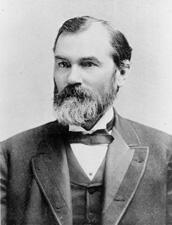
Here you will find contact information for Senator Wilbur Fiske Sanders, including email address, phone number, and mailing address.
| Name | Wilbur Fiske Sanders |
| Position | Senator |
| State | Montana |
| Party | Republican |
| Status | Former Representative |
| Term Start | January 1, 1890 |
| Term End | March 3, 1893 |
| Terms Served | 1 |
| Born | May 2, 1834 |
| Gender | Male |
| Bioguide ID | S000039 |
About Senator Wilbur Fiske Sanders
Wilbur Fisk Sanders (May 2, 1834 – July 7, 1905) was a United States senator from Montana, a leading pioneer and skilled lawyer who played a prominent and often controversial role in the development of Montana Territory and the early political history of the state. A member of the Republican Party, he served one term in the United States Senate from 1889 to 1893, contributing to the legislative process during a significant period in American history and representing the interests of his Montana constituents.
Sanders was born in Leon, Cattaraugus County, New York, to Ira Sanders, a farmer originally from Rhode Island, and Freedom (Edgerton) Sanders, a native of Connecticut. His father, a devout Methodist, named his firstborn son after Wilbur Fisk, the founding president of Wesleyan University, though the name was often misspelled with one “l” instead of two. Family accounts describe Sanders as a precocious child with a keen intellect and studious character. He attended the common schools in New York and, after completing his own schooling, taught in local schools, gaining early experience as an educator.
In 1854, following his mother’s wishes, Sanders moved to Akron, Ohio, where he continued to teach and began the study of law under the guidance of his uncle, Sidney Edgerton. Edgerton, sixteen years his senior and also a native of western New York, had moved to Akron a decade earlier and risen to prominence under the tutelage of Ohio politician and lawyer Rufus P. Spalding. Edgerton took Sanders under his wing, and Sanders was admitted to the bar in 1856. The two soon entered into a law partnership. Edgerton’s political evolution—from the Free Soil Party in the 1840s to the emerging Republican Party in the mid‑1850s—strongly influenced Sanders, who followed his uncle into Republican politics. On October 27, 1858, Sanders married Harriet P. Fenn, a native of Ohio. The couple had five children, of whom three—James, Wilbur E., and Louis—survived into adulthood.
During the Civil War, Sanders took an active role in the Union cause. In the summer of 1861, he recruited a company of infantry and a battery of artillery and was commissioned a first lieutenant in the 64th Regiment, Ohio Infantry, in which he was made adjutant. He saw combat at the Battle of Shiloh and later, in 1862, assisted in constructing defenses along the railroads south of Nashville, Tennessee, a critical logistical corridor for Union forces. According to his family, he resigned from the army in August 1862 after an illness aggravated by a wound and returned to his family in Akron, Ohio, resuming civilian life and legal practice.
In 1863, Sanders moved to the Idaho Territory, settling in the mining camp of Bannack in that portion of the territory that would later become Montana. He was a young lawyer when he arrived, preceding the formal organization of courts, and quickly became involved in the legal and political affairs of the frontier community. He engaged in the practice of law and became interested in mining and stock raising, but he also emerged as a central figure in the extralegal activities that shaped early Montana. Sanders was a founder and ringleader of the Montana Vigilantes, a secretive organization that undertook summary executions of suspected criminals. In December 1863, he led the prosecution of George Ives for the murder of Nicolas Tiebolt in Nevada City, Montana; Ives was convicted and hanged on December 21, 1863. The Ives trial marked the beginning of a period of vigilantism and extrajudicial killings, orchestrated in part by Sanders and the Alder Gulch Vigilance Committee, which he helped organize on December 23, 1863, in Virginia City. These actions were credited by many contemporaries with suppressing thefts and murders by “road agents” in the region, but they also drew criticism and later historical scrutiny. Sanders was later implicated by some accounts in the mysterious 1867 death of acting territorial governor Thomas Francis Meagher, a prominent opponent of vigilantism, Freemasonry, and Protestant influence, and a formidable political rival who was well positioned to challenge Sanders in any future contest once Montana achieved statehood.
Despite his association with vigilantism, Sanders built a substantial legal reputation in Montana. He became known for representing minority defendants, including Chinese and Native American clients, at a time of widespread prejudice. In a notable 1881 case, he led the defense of Ah Wah and Ah Yen, Chinese miners charged with murder. Arguing lack of evidence and reasonable doubt, Sanders secured their acquittal before the Montana Territorial Supreme Court in a widely publicized trial. He also remained active in territorial politics. Sanders was a member of the Territorial House of Representatives of Montana from 1873 to 1879 and had earlier become a member of the Territorial Legislature in 1873. He ran unsuccessfully as a Republican candidate for the United States House of Representatives in 1864, 1867, 1880, and 1886, reflecting his long-standing ambition for national office and his prominence within the territorial Republican Party.
Sanders played a leading role in preserving the historical record of Montana’s formative years. He was instrumental in the establishment and growth of the Montana Historical Society, founded in 1865, and served as its president for thirty years. From his law office he accumulated newspapers, documents, and other materials that became foundational to the Society’s collections. He was also a founding member of the Society of Montana Pioneers, serving as its secretary in 1884 and president in 1888. In the field of education, he was the first president of the board of trustees of Montana Wesleyan University, which opened in Helena in 1890, reflecting his Methodist upbringing and interest in higher education in the new state.
Upon the admission of Montana as a state into the Union in 1889, Sanders achieved his long-sought national office. He was elected as a Republican to the United States Senate and served from January 1, 1890, to March 3, 1893. His tenure in Congress coincided with a significant period in American history, marked by debates over economic policy, western development, and civil rights. During the Fifty-second Congress, he served as chairman of the Committee on Enrolled Bills, overseeing the final review of legislation passed by both houses. As a senator from Montana, he participated in the democratic process at the federal level and represented the interests of his state’s citizens during its earliest years of statehood.
In the 1890s, after leaving the Senate, Sanders continued to practice law and remained engaged in public affairs in Montana. Notably, he represented the Chinese community in Butte, Montana, in legal and political struggles against labor unions that were boycotting Chinese businesses, further cementing his reputation as an advocate for unpopular or marginalized clients despite the broader anti-Chinese sentiment of the era. He also maintained his leadership roles in historical and educational institutions, contributing to the civic life of Helena and the state at large.
Wilbur Fisk Sanders died in Helena, Montana, on July 7, 1905, at the age of 71. He was interred in Forestvale Cemetery in Helena. In recognition of his influential—if often contentious—role in the territory’s and state’s early history, Sanders County, Montana, was named in his honor.