Representative Wilburn Cartwright
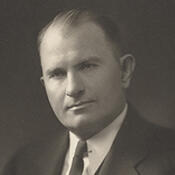
Here you will find contact information for Representative Wilburn Cartwright, including email address, phone number, and mailing address.
| Name | Wilburn Cartwright |
| Position | Representative |
| State | Oklahoma |
| District | 3 |
| Party | Democratic |
| Status | Former Representative |
| Term Start | December 5, 1927 |
| Term End | January 3, 1943 |
| Terms Served | 8 |
| Born | January 12, 1892 |
| Gender | Male |
| Bioguide ID | C000207 |
About Representative Wilburn Cartwright
Wilburn Cartwright (January 12, 1892 – March 14, 1979) was an American lawyer, educator, and Democratic politician from Oklahoma who served eight consecutive terms as a United States Representative from 1927 to 1943. Over the course of a long public career, he held elected office in both the Oklahoma House of Representatives and the Oklahoma Senate, served as a school superintendent, represented Oklahoma’s 3rd congressional district in the U.S. House of Representatives, and later held statewide executive positions as Oklahoma Secretary of State and Oklahoma State Auditor, as well as a regulatory post on the Oklahoma Corporation Commission. He also served as a United States Army officer during World War II. Reflecting on his extensive tenure in public life, he described himself as “the most elected man in Oklahoma government.” The town of Cartwright, Oklahoma, was named in his honor.
Cartwright was born on January 12, 1892, in what was then Indian Territory and later became part of the state of Oklahoma. He grew up in a rural environment during the closing years of the territorial period, an experience that shaped his interest in public education, agriculture, and local governance. His early life in a frontier region undergoing rapid political and economic change exposed him to the challenges of settlement, infrastructure development, and the integration of diverse communities into the emerging state of Oklahoma. These formative experiences contributed to his later legislative focus on transportation, public works, and services for rural constituents.
Cartwright pursued his education in Oklahoma’s public schools and went on to study at regional institutions that prepared him for a career in teaching and the law. He trained as an educator and began his professional life in the classroom, eventually serving as a school superintendent. His work in education provided him with firsthand knowledge of the needs of students, teachers, and local school systems, and it established his reputation as a capable administrator. Seeking to broaden his public service, he studied law and was admitted to the bar, beginning a legal practice that complemented his growing involvement in state and local politics.
Cartwright entered elective office in Oklahoma as a member of the state legislature, serving in both the Oklahoma House of Representatives and the Oklahoma Senate. In these roles he participated in the early development of Oklahoma’s statutory framework, working on issues important to a young and rapidly developing state, including education, infrastructure, and regulation of natural resources. His legislative experience at the state level helped him build a political base and gain familiarity with the concerns of constituents across rural and small-town Oklahoma, laying the groundwork for his later election to national office.
In 1927, Cartwright began his service in the United States House of Representatives as the Democratic member from Oklahoma’s 3rd congressional district, a position he held through eight consecutive terms until 1943. His tenure in Congress coincided with a period of profound national change, including the late 1920s economic expansion, the onset of the Great Depression, the New Deal era, and the early years of World War II. As a member of the House of Representatives, Cartwright participated in the legislative process during these critical years, representing the interests of his Oklahoma constituents while contributing to national debates over economic recovery, social welfare, and national defense. He was part of the Democratic majorities that supported many New Deal initiatives, and he took particular interest in measures affecting agriculture, transportation, and public works, reflecting the needs of his largely rural district.
After leaving Congress in 1943, Cartwright continued his public service in the context of World War II by serving as a United States Army officer. His military service during the global conflict added a national defense dimension to a career previously focused on education and civil governance. Following the war, he returned to Oklahoma and resumed his involvement in state government. He was elected Oklahoma Secretary of State, where he oversaw the state’s official records and administrative processes, and later served as Oklahoma State Auditor, responsible for supervising public accounts and financial practices. In addition, he held a seat on the Oklahoma Corporation Commission, the powerful regulatory body that oversees public utilities, transportation, and aspects of the state’s energy and natural resource industries. In these positions he played a significant role in postwar governance, regulation, and fiscal oversight in Oklahoma.
In his later years, Cartwright remained a prominent figure in Oklahoma political history, recognized for the breadth and longevity of his service at local, state, and federal levels. His papers and photographs, preserved in collections such as those at the Carl Albert Center, document a career that spanned the territorial era, statehood, the Great Depression, World War II, and the modern regulatory state. Wilburn Cartwright died on March 14, 1979, leaving a legacy as one of Oklahoma’s most enduring public servants, commemorated in both the historical record and in the community that bears his name.