Representative Wiley Mayne
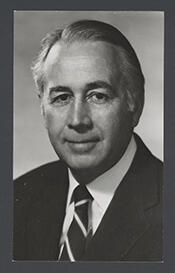
Here you will find contact information for Representative Wiley Mayne, including email address, phone number, and mailing address.
| Name | Wiley Mayne |
| Position | Representative |
| State | Iowa |
| District | 6 |
| Party | Republican |
| Status | Former Representative |
| Term Start | January 10, 1967 |
| Term End | January 3, 1975 |
| Terms Served | 4 |
| Born | January 19, 1917 |
| Gender | Male |
| Bioguide ID | M000286 |
About Representative Wiley Mayne
Wiley Mayne (January 19, 1917 – May 27, 2007) was an American attorney and Republican politician who served as a four-term United States Representative from Iowa’s 6th congressional district from 1967 to 1975. A member of the Republican Party, he contributed to the legislative process during a significant period in American history, serving on key House committees and participating in major national debates, including the impeachment proceedings against President Richard M. Nixon. He was one of several Republican members of the House Judiciary Committee who were defeated in the fall of 1974 after voting against resolutions to impeach Nixon in the summer of 1974.
Mayne was born in Sanborn, Iowa, on January 19, 1917, and was educated in the public schools of Iowa. He went on to study at Harvard College, where he received his bachelor’s degree, and then pursued legal studies at Harvard Law School. He later completed his legal education at the University of Iowa College of Law, receiving his J.D. in 1939. Admitted to the bar in 1941, he entered the legal profession at the outset of a period of global conflict that would shape his early career.
In 1941, the same year he was admitted to practice law, Mayne joined the Federal Bureau of Investigation. During World War II, he served in the United States Naval Reserve as a lieutenant junior grade from 1941 to 1943. Following his three-year tour of duty, he returned to Iowa and entered private practice, joining a law firm in Sioux City. On January 5, 1942, he married Betty Dodson. The couple had three children: sons Wiley Mayne II and John Mayne, both of whom became lawyers, and a daughter, Martha Mayne Smith. Over the following two decades, Mayne established himself as a prominent attorney in Iowa and became active in professional legal organizations.
Mayne’s leadership within the legal community culminated in his election as president of the Iowa Bar Association in 1963, a position he held for one year. After completing his term as bar president, he continued his service to the profession by chairing the Grievance Commission of the Iowa Supreme Court from 1963 until 1966. In these roles, he helped oversee professional standards and disciplinary matters within the Iowa legal community, further enhancing his reputation as a careful and principled lawyer.
In 1966, Mayne entered electoral politics, running as a Republican for Congress in Iowa’s then-existing 6th Congressional District in northwest Iowa. He defeated the Democratic freshman incumbent, Stanley L. Greigg, and took office in the 90th Congress on January 3, 1967. He was subsequently reelected three times, serving four consecutive terms in the U.S. House of Representatives from 1967 to 1975. During his tenure, he served on the House Agriculture Committee and the House Judiciary Committee, representing the interests of his constituents while participating in the broader national legislative process.
On the House Agriculture Committee, Mayne dealt with issues critical to his largely rural district. A major concern during his service on that committee was a sudden and significant decline in the United States cattle market, which had serious implications for farmers and ranchers in Iowa and across the country. Reflecting his engagement with agricultural policy at the international level, he was appointed a delegate to the Food and Agriculture Organization in Rome in 1973. Among his congressional staff during this period was Fred Grandy, who would later gain fame as an actor and subsequently serve in Congress himself.
As a member of the House Judiciary Committee, Mayne played an influential role in shaping amendments to the Federal Rules of Evidence, particularly those governing the admissibility of opinion testimony, drawing on his extensive legal background. His service on the committee placed him at the center of the Watergate controversy. In the summer of 1974, he was one of ten Republican members of the Judiciary Committee who voted against articles of impeachment against President Richard M. Nixon, stating at the time that he believed the evidence then available was insufficient to justify impeachment. In the final days of Nixon’s presidency, as additional evidence emerged implicating the president in a cover-up, Mayne’s view changed, and he publicly vowed to vote in favor of impeachment when the articles reached the full House. However, his earlier committee votes had already damaged his political standing. In the 1974 general election, he lost his bid for a fifth term to his 1972 Democratic opponent, Berkley Bedell, by a margin of 54.6 percent to 45.4 percent.
After leaving Congress in January 1975, Mayne returned to Sioux City, Iowa, where he resumed his law practice and continued his involvement in the legal profession. He practiced law actively until 2005, maintaining a long career that spanned more than six decades. His wife, Betty, died in 2001. Wiley Mayne died on May 27, 2007, following a cardiopulmonary incident, closing a life marked by service as an attorney, bar leader, naval officer, and four-term member of the United States House of Representatives.