Senator Wilkinson Call
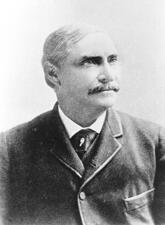
Here you will find contact information for Senator Wilkinson Call, including email address, phone number, and mailing address.
| Name | Wilkinson Call |
| Position | Senator |
| State | Florida |
| Party | Democratic |
| Status | Former Representative |
| Term Start | March 18, 1879 |
| Term End | March 3, 1897 |
| Terms Served | 3 |
| Born | January 9, 1834 |
| Gender | Male |
| Bioguide ID | C000051 |
About Senator Wilkinson Call
Wilkinson Call (January 9, 1834 – August 24, 1910) was an American lawyer and Democratic politician who represented Florida in the United States Senate from 1879 to 1897. He was born in Logan County, Kentucky, on January 9, 1834, the son of Dr. George W. Call and Lucinda Lee. Through his mother he was connected to Virginia’s prominent Lee family, and he was part of an influential Southern political network: he was a nephew of Richard K. Call, Territorial Governor of Florida; a cousin of Florida governor David S. Walker and U.S. Senator from Arkansas James D. Walker; and a nephew by marriage of Kentucky senator John J. Crittenden. By the late 1830s his parents had relocated from Kentucky to Tallahassee, Florida, where he spent much of his youth.
Call’s early education took place in the context of this politically active extended family in Florida. As a young man he moved to Jacksonville, Florida, to pursue legal studies. He read law there, was admitted to the bar, and entered into practice. By the late 1840s he had joined his cousin David S. Walker in a law partnership in Tallahassee, gaining experience in both legal advocacy and the political issues of the antebellum South. His legal career and family connections positioned him for public service as sectional tensions mounted in the years leading up to the Civil War.
During the American Civil War, Call served in the Confederate Army, where he held the position of adjutant general. His Confederate service, like that of many Southern political figures of his generation, would shape his postwar political trajectory and the reception he received in national politics during Reconstruction. After the war, he returned to civilian life and resumed the practice of law in Jacksonville, remaining active in Democratic Party circles as Florida and the rest of the South navigated the complex process of readjustment to the Union.
On December 29, 1865, Call was elected by the Florida legislature to represent the state in the United States Senate as a Democrat. However, in the immediate postwar period the Republican majority in the Senate, wary of former Confederate leaders returning to national office, refused to seat him, and he was not permitted to enter upon his duties. In the years that followed, he continued his legal practice and became a member of the Democratic National Committee, helping to rebuild Democratic influence in Florida and the broader South during Reconstruction. His persistence in party affairs and his alignment with Southern Democratic interests kept him a significant figure in Florida politics despite his initial exclusion from Congress.
Call was again elected to the United States Senate on January 21, 1879, this time successfully taking his seat. A member of the Democratic Party, he served three terms in the Senate, having been reelected on January 20, 1885, and May 26, 1891. His service extended from March 1879 to March 1897, with a brief vacancy in 1891 when the Florida legislature initially failed to elect a senator by the beginning of the new term. During these years he participated in the legislative process at a time of major economic, social, and political change in the United States, representing the interests of his Florida constituents in debates over issues such as federal economic policy, internal improvements, and the evolving structure of the post-Reconstruction South. In the Senate he served as chairman of the Committee on Civil Service and Retrenchment during the 53rd Congress and also sat on the Committee on Patents, giving him a role in oversight of federal administrative reforms and intellectual property legislation.
Within Florida’s Democratic Party, Call emerged as a leader of the populist agrarian faction that gained strength in the 1890s. Working alongside figures such as Napoleon Bonaparte Broward, he aligned himself with the concerns of small farmers and rural voters amid the broader agrarian movement that was reshaping Southern and Western politics. Reflecting these commitments, he actively supported and campaigned for William Jennings Bryan in the 1896 presidential election, backing Bryan’s advocacy of free silver and other policies favored by agrarian and populist constituencies. His stance placed him at the center of intraparty debates over economic policy and the direction of the Democratic Party at the close of the nineteenth century.
The end of Call’s Senate career was marked by a contested succession. After his term expired in March 1897, Florida Governor William D. Bloxham appointed John A. Henderson to serve until the state legislature chose a permanent successor. The U.S. Senate, however, concluded that Bloxham had exceeded his authority and refused to seat Henderson, leaving the matter to the Florida legislature. After multiple inconclusive ballots and an extended deadlock, Call withdrew his own candidacy and threw his support behind Stephen Mallory II, who was ultimately elected to the seat. With that decision, Call’s eighteen-year tenure in the Senate came to a close.
Following his retirement from Congress, Wilkinson Call took up residence in Washington, D.C., where he lived for the remainder of his life. He remained part of the capital’s social and political milieu, though no longer in elective office. Call died in Washington on August 24, 1910, and was interred in Oak Hill Cemetery. His family continued to be prominent in public and cultural life: his daughter, Lucy Lee Call, became a noted opera singer who performed with the New York Metropolitan Opera, and his nephew Rhydon M. Call served for many years as a federal court judge in Florida.