Representative Will Hurd
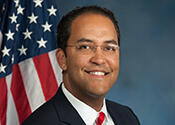
Here you will find contact information for Representative Will Hurd, including email address, phone number, and mailing address.
| Name | Will Hurd |
| Position | Representative |
| State | Texas |
| District | 23 |
| Party | Republican |
| Status | Former Representative |
| Term Start | January 6, 2015 |
| Term End | January 3, 2021 |
| Terms Served | 3 |
| Born | August 19, 1977 |
| Gender | Male |
| Bioguide ID | H001073 |
About Representative Will Hurd
William Ballard Hurd (born August 19, 1977) is an American politician, technology and cybersecurity specialist, and former CIA clandestine officer who served as the U.S. representative for Texas’s 23rd congressional district from January 3, 2015, to January 3, 2021. A member of the Republican Party, he served three terms in Congress during a significant period in American political history, representing a vast, predominantly Hispanic, border district stretching roughly 550 miles from San Antonio to El Paso along the U.S.–Mexican border. As of January 2019, he was the only Republican member of Congress representing a district along the U.S.–Mexican border and, as of August 2019, the only Black Republican in the U.S. House of Representatives.
Hurd was born in San Antonio, Texas, the son of Mary Alice Hurd and Robert Hurd. His father is Black and his mother is white, and he has a brother, Chuck, and a sister, Elizabeth. He grew up in the San Antonio area and graduated from John Marshall High School in Leon Valley, Texas. He went on to attend Texas A&M University, where he majored in computer science and minored in international relations. At Texas A&M he was elected student body president and held that position during the 1999 Aggie Bonfire collapse, an experience that placed him in a leadership role during a campus tragedy and helped shape his interest in public service and crisis management.
After graduating from Texas A&M, Hurd joined the Central Intelligence Agency, where he served for nine years, from 2000 to 2009, as an undercover operations officer. Stationed primarily in Washington, D.C., he also served tours in Afghanistan, Pakistan, and India. He speaks Urdu, the national language and lingua franca of Pakistan, where he worked undercover. In one of his key roles at the CIA, he briefed members of Congress on intelligence matters, an experience that exposed him to the legislative branch and motivated him to pursue elected office. Upon leaving the CIA in 2009, Hurd returned to Texas and entered the private sector, becoming a partner at the strategic advisory firm Crumpton Group LLC and a senior adviser with FusionX, a cybersecurity firm, further developing his expertise in national security, intelligence, and cyber issues.
On November 19, 2009, Hurd announced his candidacy for the Republican nomination in Texas’s 23rd congressional district, a district that is about two-thirds Hispanic. His electronically filed campaign finance records at the time showed he had $70,000 on hand. The San Antonio Express-News endorsed him on February 15, 2010. In the March 2, 2010, primary election he received the most votes but failed to secure a majority, forcing an April 13 runoff against San Antonio banker Francisco “Quico” Canseco, who was making his third bid for Congress. Canseco defeated Hurd in the runoff, 53 percent to 47 percent, and went on to win the general election against two-term Democratic incumbent Ciro Rodriguez, before losing the seat in 2012 to Democrat Pete Gallego by about 2,500 votes.
Hurd again sought the 23rd district seat in the 2014 United States House of Representatives elections. After a runoff, he won the Republican primary over Canseco, once more receiving the endorsement of the San Antonio Express-News. In the general election, he defeated incumbent Democrat Pete Gallego in what was widely regarded as an upset, making it the third consecutive election cycle in which an incumbent was unseated in that district. The victory came despite Republican presidential nominee Mitt Romney having carried the district two years earlier, underscoring the district’s competitiveness. Following his election, Hurd conducted a post-election tour through parts of the district that had heavily supported Gallego. He was notably the only candidate ever endorsed by former CIA director and Secretary of Defense Robert Gates, who admired Hurd’s CIA service and said Hurd “has the character and the integrity and the leadership skills for higher office.”
Will Hurd assumed office as a U.S. representative on January 3, 2015. During his first term, he ranked third among freshman House members in the number of bills passed, and he quickly emerged as a leading congressional voice on technology and cybersecurity. He was made chairman of the Information Technology Subcommittee of the House Committee on Oversight and Government Reform—an unusual responsibility for a first-term member—and served as vice-chair of the Border and Maritime Subcommittee of the House Committee on Homeland Security. In July 2015, he was named to replace Aaron Schock of Illinois as co-chair of the Congressional Future Caucus, serving alongside Tulsi Gabbard of Hawaii. His background as a former undercover officer led some observers, including The Daily Dot, to describe him as “The Most Interesting Man in Congress.”
Hurd was renominated for a second term in the Republican primary on March 1, 2016, defeating William Peterson with 82.2 percent of the vote (39,762 to 8,590). In the general election he again faced former Congressman Pete Gallego in what was expected to be one of the most competitive House races in the country. During the campaign, Hurd distanced himself from Republican presidential nominee Donald Trump, criticizing Trump’s “nasty rhetoric” about Muslims and Latinos and calling the proposal for an $8 billion, 1,000-mile wall along the Mexican border “the most expensive, least effective way to do border security.” After the release of the Access Hollywood tape, Hurd stated that he would not endorse or vote for Trump, citing Trump’s behavior toward women and minorities. Gallego attempted to tie Hurd to Trump, while Hurd criticized Gallego’s record on veterans’ issues and portrayed him as aligned with House Democratic leader Nancy Pelosi. In the November 2016 general election, Hurd won with 110,577 votes (48.3 percent) to Gallego’s 107,526 (47 percent), with Libertarian Ruben Schmidt Corvalan receiving 10,862 votes (4.7 percent). Hurd’s strong performance in Bexar, Medina, and Uvalde counties offset Gallego’s large margins in El Paso and Maverick counties.
In the 2018 election cycle, Hurd again faced a highly competitive race. On March 7, 2018, he won the Republican primary with 80 percent of the vote. No Democrat secured a majority in the Democratic primary, leading to a runoff between former Air Force intelligence officer Gina Ortiz Jones and high school teacher Rick Treviño; Ortiz Jones prevailed. By mid-2018, the contest was projected to become one of the most expensive congressional races in Texas history. The race proved to be the closest House contest in Texas and one of the closest in the nation. The Associated Press initially called the race for Hurd on election night, but additional ballots briefly gave Ortiz Jones a narrow lead before Hurd regained it. After all provisional and overseas ballots were counted, Hurd was declared the official winner on November 19, 2018, by a margin of 926 votes. Throughout his tenure, Hurd was frequently described as a moderate Republican; in 2015 he voted with his party’s position on 96 percent of roll-call votes, and as of August 2019 he had voted with his party in 82 percent of votes in the 116th Congress and in line with President Trump’s position in 81.3 percent of votes.
During his three terms in Congress, from 2015 to 2021, Hurd contributed actively to the legislative process and emphasized bipartisan approaches, particularly on cybersecurity, technology, and government modernization. He served on the House Committee on Oversight and Government Reform (chairing its Information Technology Subcommittee), the House Committee on Homeland Security (serving as vice-chair of its Border and Maritime Subcommittee), and the House Permanent Select Committee on Intelligence, to which he was appointed for his second term, replacing Mike Pompeo after Pompeo became CIA director. He was also co-chair of the Congressional Future Caucus and a member of the Republican Main Street Partnership. Hurd often broke with his party on issues such as LGBT rights, gun control, immigration, repeal of the Affordable Care Act, and congressional oversight, earning praise for bipartisanship. He argued that the principal role of government in the lives of African Americans should be to empower individuals to do things for themselves. His sprawling district, which USA Today noted spans two time zones and more than 800 miles of the U.S.–Mexico border, was the subject of redistricting litigation; in March 2017 a three-judge federal panel invalidated the Texas Legislature’s 2011 drawing of three congressional districts, including the 23rd, for intentional discrimination against Black and Latino voters. Hurd’s elections, however, were conducted under a court-approved 2013 interim map. He defended the existing boundaries and stated that any revised plan would not affect his work in Congress or his prospects for reelection.
Beyond his committee assignments, Hurd engaged in transatlantic and foreign policy work. In 2019, he joined the Transatlantic Task Force of the German Marshall Fund and the Bundeskanzler-Helmut-Schmidt-Stiftung, co-chaired by Karen Donfried and Wolfgang Ischinger, reflecting his ongoing interest in international relations and security policy. On August 1, 2019, he announced that he would not seek reelection to Congress in 2020, concluding his service in the House at the end of the 116th Congress in January 2021. After leaving Congress, he continued to be active in public affairs and policy debates, particularly on technology, cybersecurity, and national security.
On June 22, 2023, Hurd announced that he was seeking the Republican nomination for president of the United States in the 2024 election, positioning himself as a pragmatic, security-focused conservative. His campaign emphasized issues such as technology, national security, and political moderation. He ended his presidential bid on October 9, 2023, and endorsed former South Carolina governor and U.N. ambassador Nikki Haley for the Republican nomination.