Representative Will Rogers
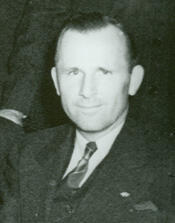
Here you will find contact information for Representative Will Rogers, including email address, phone number, and mailing address.
| Name | Will Rogers |
| Position | Representative |
| State | Oklahoma |
| District | At-Large |
| Party | Democratic |
| Status | Former Representative |
| Term Start | March 9, 1933 |
| Term End | January 3, 1943 |
| Terms Served | 5 |
| Born | December 12, 1898 |
| Gender | Male |
| Bioguide ID | R000405 |
About Representative Will Rogers
William Vann Rogers (October 20, 1911 – July 9, 1993), generally known as Will Rogers Jr., was an American politician, writer, newspaper publisher, and actor. A member of the Democratic Party, he served as a Representative in the United States Congress and contributed to the legislative process during five terms in office, and he was a Democratic U.S. Representative from California from January 3, 1943, until May 23, 1944, when he resigned to return to the United States Army. He was the eldest son of noted humorist Will Rogers (1879–1935) and Betty Blake Rogers (1879–1944), and he was proud of his Cherokee heritage, which informed aspects of his later public service.
Rogers was born in New York City on October 20, 1911, while his father was performing there on stage. He spent his childhood and youth in Los Angeles, California, where the Rogers family settled as his father’s career expanded into film and radio. He attended school in Los Angeles before enrolling at Stanford University in Palo Alto, California. At Stanford, he pursued liberal arts studies and received a Bachelor of Arts degree in 1935. His upbringing in a prominent entertainment family and his education at a leading university exposed him early to public life, journalism, and national politics.
Upon completing his studies at Stanford in 1935, Rogers embarked on a career in journalism and publishing. He became publisher of the Beverly Hills Citizen, a local newspaper serving the growing communities of Beverly Hills and the west side of Los Angeles. He continued in this role until 1953, using the paper as a platform for civic engagement and commentary on public affairs. In the late 1930s, he also demonstrated an early interest in international issues. During the Spanish Civil War, he traveled to Spain to show his support for the Republican government and the American volunteers of the Abraham Lincoln Brigade. While staying in Barcelona, he survived a Nationalist air raid that shattered the windows of his hotel room, an experience that reinforced his concern with the rise of fascism in Europe.
Rogers’s military association began before World War II, when he was commissioned a second lieutenant through the Reserve Officers’ Training Corps, though he did not immediately go on active duty. With the entry of the United States into World War II, he enlisted as a private in June 1942. The following month he was commissioned in the field artillery and assigned to the 893rd Tank Destroyer Battalion. His military service ran parallel to his emerging political career and shaped his views on international cooperation and postwar security.
While on active duty in the Army, Rogers was elected to the United States House of Representatives. A Democrat, he was chosen by voters in California and was sworn into office on January 3, 1943, serving in the 78th Congress. His service in Congress occurred during a significant period in American history, as the nation was fully engaged in World War II and laying the groundwork for the postwar international order. As a member of the House of Representatives, he participated in the democratic process and represented the interests of his constituents, contributing to legislative deliberations during his time in office. Contemporary observers took note of his political outlook. In a confidential 1943 report for the British government on the House Committee on Foreign Affairs, analyst Isaiah Berlin described Rogers as a sincere and somewhat impassioned newcomer who believed strongly in Vice President Henry Wallace’s brand of internationalism and in close cooperation with the United Nations. Berlin predicted that Rogers would be a vigorous advocate of all-out postwar cooperation with the United Nations and suggested that his liberal ideals might make him critical of aspects of the British Empire. Although he had been elected for a full term, Rogers did not complete it; he resigned from Congress on May 23, 1944, in order to return to active duty in the United States Army.
After resigning from Congress, Rogers was assigned to the 814th Tank Destroyer Battalion and served in the European theater as part of General George S. Patton’s Third United States Army. He participated in the European campaign, where he was wounded in action and was awarded the Bronze Star for meritorious service. He was released from active duty with the rank of lieutenant on March 1, 1946. His wartime experiences, combined with his earlier exposure to European conflicts in Spain, reinforced his commitment to liberal internationalism and to policies aimed at preventing future global wars.
Following his return to civilian life, Rogers sought higher office. In 1946 he ran for the United States Senate from California, challenging incumbent William F. Knowland, who had been appointed by Governor Earl Warren in August 1945 to fill the vacancy created by the death of Senator Hiram Johnson. California held two elections for the seat: a special election, conducted with blank ballots, to fill the remainder of Johnson’s term through 1947, and a regular election for a full six-year term. Knowland won the special election decisively over Rogers and other write-in candidates and went on to secure the full term in the general election by more than 200,000 votes. Although unsuccessful in this bid, Rogers remained active in Democratic politics. He managed the Southern California presidential campaign for Harry S. Truman in 1948 and served as a delegate to the Democratic National Conventions in 1948, 1952, and 1956. He also participated in state and federal public service, serving on the California State Parks Commission from 1958 to 1962 and as its chairman from 1960 to 1962. Later, during the administration of President Lyndon B. Johnson, he was a special assistant to the Commission on Indian Affairs from 1967 to 1969, a role in which he drew on his Cherokee heritage and his family’s longstanding interest in Native American issues.
In addition to his political and governmental work, Rogers developed a parallel career in entertainment, particularly in roles that drew on his resemblance to his famous father. In the early 1950s he appeared in several motion pictures, most notably portraying Will Rogers in The Story of Will Rogers (1952) and The Eddie Cantor Story (1953). As a character actor, he starred in the Western film The Boy from Oklahoma (1954), directed by Michael Curtiz, which later served as the basis for the television series Sugarfoot. He also appeared in the 1958 film Wild Heritage as a judge and made frequent appearances on the 1950s television anthology series Schlitz Playhouse of Stars. On radio, he starred during the 1953–1954 season in Rogers of the Gazette on CBS, playing the owner of a small-town newspaper, a role that echoed his real-life experience as a publisher. From 1956 to 1957 he hosted the weekday-morning Good Morning program on CBS Television, though he was eventually replaced by Jimmy Dean. He was among several actors who hosted syndicated reruns of the television anthology series Death Valley Days, with the episodes he introduced airing under the title The Pioneers. In 1982 he recorded the narration for The American Adventure attraction at Disney’s Epcot in Florida, lending his voice to a prominent historical presentation.
Rogers retired to his ranch near Tubac, Arizona, where he lived in later years. His health declined significantly as he suffered several strokes, experienced heart problems, and underwent hip replacement surgeries. On July 9, 1993, at the age of 81, he died by suicide; his body was found in his car near his ranch with a self-inflicted gunshot wound. He was buried in the Tubac Cemetery beside his wife. He was survived by his two sons, Clem Adair Rogers and Carl Connell Rogers, and by his brother, James Rogers.