Representative Willard Duncan Vandiver
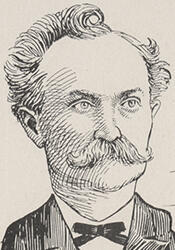
Here you will find contact information for Representative Willard Duncan Vandiver, including email address, phone number, and mailing address.
| Name | Willard Duncan Vandiver |
| Position | Representative |
| State | Missouri |
| District | 14 |
| Party | Democratic |
| Status | Former Representative |
| Term Start | March 15, 1897 |
| Term End | March 3, 1905 |
| Terms Served | 4 |
| Born | March 30, 1854 |
| Gender | Male |
| Bioguide ID | V000032 |
About Representative Willard Duncan Vandiver
Willard Duncan Vandiver (March 30, 1854 – May 30, 1932) was a Democratic member of the United States House of Representatives from the state of Missouri who served four consecutive terms in Congress from 1897 to 1905. He is popularly credited with the authorship and, more securely, the popularization of the famous expression, “I’m from Missouri, you’ve got to show me,” which became closely associated with Missouri’s identity as “The Show Me State.” In an 1899 speech, he declared, “I come from a state that raises corn and cotton, cockleburs and Democrats, and frothy eloquence neither convinces nor satisfies me. I’m from Missouri, and you have got to show me.” Although the phrase was already in circulation earlier in the 1890s, and the attribution of its original coinage to Vandiver is doubtful, his use of it in a widely noted address helped fix it in the public mind and link it enduringly with his home state.
Vandiver was born near Flora, Clay County, Illinois, on March 30, 1854. During his childhood his family moved to Missouri, and he grew up in that state, which would shape his personal identity and political career. His early years were spent in a largely rural environment in the post–Civil War Midwest, a setting that informed both his later public rhetoric—rooted in agricultural imagery—and his political alignment with the Democratic Party at a time when agrarian interests were a central force in regional and national politics.
Vandiver pursued higher education in Missouri and became closely associated with the state’s developing system of public higher learning. He graduated from Central Methodist College in Fayette, Missouri (then known as Central College), and subsequently embarked on an academic career. He joined the faculty of the Missouri State Normal School at Cape Girardeau (later Southeast Missouri State University), where he taught and advanced through the academic ranks. His work as an educator and administrator in Missouri’s normal school system reflected his commitment to teacher training and public education at a time when the state was expanding and professionalizing its schools.
By the late nineteenth century, Vandiver had become a prominent figure in Missouri’s educational and civic life, a standing that helped propel him into elective office. A member of the Democratic Party, he was elected to the United States House of Representatives as a Representative from Missouri in 1896 and took his seat in the Fifty-fifth Congress on March 4, 1897. He was subsequently reelected to the Fifty-sixth, Fifty-seventh, and Fifty-eighth Congresses, serving continuously until March 3, 1905. His service in Congress occurred during a significant period in American history marked by the aftermath of the economic depression of the 1890s, the Spanish–American War, the onset of American overseas expansion, and the early stirrings of the Progressive Era.
During his four terms in office, Vandiver participated actively in the legislative process and represented the interests of his Missouri constituents in the House of Representatives. He served on key committees, including those dealing with rivers and harbors and other matters of infrastructure and economic development that were of particular concern to a largely agricultural and river-dependent state. As a member of the House, he took part in debates over issues such as currency, tariffs, and regulatory policy, aligning with Democratic positions that emphasized skepticism toward concentrated economic power and advocacy for farmers and small producers. His plainspoken style and insistence on evidence and practicality, encapsulated in his famous “show me” remark, contributed to his reputation as a representative who demanded substantive justification for legislative proposals.
After leaving Congress in 1905, Vandiver remained an influential public figure in Missouri. He continued his involvement in public affairs and held appointive positions that drew on his experience in both education and government. In the years following his congressional service, he was associated with state and federal roles that included work in financial and regulatory capacities, reflecting the growing complexity of public administration in the early twentieth century. His post-congressional career underscored his continued engagement with the practical problems of governance and public policy in Missouri and beyond.
Willard Duncan Vandiver died on May 30, 1932. By the time of his death, he was remembered not only as a four-term Democratic Representative from Missouri who had served during a transformative era in American politics, but also as the public figure most closely associated with the phrase “I’m from Missouri, you’ve got to show me.” Whether or not he originated the expression, his use of it in 1899 and his long identification with Missouri helped cement both his own place in political folklore and the enduring nickname of his state as “The Show Me State.”