Representative William David Blakeslee Ainey
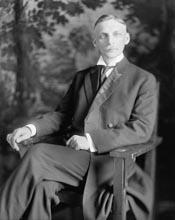
Here you will find contact information for Representative William David Blakeslee Ainey, including email address, phone number, and mailing address.
| Name | William David Blakeslee Ainey |
| Position | Representative |
| State | Pennsylvania |
| District | 14 |
| Party | Republican |
| Status | Former Representative |
| Term Start | April 4, 1911 |
| Term End | March 3, 1915 |
| Terms Served | 2 |
| Born | April 8, 1864 |
| Gender | Male |
| Bioguide ID | A000065 |
About Representative William David Blakeslee Ainey
William David Blakeslee Ainey (April 8, 1864 – September 4, 1932) was a Republican member of the U.S. House of Representatives from Pennsylvania who served in Congress from 1911 to 1915. Ainey’s congressional career unfolded during a significant period in American history, and he was an active participant in the legislative and democratic processes of the early twentieth century, representing the interests of his Pennsylvania constituents as a member of the Republican Party.
Ainey was born on April 8, 1864, and came of age in the decades following the Civil War, a time of rapid industrialization and political realignment in the United States. His early life in Pennsylvania placed him in a region deeply affected by the growth of railroads, coal, and manufacturing, developments that would later shape his professional focus on public service regulation and utilities. He pursued legal training and entered the practice of law, establishing himself in Montrose, Pennsylvania, where he built a career that combined legal expertise with growing involvement in public affairs.
By the early twentieth century, Ainey had become a prominent Republican figure in his region, and his legal and civic experience positioned him for national office. He was elected as a Republican to the 62nd United States Congress to fill the vacancy caused by the death of Representative George W. Kipp. Taking his seat in 1911, he thus began the first of two consecutive terms in the U.S. House of Representatives. He was subsequently reelected to the 63rd United States Congress, serving continuously until 1915. During these two terms in office, Ainey contributed to the legislative process at a time when the nation was grappling with issues of economic regulation, progressive reforms, and an emerging role on the world stage. He chose not to be a candidate for reelection in 1914, bringing his formal congressional service to a close at the end of his second term.
While in Congress, Ainey extended his public service beyond domestic legislation to the international arena. He was a delegate to the International Parliamentary Union for International Peace, attending its sessions in Geneva, Switzerland, in 1912 and at The Hague in 1913. His work in these forums reflected contemporary efforts to promote arbitration and peaceful resolution of disputes among nations. He also served as secretary and president of the Japanese-American group of inter-parliamentarians, and in 1914 he was a delegate to meetings in Tokyo, Japan, and Stockholm, Sweden. These roles underscored his engagement with international parliamentary dialogue and the broader movement for peace and cooperation prior to the First World War.
After leaving Congress in 1915, Ainey resumed the practice of law in Montrose, but he quickly returned to public service in a regulatory capacity. On May 20, 1915, he was appointed a member of the Public Service Commission of Pennsylvania, the state body responsible for oversight of public utilities and transportation services. On August 20, 1915, he was elected chairman of the commission, a position that placed him at the center of state efforts to regulate railroads, utilities, and other essential services during a period of expanding infrastructure and public demand for fair rates and reliable service.
Ainey’s leadership in public service regulation was repeatedly affirmed. He was reappointed for a ten-year term as both member and chairman of the Public Service Commission on July 1, 1917, and again on July 1, 1927, giving him a long and influential tenure in shaping Pennsylvania’s regulatory policies. In August 1922, he was appointed chairman of the Pennsylvania Fuel Commission, an office that carried particular importance in an era when coal and other fuels were central to the state’s economy and to national industry. His expertise and prominence in regulatory affairs were further recognized in 1924, when he served as president of the National Association of Railroad and Utilities Commissioners, a national organization that coordinated regulatory practices and shared policy approaches among the states.
William David Blakeslee Ainey remained active in these roles until the later years of his life. He died in Harrisburg, Pennsylvania, on September 4, 1932. He was interred in Montrose Cemetery in Montrose, Pennsylvania, returning in death to the community where he had long practiced law and from which he had risen to national and statewide prominence.